
Lieferung heute & morgen

Qualitätsgarantie

Willkommens-Angebote freischalten: KOSTENLOSE Lieferung | Bis zu 80 % RABATT | Kostenlose 30-Tage-JoyPlus-Testphase
App herunterladen
Kategorien
A height-adjustable coffee table is a functional solution to the demands of modern living concepts, especially in urban spaces with a limited footprint. Its primary function is to bridge the gap between a low coffee table and a dining table or temporary workspace. An integrated lifting mechanism allows the tabletop to be raised to a more ergonomic height, making it possible to eat, work on a laptop, or perform other activities directly from the sofa. This piece of furniture thus addresses the need for multifunctionality and optimized use of space.
The decision for a specific model should be based on an analysis of technical specifications and material properties. The following criteria are relevant for an objective evaluation.
The mechanism is the core component of a height-adjustable coffee table. There are two main systems:
Pay attention to the manufacturer's specified maximum load capacity for the tabletop in its raised position. This information is crucial to prevent overloading and potential damage to the mechanism.
The durability and maintenance requirements of a table depend directly on the materials used.
A coffee table with storage maximizes efficiency in a small space. Common solutions include:
Before purchasing, measure the available space and the seat height of your sofa. A height-adjustable living room table should have a typical coffee table height (approx. 40–50 cm) in its lowest position. The raised height should be between 65–75 cm to ensure a comfortable posture for eating or working. Also, consider the overhang of the tabletop when raised to ensure there is enough room to move around it.
Based on an analysis of design, material, and functionality, we present two models that cater to different user profiles.
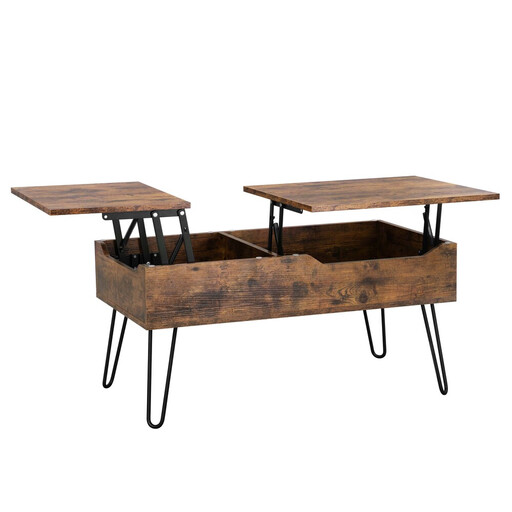
Why we're featuring this product: This model stands out with its dual, independently liftable tabletop. This design offers great flexibility for households where multiple people want to use the table for different purposes simultaneously. The spring-assisted mechanism is designed for everyday use. With its vintage brown wood look and black metal frame, the design specifically caters to the vintage-style coffee table trend.
Pros:
Who it's for: Couples or flatmates who need a flexible surface for simultaneous work and leisure. Users who prefer a vintage or subtle industrial interior design style.
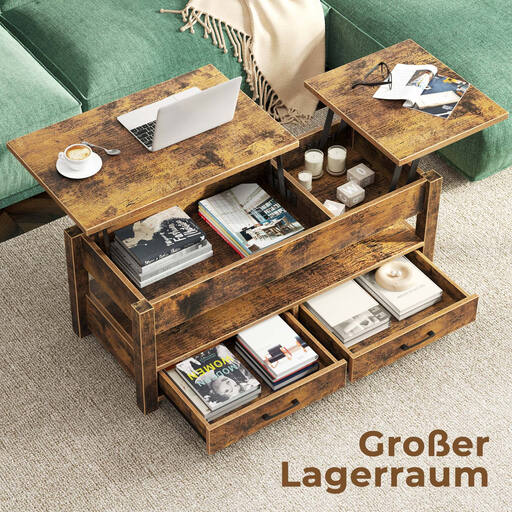
Why we're featuring this product: The Rolanstar table combines a high-quality gas-lift mechanism with a well-thought-out storage concept. The split tabletop can not only be lifted, but one part can also be rotated 180 degrees to create a larger, continuous surface—a practical solution for use as a coffee table for dining for several people. The combination of concealed compartments, open shelves, and two drawers offers exceptionally versatile organization.
Pros:
Who it's for: Individuals in small apartments looking for a multifunctional solution that can replace a dining table. Users who value maximum organized storage and a stable, durable lifting mechanism. The design fits well with industrial and rustic interiors.
If the featured models don't exactly meet your aesthetic or functional requirements, a broader selection of designs may be helpful. Different materials, colour schemes, and sizes offer more possibilities for customising your individual living space.
Discover more Living Room Furniture Designs in our overview.
1. How high should a height-adjustable coffee table be in its raised position? The ideal raised height is between 65 cm and 75 cm. This height allows for an ergonomically correct posture when eating or working on a laptop from the sofa and is roughly equivalent to the height of a standard dining table.
2. What is the functional difference between a spring-assisted and a gas-lift mechanism? A spring-assisted mechanism uses the mechanical force of springs and often requires slight manual effort to lift and lower. A gas-lift mechanism uses compressed gas in a cylinder, which provides a significantly smoother, more uniform, and often quieter motion. Gas-lift systems are generally considered more comfortable and less prone to wear with frequent use.
3. How do I care for the surface of a lift-top coffee table? For engineered wood surfaces with a melamine resin coating, a soft, slightly damp cloth is usually sufficient. Avoid aggressive or abrasive cleaning agents, as they can damage the coating. For real wood veneers, follow the manufacturer's care instructions, which may occasionally recommend the use of special wood care products.