The primary function of a protective helmet for wheeled sports is to reduce the impact energy that affects the head during a fall. This is achieved through a combination of a hard outer shell and a shock-absorbing inner core. Selecting a suitable model is based on objective criteria such as material properties, fit, and adjustment mechanisms. This guide analyzes the technical specifications relevant to a skateboard helmet and introduces a model designed for various applications.
Buyer's Guide: Key Technical Features to Look For in a Protective Helmet
The choice of a helmet should be based on an analysis of its design features. The following parameters are crucial for safety and user comfort.
1. Material and Construction
The most common and proven design for a skate helmet is the hardshell construction.
- Outer Shell: Acrylonitrile Butadiene Styrene (ABS) is most commonly used. This material is characterized by high impact and scratch resistance. Its purpose is to distribute the point energy of an impact over a larger area and prevent penetration by sharp objects.
- Inner Shell: The core is typically made of Expanded Polystyrene (EPS). This rigid foam is designed to deform permanently upon impact, thereby absorbing the shock energy before it reaches the head. After a significant impact, a helmet with an EPS core must be replaced, as its protective function is no longer guaranteed.
2. Fit and Adjustability
A helmet only provides adequate protection if it fits correctly. It must not shift during movement, nor should it cause pressure points.
- Sizing: Measure the head circumference at its widest point, about one centimeter above the eyebrows. Manufacturers provide corresponding centimeter ranges for their helmet sizes.
- Adjustment System: An adjustable helmet is essential. Modern systems often combine a dial at the back of the head to adjust the head ring with an adjustable chin strap. This dual-adjustment system allows for a precise and secure fit.
3. Ventilation and Comfort
During physical activity, sufficient air circulation is important to prevent heat buildup under the helmet.
- Vents: Strategically placed openings in the helmet shell promote airflow and channel away warm, moist air.
- Inner Padding: Removable and washable pads contribute to hygiene and allow for fine-tuning the fit. Some models come with padding sets in different thicknesses.
The OutdoorMaster Oryx Helmet
Based on the technical criteria mentioned above, we present the OutdoorMaster Oryx. This model is designed as a multisport helmet and is suitable for a variety of activities, including skateboarding, cycling, inline skating, or scooter riding.
OutdoorMaster Skateboard Helmet Oryx Light Blue M 51-58cm
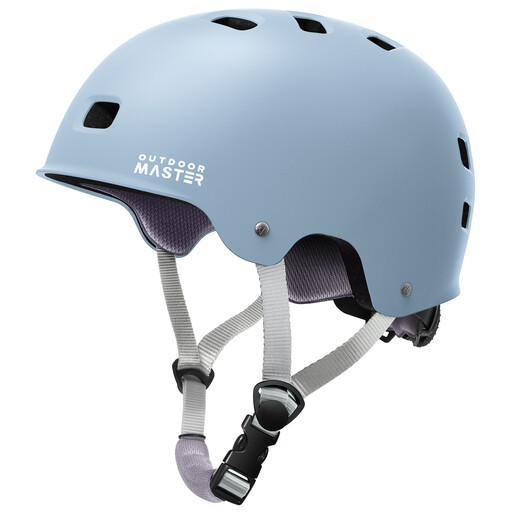
- Why We Recommend This Product: The OutdoorMaster Oryx combines a reinforced ABS outer shell with a thickened, shock-absorbing EPS core. The dual-adjustment system, featuring a dial and an adjustable chin strap, ensures a secure fit. It comes with two removable liners of different thicknesses, allowing for a custom fit for various head sizes and simplifying cleaning.
- Advantages:
- Robust ABS and EPS construction for impact resistance.
- Includes two sets of removable and washable inner pads.
- Efficient ventilation system for various sports.
- Precise fit with a dial and adjustable chin strap.
- Who It's For: This model is designed for adults and children from a recommended age of 5 years who are looking for a versatile protective helmet for skateboarding, cycling, inline skating, or scootering. Size M covers a head circumference of 51-58 cm.
View Product on Joybuy.de
OutdoorMaster Skateboard Helmet Oryx Light Pink M 51-58cm

- Why We Recommend This Product: This version of the Oryx model offers identical technical specifications and safety features as the light blue version. The construction of reinforced ABS and EPS foam provides a solid foundation for protection in various wheeled sports. The inclusion of a second inner liner is a practical feature for hygiene and fit optimization.
- Advantages:
- Construction with a reinforced ABS shell and shock-absorbing EPS core.
- Additional removable liner for a flexible fit and easy cleaning.
- Ventilation system for comfort during athletic activity.
- Dual-adjustment system for a secure hold.
- Who It's For: Identical to the light blue variant, this model is aimed at users from 5 years of age who need a functional inline skate helmet or scooter helmet with a head circumference between 51 and 58 cm and prefer a different color.
View Product on Joybuy.de
OutdoorMaster Oryx Adults Skateboard Cycling Helmet - Black M

- Why We Recommend This Product: The black version of the OutdoorMaster Oryx meets the same technical requirements for material and functionality. The combination of a durable ABS shell and a cushioning EPS core is designed for use as both a bike helmet and a skate helmet. The adjustment system and washable pads offer high practical value for everyday use.
- Advantages:
- Multisport-ready construction of ABS and EPS.
- Two removable inner liners for customization and hygiene.
- Well-designed ventilation system for various use cases.
- Reliable dual-adjustment system for a custom fit.
- Who It's For: A neutral design option for adults, teens, and children from 5 years old who are looking for a helmet for skateboarding, BMX, or daily cycling. Size M is suitable for a head circumference of 51-58 cm.
View Product on Joybuy.de
More Options and Designs
If the featured model does not meet your specific requirements, or if you wish to explore a wider range of colors and designs, you can find more alternatives in our main category.
Discover All Skateboard & Bike Helmets
Frequently Asked Questions (FAQ)
1. Can you use a skateboard helmet for cycling? Yes, many modern skate helmets are designed as multi-sport helmets and meet the relevant safety standards (e.g., EN 1078 in Europe) for both activities. The OutdoorMaster Oryx featured here is explicitly intended for use in skating, cycling, BMX, and similar sports.
2. How do I determine the correct helmet size? Measure your head circumference with a flexible tape measure at the widest point, approximately one centimeter above your eyebrows and ears. Compare this measurement with the manufacturer's size specifications. A correctly fitting helmet should be snug without wobbling or causing uncomfortable pressure. Use the adjustment dial and chin straps for fine-tuning.
3. When should a skate helmet be replaced? A helmet should be replaced immediately after any significant impact or fall, even if no external damage is visible. The inner EPS foam may have lost its shock-absorbing properties due to compression. Additionally, manufacturers recommend replacement every 3 to 5 years, as materials like plastics and foams can degrade over time due to UV radiation and environmental factors.
Written by: Joybuy Product Recommendation Officer


