
Lieferung heute & morgen

Qualitätsgarantie

Willkommens-Angebote freischalten: KOSTENLOSE Lieferung | Bis zu 80 % RABATT | Kostenlose 30-Tage-JoyPlus-Testphase
App herunterladen
By the Joybuy Product Recommendation Officer
An effective abdominal workout is a core component of many fitness routines. However, performing exercises like sit-ups or crunches correctly without guidance can be difficult and carries the risk of neck or back strain. A suitable home ab trainer can help guide your movements, increase intensity, and strengthen your core muscles more effectively.
This article introduces different types of ab trainers and explains their respective uses. The goal is to provide you with an informed basis for your decision, so you can find the device that best suits your individual needs and training goals.
The selection of home fitness equipment is vast. To find the right model for you, you should consider three key aspects.
Define your primary objective. Are you a beginner looking for guided movement to learn the basics safely? A classic sit-up assistant might be the right choice. More advanced users seeking a new challenge for their core muscles may benefit more from a dynamic device like an ab roller or a balance board.
A good piece of training equipment should support the correct execution of exercises. This is crucial for activating the desired muscle groups while minimising strain on the spine and neck. Look for ergonomic designs, padded surfaces, and stable constructions that ensure a safe workout.
Check the device's dimensions and ensure you have enough space at home for both use and storage. Materials like steel or robust PP plastic indicate a durable construction. Non-slip grips and surfaces are important features for safe handling during your workout.
Based on different training approaches, we have compiled a selection of devices that cater to various needs—from guided training to dynamic core stabilisation.

Why It Stands Out: This ab trainer from Umbro is designed for guided and controlled movement. The ergonomic design helps bring the upper body into the correct position for crunches, which reduces common errors and protects the back.
Benefits:
Who It's For: This model is an excellent choice for beginners, seniors, or individuals resuming training after an injury. It provides safety and guidance to build abdominal muscles in a targeted and gentle way.
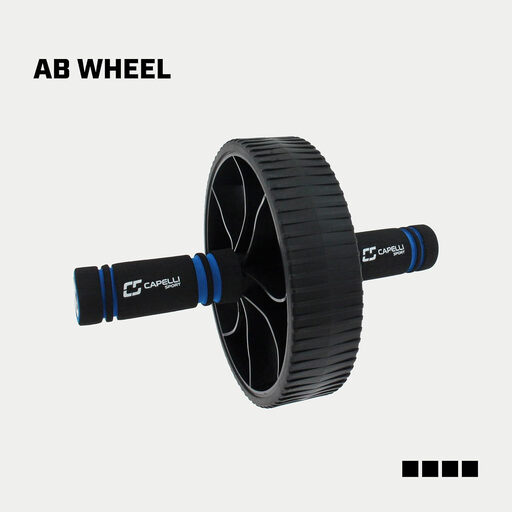
Why It Stands Out: The ab roller, also known as an ab wheel, is a classic core trainer for an intense, full-body workout. The Capelli Sport Wheel is distinguished by its wide wheel, which provides extra stability during the challenging roll-out movement.
Benefits:
Who It's For: The ab roller is aimed at advanced users who want to take their core strength and stability to the next level. It requires a pre-existing baseline of core strength to perform the exercise correctly.

Why It Stands Out: This balance board trains the core muscles in a different way: through instability. It forces the deep muscles to work continuously to maintain balance. With a 360-degree rotation and a 15-degree tilt angle, it enables dynamic and functional exercises.
Benefits:
Who It's For: The balance board is suitable for users of all fitness levels. It can be used to improve general fitness, for injury prevention, in rehabilitation, or as a supplement to strength training to enhance core stability.
The products featured here cover a range of training approaches. If you are looking for more specialised equipment or wish to compare different models, you can find a broader selection in our category.
? Discover more ab training equipment here
The frequency of training depends on your individual fitness level and recovery capacity. For most people, 2 to 4 sessions per week are recommended. It is important to give your muscles enough time to recover between sessions, typically 24 to 48 hours.
Yes, certain models are specifically designed for beginners. A guided sit-up assistant like the Umbro Ab Trainer reduces the risk of improper form and protects the neck and back. A balance board can also be used by beginners to gradually build coordination and core stability. More demanding devices like an ab roller, however, require a certain level of baseline fitness.
A home ab trainer primarily serves to strengthen and define the abdominal and core muscles. Building muscle can slightly increase the body's basal metabolic rate. However, a visible reduction in belly fat is mainly achieved through a combination of regular physical activity (cardio and strength training) and a calorie-controlled diet. Abdominal training is an important part of this overall strategy.