
Lieferung heute & morgen

Qualitätsgarantie

Willkommens-Angebote freischalten: KOSTENLOSE Lieferung | Bis zu 80 % RABATT | Kostenlose 30-Tage-JoyPlus-Testphase
App herunterladen
Setting up a home workspace presents a common challenge: How do you find a chair that is not only functional but also blends seamlessly into your living space? The right home office chair is a fundamental investment in your daily work quality and well-being. This guide is designed to simplify your selection process. We will introduce various models and explain the key criteria to consider when making your decision.
The search for the perfect chair can be overwhelming. To make an informed decision, you should focus on three core areas: ergonomics, durability, and design.
An ergonomic office chair adapts to your body, not the other way around. Look for adjustable components that promote a healthy sitting posture. A height-adjustable swivel chair is the foundation, allowing you to match the seat height to your body and desk height. Ideally, your feet should rest flat on the floor with your knees at an approximately 90-degree angle. Other crucial adjustments include:
The maximum weight capacity is a critical safety feature. Standard models are often rated for up to 110 kg or 120 kg. If you require greater stability, you should specifically look for an office chair with a 150 kg capacity. These models typically feature a reinforced base and a more robust gas lift.
The material affects comfort, longevity, and aesthetics:
The chair should complement the style of your interior. A white desk chair creates a light, modern look and fits well into many home designs. A designer desk chair can even become the focal point of the room.
For smaller workspaces or if you need to slide the chair completely under the desk, an armless office chair is a practical solution. It offers more freedom of movement and requires less space.
Based on the criteria mentioned, we have curated a selection of chairs that meet various needs for ergonomics, design, and functionality.
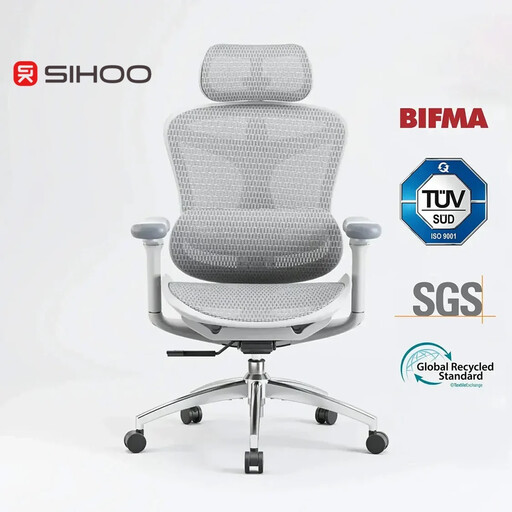
Why it stands out: The Sihoo Doro C300 is engineered for comprehensive ergonomic adjustment. Its self-adaptive lumbar support and dynamic backrest conform to the user's movements. The high weight capacity and extensive adjustment options make it a highly functional work chair for long days.
Pros:
Best for: Individuals who spend many hours at their desk and need a chair with maximum ergonomic adjustments and a high weight capacity.

Why it stands out: This armless office chair combines a modern, clean design with practical functionality. The lack of armrests allows it to be tucked neatly under any desk, making it well-suited for compact workspaces.
Pros:
Best for: Users seeking a stylish and compact white desk chair for occasional to moderate use in a home office, who value an uncluttered aesthetic.

Why it stands out: The Yaheetech chair merges the function of an office chair with the aesthetics of a piece of furniture. Its petal-shaped design and soft velvet upholstery make it a decorative element for a bedroom, dressing room, or a stylish work corner in the living room.
Pros:
Best for: Style-conscious users who see their chair as both a work tool and a design statement, and who are looking for a comfortable seat for moderate work hours.
The models presented here cover a range of needs. However, if you prefer a wider selection of designs and features, especially in the category of light and modern chairs, you can find more models in our collection.
? Discover more white desk chairs here
An ergonomic office chair is defined by its ability to adapt to the user. Key features include adjustable seat height, an adjustable backrest (ideally with lumbar support), adjustable armrests, and seat depth and tilt adjustment. The goal is to enable a natural and supported posture to minimise strain.
The ideal seat height is achieved when your feet are flat on the floor and your thighs are parallel to or slightly sloping downwards. Your knees should form an open angle of 90 degrees or slightly more. The armrests should be adjusted so that your forearms can rest horizontally on the desk surface with your shoulders relaxed.
For regular cleaning, it is usually sufficient to vacuum the upholstery with a soft brush or an upholstery attachment. For light stains, a slightly damp cloth with a mild detergent can be used. Gently dab the area instead of rubbing to avoid damaging the fabric. Always follow the specific care instructions provided by the manufacturer.