
Lieferung heute & morgen

Qualitätsgarantie

Willkommens-Angebote freischalten: KOSTENLOSE Lieferung | Bis zu 80 % RABATT | Kostenlose 30-Tage-JoyPlus-Testphase
App herunterladen
A home weight bench is a cornerstone for effective strength training in the comfort of your own home. It enables a wide variety of exercises and is crucial for ensuring proper form and safety. However, with numerous models on the market—from a basic flat bench to a multi-function weight bench—making the right choice can be complex. This article serves as a guide, introducing different types of workout benches to help you make an informed decision.
Before making a decision, consider several technical criteria that are crucial for the functionality, safety, and longevity of your fitness bench.
The functionality of a workout bench is largely determined by its adjustment options.
The maximum weight capacity is a critical safety feature. It indicates the total weight (body weight plus training weight) the bench can support. For most home users, a capacity of 250 kg to 300 kg is a solid benchmark. Stability depends on the frame material (usually powder-coated steel), the width of the feet, and the overall build quality. A sturdy frame minimises wobbling during exercises.
Carefully measure the available space in your workout area. Consider not only the dimensions of the bench itself but also the extra room needed for movement during exercises. For users with limited space, a foldable weight bench is a practical solution. These models can be folded compactly for storage after your workout. Integrated transport wheels can make moving it even easier.
Based on the criteria above, we have curated a selection of weight benches that cater to different needs and training goals.
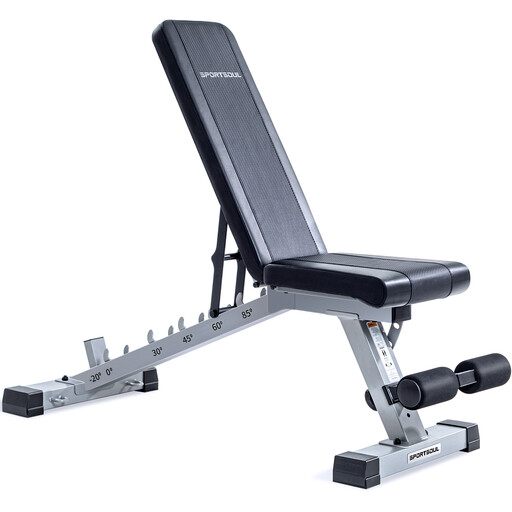
What sets it apart: This model combines flexibility with a space-saving design. The backrest and seat are multi-adjustable, allowing for exercises in flat, incline, and decline positions. The alloy steel frame is designed for a weight capacity of up to 277 kg. A special feature is the padding made of breathable synthetic leather with a latex layer, which the manufacturer claims helps reduce heat build-up during intense workouts. Thanks to its folding mechanism and integrated wheels, the bench is easy to move and store.
Pros:
Best for: This model is an excellent choice for beginners and intermediate users looking for a versatile and adjustable strength training bench for varied dumbbell workouts, who also value space-saving storage.

What sets it apart: This multi-function weight bench is designed for users seeking a comprehensive piece of training equipment. It features a 7-position adjustable backrest and a 4-position adjustable preacher curl pad. Additionally, it includes a detachable leg extension/curl attachment and an integrated barbell rack suitable for both standard and Olympic bars. The dynamic weight capacity is 277 kg, while the static capacity is rated by the manufacturer at up to 862 kg.
Pros:
Best for: Ideal for ambitious home users who want an all-in-one machine for a full-body workout and have enough space for a larger workout bench.
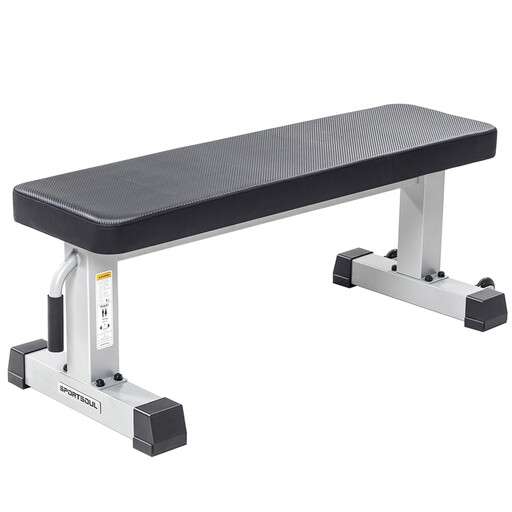
What sets it apart: This flat bench focuses on the essentials: stability and durability. The carbon steel frame provides a solid foundation for compound exercises and is rated for a load of up to 277 kg. Like the other SPORTSOUL models, the ergonomically shaped pad is made of breathable synthetic leather with a latex layer. Despite its robust construction, the bench is relatively lightweight at 14.8 kg and can be easily moved thanks to integrated wheels.
Pros:
Best for: This flat bench is the right choice for strength training purists who need an extremely stable and reliable bench for heavy compound lifts like the bench press or rows and can do without adjustment features.
If these recommendations don't include the perfect model for your individual needs, or if you're looking for other accessories like dumbbells or mats, it's worth exploring our wider range.
Discover our selection of Fitness Accessories to complete your workout setup.
A weight bench significantly expands your strength training possibilities. Typical exercises include:
The required weight capacity depends on your body weight and the amount of weight you lift. A good rule of thumb is to add your body weight to your maximum training weight and then add a safety margin of at least 50 kg. For most home users, a bench with a maximum capacity of 250–300 kg offers sufficient safety and room for future progress.
The stability of a foldable weight bench depends on its build quality, not just the folding feature itself. High-quality models use sturdy steel frames and secure locking pins that ensure stability comparable to fixed benches when unfolded. Pay close attention to the solid construction of the hinges and locking mechanisms.