
Lieferung heute & morgen

Qualitätsgarantie

Willkommens-Angebote freischalten: KOSTENLOSE Lieferung | Bis zu 80 % RABATT | Kostenlose 30-Tage-JoyPlus-Testphase
App herunterladen
By Joybuy Product Recommendation OfficerDate: 2026-07-05
Whether you're washing dishes, cleaning the bathroom, or doing other household chores, your hands regularly come into contact with water, detergents, and dirt. This can dry out and irritate the skin, or even lead to allergic reactions. The right household gloves offer effective protection. However, given the variety of materials, sizes, and features, the selection can be overwhelming. This guide is designed to help you find the perfect gloves for your needs by presenting objective criteria and a curated selection of models.
To make an informed decision, there are a few fundamental aspects to consider. The following points will give you an idea of which features are relevant for your purposes.
The material is crucial for comfort, durability, and protection.
A well-fitting glove doesn't slip and allows for precise work. Pay attention to the correct size (usually S, M, or L) to avoid a fit that is too tight or too loose. Some models are flock-lined with cotton on the inside or have special linings that absorb sweat and increase comfort during extended use.
Depending on the application, additional features can be useful. Non-slip cleaning gloves have a textured surface on the fingers and palms, ensuring a secure grip on wet surfaces like dishes or tiles. A long cuff provides extra protection for the forearms against splashes of water and chemicals.
Here we present a selection of different rubber gloves, each suited for various household tasks due to their specific properties.
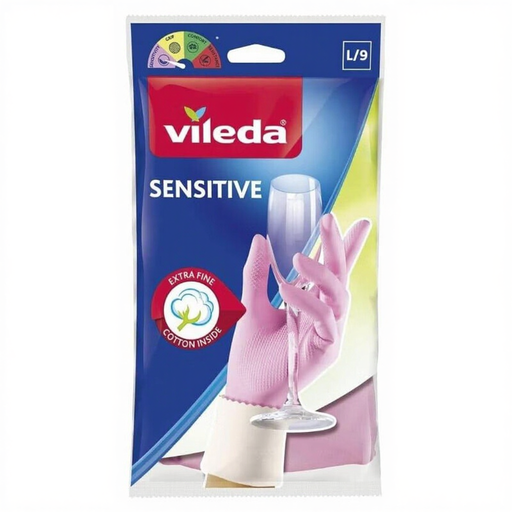
Why They Stand Out These Vileda gloves are made from an extra-fine latex that allows for a high degree of tactile sensitivity. The ComfortPlus inner lining with air cells is designed to absorb moisture and keep hands dry.
Benefits
Who They're For Individuals performing light cleaning duties or tasks that require a good feel in the fingertips, such as washing delicate dishes or dusting.
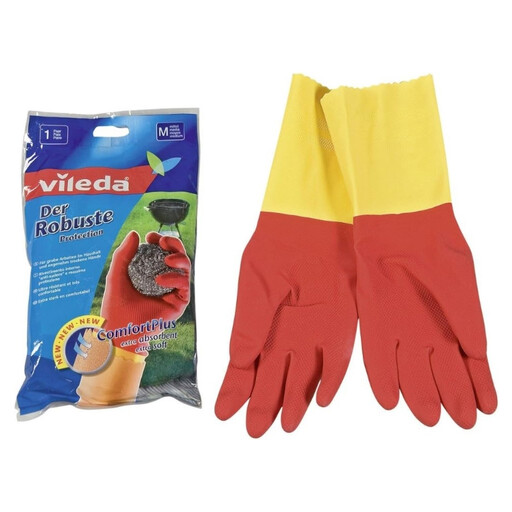
Why They Stand Out The Robust model, as its name suggests, is designed for more demanding tasks. A triple-layer construction with a neoprene coating offers special protection against cleaning agents, according to the manufacturer.
Benefits
Who They're For Users who perform heavy-duty cleaning, such as scrubbing the bathroom with stronger chemicals or gardening, where maximum protection is required.
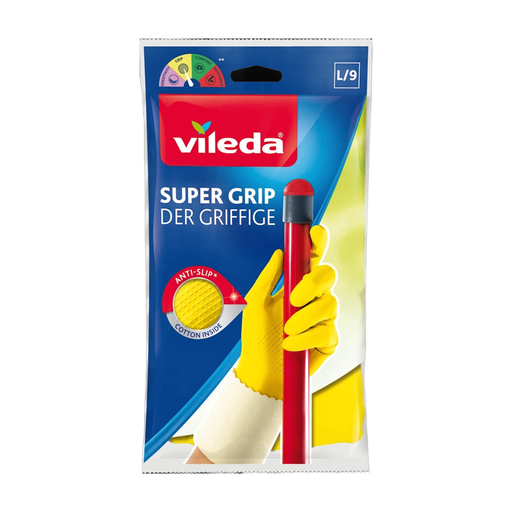
Why They Stand Out These gloves were specifically designed for a secure grip. A unique surface profile and a special wax treatment provide high grip, even with wet and slippery objects.
Benefits
Who They're For Ideal for washing dishes, glasses, and pots, where a secure hold is crucial to prevent breakage.
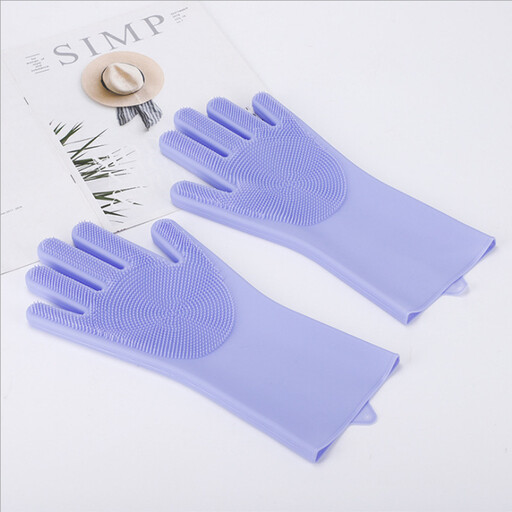
Why They Stand Out These silicone dishwashing gloves are a modern and exceptionally durable alternative to traditional latex gloves. The material is wear-resistant, waterproof, and heat-resistant.
Benefits
Who They're For Households looking for a durable, reusable, and allergy-friendly solution for kitchen tasks, especially for washing dishes with hot water.
If you haven't found what you're looking for in our selection or wish to compare more specialised models, you can find a wider range in our dishwashing gloves category. There, you can filter specifically by other materials, brands, and features.
There is no single "best" material; the choice depends on your needs. Latex offers flexibility and tactile sensitivity. Silicone is very durable, heat-resistant, and latex-free. Nitrile is a robust, chemical-resistant, and allergy-friendly alternative.
To extend the life of your gloves, you should rinse them with clean water after each use and hang them up to dry. Avoid direct sunlight or heat sources, as these can make the material porous. Store the dry gloves in a cool, dry place.
If you have a known latex allergy, you should definitely use latex-free gloves. Models made of nitrile, vinyl, or silicone are suitable alternatives. Look for the "latex-free" note in the product description.