
Lieferung heute & morgen

Qualitätsgarantie

Willkommens-Angebote freischalten: KOSTENLOSE Lieferung | Bis zu 80 % RABATT | Kostenlose 30-Tage-JoyPlus-Testphase
App herunterladen
Choosing a car seat is one of the most critical safety decisions a parent can make. A convertible i-Size car seat promises to be a long-term, safe, and cost-effective solution that grows with your child for many years. However, the market is saturated with marketing promises and complex technical data, making an informed decision difficult. This guide will help you identify common pitfalls and understand the crucial criteria for making your choice.
As your Joybuy Product Recommendation Officer, my mission is to filter through the market noise and provide you with objective, practical advice, ensuring your choice is based on facts, not just advertising claims.
Before you invest, be aware of the common issues that often only become apparent after the purchase.
To make a safe and long-lasting choice, focus on these three fundamental aspects.
The i-Size standard is more than just a sticker. It defines fundamental safety requirements that go beyond the older ECE R44 regulation:
An ISOFIX car seat connects directly to the dedicated anchor points in the vehicle's chassis. This minimises the risk of incorrect installation compared to securing the seat with the vehicle's seatbelt.
A convertible seat must adapt precisely to each stage of your child's development. Look for:
Here are some recommendations tailored to the different needs and lifestyles of modern families.
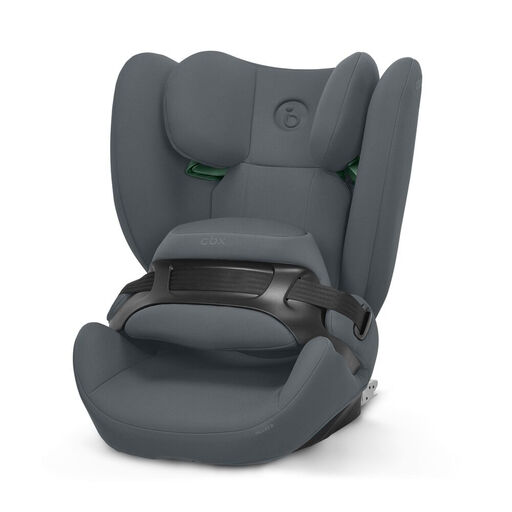
Why it's a great fit: Ideal for parents seeking a single, long-lasting solution after the infant carrier stage. This seat covers the period from toddler (approx. 15 months) to the end of the car seat requirement (12 years), eliminating the need for future purchases.
It bypasses the "one-size-fits-all" trap by specialising in the age group from 76 cm onwards, using an impact shield system for younger children instead of a 5-point harness. This is not a compromise but a specific safety feature for this growth phase.
Long-term use for over 10 years (76–150 cm). The adjustable impact shield reduces neck injury forces, according to the manufacturer. Easy installation with ISOFIX and Top Tether.

Why it's a great fit: Perfect for parents who prioritise back-friendly, hassle-free handling. The 360° rotation function makes getting your child in and out of the seat significantly easier, especially in tight parking spaces.
This model integrates the convenience of rotation into a stable overall system featuring a support leg. The integrated Linear Side-impact Protection (L.S.P. System) and i-Size certification ensure that convenience does not come at the expense of safety.
Full 360° rotation for easy entry and exit. Five recline positions in both directions for optimal comfort. One-hand adjustable headrest with 12 positions.
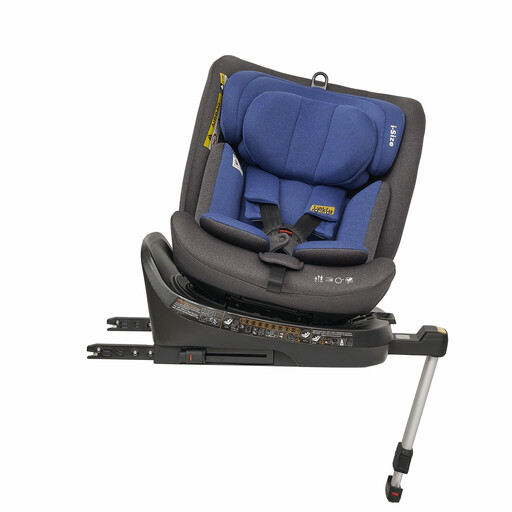
Why it's a great fit: For parents who want a single, flexible solution for the entire childhood, right from the start. This seat covers the complete range from birth (40 cm) to age 12 (150 cm).
It tackles the "one-size-fits-all" challenge with a modular system: a special newborn inlay ensures a proper fit for the smallest infants, while the 12-position adjustable headrest and adaptable harness allow for precise adjustments at every growth stage.
Extremely long usability from birth. Combines the benefits of a rear-facing and forward-facing seat with a 360° rotation feature. Includes a detachable sun canopy.
We have compiled a complete, up-to-date list of products that fully meet these strict selection criteria and EU safety regulations.
1. How long must my child travel in a rear-facing car seat? According to the i-Size (UN R129) regulation, rear-facing travel is legally required until at least 15 months of age and a height of 76 cm. However, safety experts and automotive clubs recommend keeping your child in this position for as long as possible, ideally up to the age of four. The reason is the superior protection it offers for a child's still-developing head and neck in the event of a frontal collision.
2. Does every i-Size car seat fit in every car with ISOFIX? Not necessarily. Although ISOFIX is a standardised system, factors like the angle of the vehicle's seats, the shape of the upholstery, or underfloor storage compartments can affect compatibility. It is essential to check the car seat manufacturer's vehicle compatibility list before purchasing. You can usually find this on the brand's website. A vehicle seating position marked as "i-Size" is universally compatible with any i-Size car seat, but checking is still recommended.
3. When should I switch from a harnessed car seat to a booster seat? The transition occurs when the child has outgrown their Group 1 or 2 car seat. This is typically when their shoulders reach the highest headrest position or they exceed the maximum weight or height limit for the integrated harness system (5-point harness or impact shield). The next step is a high-back booster seat (Group 2/3), which uses the vehicle's 3-point seat belt. This is used until the child reaches a height of 150 cm or the age of 12, as required by law in many European countries.