
Lieferung heute & morgen

Qualitätsgarantie

Willkommens-Angebote freischalten: KOSTENLOSE Lieferung | Bis zu 80 % RABATT | Kostenlose 30-Tage-JoyPlus-Testphase
App herunterladen
A consistent supply of ice cubes is a matter of convenience for many households and offices. Conventional freezer compartments often offer limited space and slow production. An ice maker is a dedicated solution that provides ice quickly and at the touch of a button. The choice of the right appliance depends on specific technical requirements and the intended use case—from occasional home use to regular demand in a shared office or for camping.
The decision to buy an ice maker should be based on an analysis of objective performance data and functional features. The following parameters are crucial for making an informed choice.
The performance of an appliance is expressed in two key metrics:
Most models for home use are designed as countertop ice makers and feature an integrated water tank that is filled manually. This allows for high flexibility in placement. The volume of the water tank (often between 1.5 and 3.5 litres) determines how frequently water needs to be refilled. Some models also offer the option to mount a standard water bottle, which simplifies the refilling process. A direct water line connection is primarily found in commercial settings.
For use as a portable ice maker, for example when camping or for parties in various locations, compact dimensions and a low weight are crucial. Models under 8 kg with an integrated carrying handle offer a clear advantage here. Check the dimensions (length x width x height) to ensure the appliance fits in its intended location.
Modern ice makers offer a range of features that enhance user convenience:
Based on an analysis of technical specifications and functional features, we present a few models here.
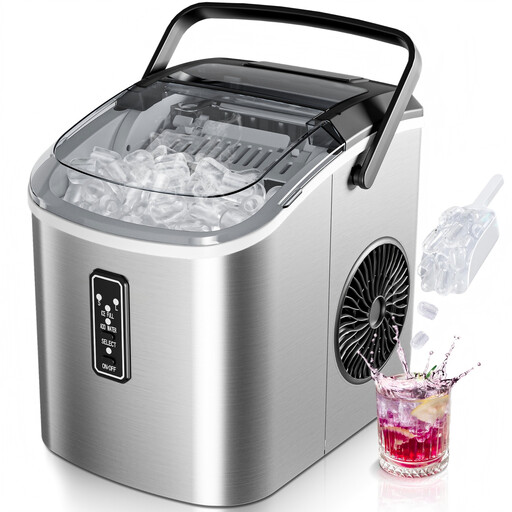
Why We Recommend This Product This model combines fast ice production with a highly portable design. Weighing only 6.3 kg and featuring a sturdy carrying handle, it is designed for flexible use cases. The simple operation via a clear control panel makes it a straightforward entry-level solution.
Pros
Who It's For This appliance is suitable for private households looking for a compact and easily transportable small ice maker. It is ideal for the kitchen, parties, or use in an RV.
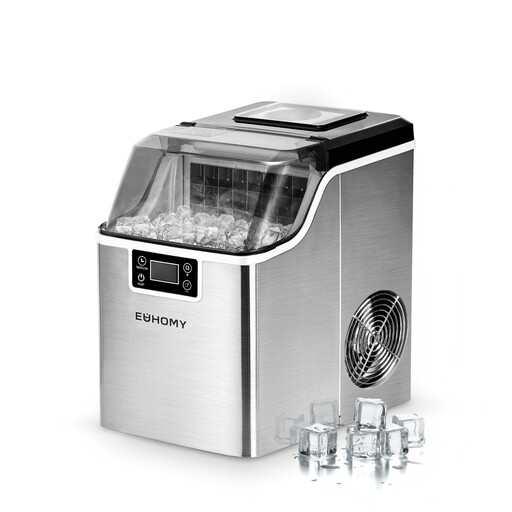
Why We Recommend This Product This model is aimed at users with a higher demand for ice. Its production capacity of up to 20.5 kg per day and flexible water supply (manually or via a mounted bottle) offer convenience and performance. The LCD display and timer function allow for precise operational control.
Pros
Who It's For This ice machine is a great choice for larger families, shared offices, or for hosting regular events. The high production volume ensures a continuous supply.
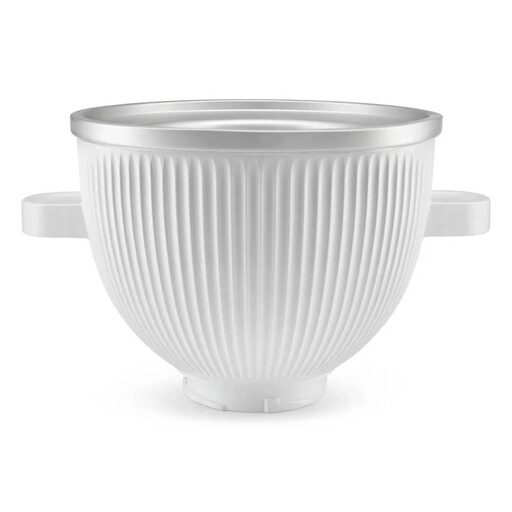
Why We Recommend This Product This product is not an ice cube maker, but an accessory for making ice cream. It is a space-saving and efficient solution for owners of a compatible KitchenAid stand mixer. Instead of a standalone appliance, it uses the motor power of the stand mixer to drive a 1.9-litre bowl with internal cooling fluid.
Pros
Who It's For This accessory is intended exclusively for owners of a compatible KitchenAid stand mixer who want to make homemade frozen desserts. It is not a solution for producing ice cubes for drinks.
The products presented here cover common requirement profiles. Should your needs demand more specific solutions, such as appliances with different capacities or designs, you will find a wider selection in our main category.
Discover more household ice machines
1. How does an ice maker without a direct water line work? A countertop ice maker has an internal water tank that you fill manually with potable water. A pump transports the water to chilled metal rods where the ice forms. Once the freezing cycle is complete, the cubes are automatically ejected into a collection bin. Sensors signal when the water level is low or the ice bin is full.
2. How often does an ice maker need to be cleaned? For hygienic ice production, it is recommended to clean the appliance regularly. With daily use, the remaining water should be changed daily. A thorough cleaning of the interior and the water tank should be done every one to two weeks, depending on the frequency of use. Models with a self-cleaning function simplify this process but do not replace the occasional manual cleaning with a suitable cleaning agent.
3. Which ice cube shape is suitable for which drinks? Most machines produce bullet-shaped or hollow ice cubes. Small, hollow cubes have a larger surface area and cool drinks like sodas or juices very quickly. Larger, solid cubes melt more slowly and are therefore ideal for cocktails, whisky, or other spirits, as they cool the drink without quickly diluting it.