
Lieferung heute & morgen

Qualitätsgarantie

Willkommens-Angebote freischalten: KOSTENLOSE Lieferung | Bis zu 80 % RABATT | Kostenlose 30-Tage-JoyPlus-Testphase
App herunterladen
Your own ice maker promises perfectly chilled drinks at any time—whether for a spontaneous garden party, a cocktail night with friends, or your daily iced coffee at the office. But the market is flooded with appliances whose marketing claims often fail to deliver in practice. Before you make a decision, it's crucial to know the typical pitfalls that can lead to a bad buy.
As your Joybuy Product Recommendation Officer, I'll help you define objective criteria for your selection. This guide focuses on the three most common problems with ice makers and shows you what to look for to find a durable and practical appliance that meets your needs.
Many machines look similar at first glance, but the differences are in the details. These three points frequently lead to disappointment after the purchase:
To avoid these pitfalls, you should focus on the following objectively measurable criteria. These define the true performance and user-friendliness of an ice maker for home use.
Check the specified production quantity per 24 hours. For an average household or occasional parties, machines with a capacity of around 12 kg per 24 hours are generally sufficient. If you're planning larger events, models with 15 kg or more are a worthwhile option. Most compact devices produce so-called bullet ice (cone-shaped ice cubes). These have a large surface area and cool drinks quickly, but they also melt slightly faster than solid cubes. Some machines offer a choice between two sizes, providing additional flexibility for different types of drinks.
Measure the intended installation spot carefully. A countertop ice maker should have enough clearance from walls and other appliances to ensure adequate ventilation. If you plan to use the device on the go, look for a low weight (ideally under 8 kg) and an integrated carrying handle. The size of the water tank determines how often you need to refill it. A tank with a capacity of 1.5 to 2 litres is a good benchmark for a balanced compromise between compactness and convenience.
A good ice maker should make daily life easier, not more complicated. Look for the following features:
Based on these objective criteria, we have identified several models that are well-suited for different use cases.
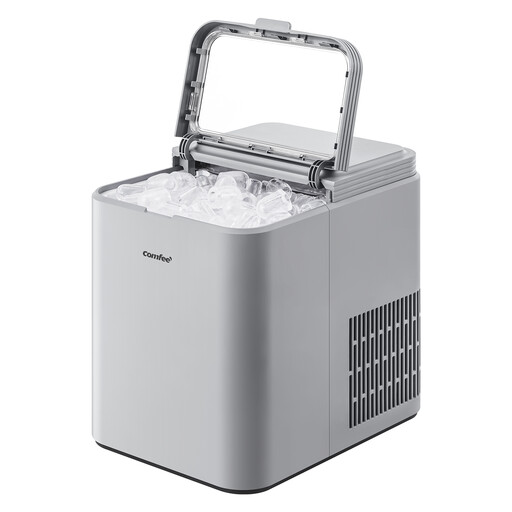
Why This Fits Their Persona: This model is ideal for users looking for a straightforward, space-saving solution for their spontaneous ice cube needs. With its compact dimensions, it fits on any kitchen countertop and is ready for use in no time.
The integrated self-cleaning function directly addresses the hygiene problem. The specified output of up to 12 kg per day is a realistic figure for home use and avoids inflated expectations.
Offers two selectable ice cube sizes and comes with an ice basket and scoop. The operation is streamlined to the essentials, making it very intuitive.
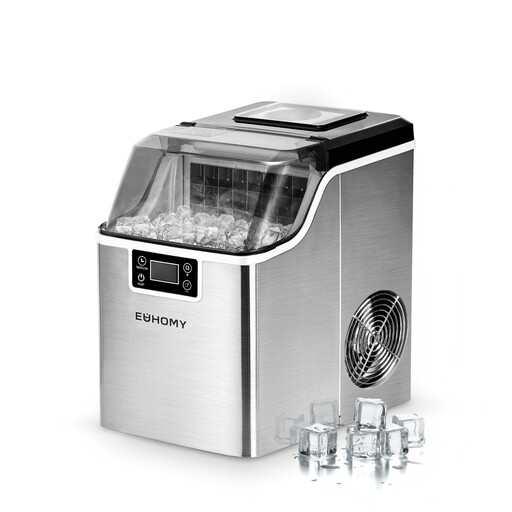
Why This Fits Their Persona: For anyone who regularly entertains guests or has a high ice consumption. The high production capacity of up to 20.5 kg per day ensures that the ice supply won't run out, even at larger parties.
This model bypasses the pitfall of insufficient performance with its high capacity. The timer function and the ability to adjust ice cube thickness offer a level of control that goes beyond basic entry-level models.
Two water-filling methods (manual or with a top-mounted water bottle) offer great flexibility. The LCD display and timer function allow for plannable and controlled ice production.
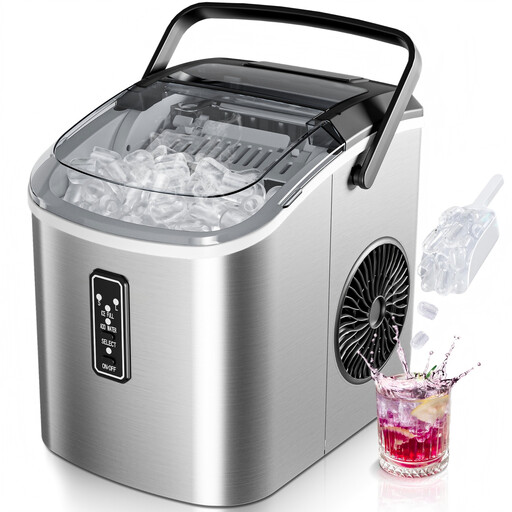
Why This Fits Their Persona: Designed for mobile use. Weighing only 6.3 kg and featuring a sturdy carrying handle, this machine can be effortlessly transported in an RV, on a boat, or to a campsite.
The low operating noise of under 45 dB prevents the machine from becoming a source of noise in small spaces like an RV. Despite its compact design, the unit features an automatic cleaning function.
The clear focus is on portability, thanks to its low weight and carrying handle. The simple, few-button operation is ideal for hassle-free use on the go.
We have compiled a complete, up-to-date list of products that fully meet these strict selection criteria and German safety regulations.
1. How often should an ice maker be cleaned? For optimal hygiene, it is recommended to clean the machine thoroughly after each extended use or at least once a week with daily use. Use the self-cleaning function regularly and then drain all residual water via the drain plug. Wipe the interior and accessories like the ice basket and scoop dry.
2. How loud is a countertop ice maker during operation? Most modern home-use machines operate at a noise level of under 45 to 50 decibels (dB). This is comparable to the quiet hum of a modern refrigerator or the ambient noise in a library. Pay attention to the manufacturer's specifications in the technical data if quiet operation is a priority for you.
3. Does the ice stay frozen in the collection bin? No, an ice maker is not a freezer. The collection bin is usually insulated to slow down the melting process, but it does not actively cool. Unused ice cubes will slowly melt over time. The meltwater flows back into the water tank and is reused for the next production cycle. For longer storage, the finished ice cubes should be transferred to a freezer bag or box and stored in the freezer.