
Lieferung heute & morgen

Qualitätsgarantie

Willkommens-Angebote freischalten: KOSTENLOSE Lieferung | Bis zu 80 % RABATT | Kostenlose 30-Tage-JoyPlus-Testphase
App herunterladen
An immersion blender, also known as a hand blender, is an indispensable tool in many kitchens. It purées soups directly in the pot, whips up smoothies in an instant, and helps prepare sauces or baby food. But the market is crowded, and not every product lives up to its promises. Before you make a decision, it's crucial to understand the common pitfalls that often lead to a poor purchase.
This guide will help you separate the wheat from the chaff and find a model that truly meets your needs. We'll focus on the critical features that really matter for long-lasting and satisfying performance.
Many purchasing decisions are based on marketing promises that have little relevance in practice. Pay close attention to these three points to avoid disappointment:
immersion blender set with a multitude of attachments seems attractive at first glance. In reality, many of these accessories are rarely or never used, are of inferior quality, and take up valuable kitchen space. Fewer, but higher-quality and more useful accessories are often the better choice.To find the right immersion blender for your needs, you should focus on the following practical criteria.
Instead of just looking at the wattage, it's wise to examine the technology of the blending shaft. Manufacturers like Braun, for example, use special bell shapes (e.g., PowerBell technology) that create a vortex effect. This actively pulls ingredients towards the blades, resulting in smoother, finer results while reducing splashing. A motor with variable speed settings or a turbo function also provides the necessary control to process both soft and hard ingredients with precision.
The blending shaft is the heart of the device. A stainless steel immersion blender is the clear recommendation for anyone who values hygiene, durability, and easy cleaning. It doesn't stain and can be used safely for hot soups directly in the pot. If you're looking for a hand blender for baby food, it's also crucial that all parts that come into contact with food are BPA-free. Also, pay attention to a sturdy click system for changing accessories; wobbly connections are a common annoyance on cheaper models.
An immersion blender with a chopper significantly expands its functionality. It can be used to quickly and easily chop onions, herbs, nuts, or even small amounts of meat. Look for a sufficiently large volume (at least 350 ml, preferably 500 ml) and a robust design. A whisk attachment is ideal for whipping cream or egg whites and often makes a separate hand mixer redundant. These two accessories offer the greatest added value for everyday kitchen tasks.
Here are some models tailored to different user profiles that meet the criteria mentioned above.
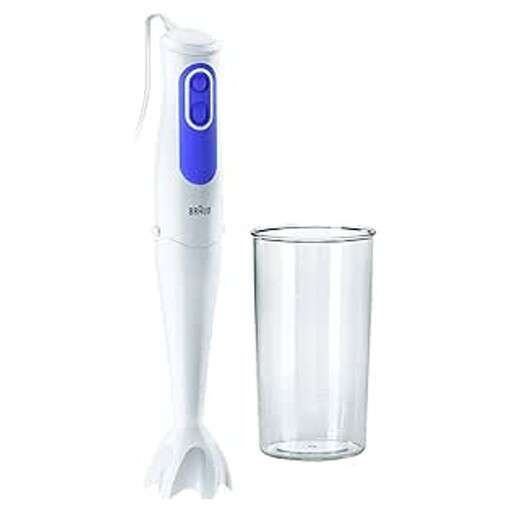
Why This Fits Their Persona: Ideal for users who want a reliable, straightforward device for basic tasks like soups and smoothies. It focuses on the core function of blending without unnecessary accessories.
This model avoids the accessory trap by focusing on the essentials. Its 700-watt motor, combined with PowerBell technology, is perfectly adequate for most everyday tasks.
Simple 2-speed control and SplashControl technology for clean operation. The beaker is BPA-free.
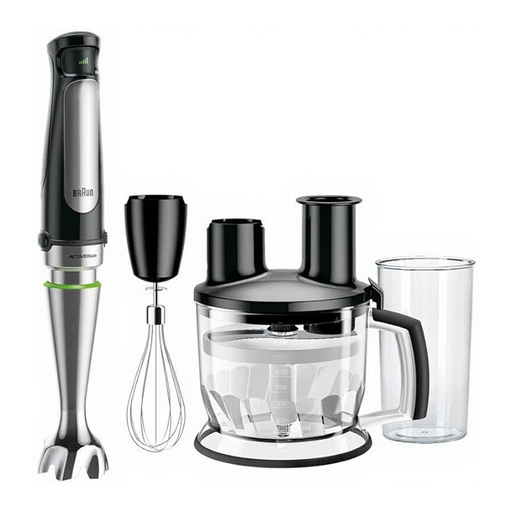
Why This Fits Their Persona: Perfect for those who cook regularly and need a powerful, versatile tool. With its large food processor attachment, this set can replace several individual appliances.
This model breaks through the wattage trap: its 1000 watts of power are used highly efficiently thanks to the ACTIVEBlade technology, where the blade moves up and down. The accessories are extensive but high-quality and practical.
ACTIVEBlade technology for the finest results with minimal effort. The 1.25-litre food processor attachment with cutting inserts is extremely versatile.
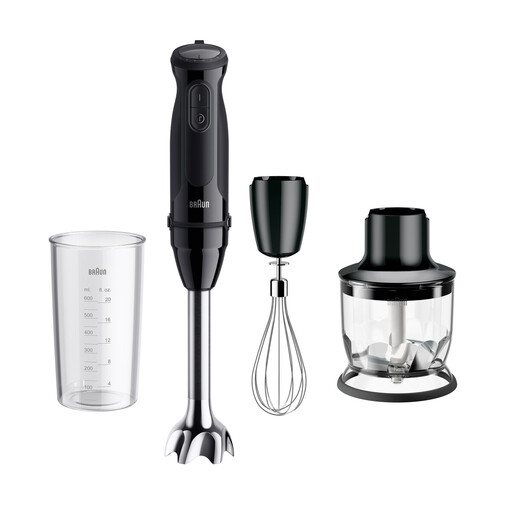
Why This Fits Their Persona: An excellent choice for parents who want to prepare fresh baby food. The focus here is on precise speed control and safe materials.
This model avoids the material trap by using BPA-free plastics and a stainless steel blending shaft. The 21 speed settings provide the precision that simpler devices lack.
PowerBell VPlus technology with an extra milling blade for exceptionally fine blending results. All parts that come into contact with food are BPA-free and dishwasher-safe.
We have compiled a complete, up-to-date list of products that fully meet these strict selection criteria and all relevant safety standards.
1. What's the most efficient way to clean an immersion blender? Cleaning is easiest right after use. Fill the beaker or a tall vessel with warm water and a drop of dish soap. Immerse the blending wand and turn it on for a few seconds. Then, rinse it under clean water. The detachable blending shaft and most accessories are usually dishwasher-safe, but the motor unit should only be wiped with a damp cloth.
2. Can you crush ice with an immersion blender? This depends heavily on the model and its motor power. Many standard immersion blenders are not designed for crushing hard ice cubes, as this can damage the blades and the motor. Some high-performance models, often with special ice-crushing attachments, can handle this. It's advisable to check the manufacturer's specifications carefully. For smoothies, using frozen fruit instead of whole ice cubes is often a gentler alternative.
3. What's the difference between an immersion blender and a countertop blender? An immersion blender is a handheld, compact device ideal for blending directly in a pot or a tall container. It's perfect for soups, sauces, and smaller quantities. A countertop blender is a larger kitchen appliance with a fixed base and an enclosed blending jar. It is generally more powerful and better suited for preparing large batches, very fibrous green smoothies, or grinding grains. The choice depends on your primary use case and the available space in your kitchen.