
Lieferung heute & morgen

Qualitätsgarantie

Willkommens-Angebote freischalten: KOSTENLOSE Lieferung | Bis zu 80 % RABATT | Kostenlose 30-Tage-JoyPlus-Testphase
App herunterladen
Purchasing a new pot for an induction hob can be a challenge. The market offers a plethora of materials, sizes, and coatings, which can make the selection process difficult. However, the right pot is crucial for your cooking results, energy efficiency, and the longevity of your cookware.
As your Joybuy Product Recommendation Officer, my mission is to provide you with clear and objective guidance. This article highlights the essential criteria for buying an induction pot and presents a selection of models with various features.
To make an informed decision, you should consider three main aspects: the material, the coating, and the right size for your household.
The material of the pot's base is decisive for its suitability on an induction hob. It must be ferromagnetic to absorb the energy from the cooktop.
The inner surface of the pot affects cooking performance and cleaning.
The size of the pot should match your hob and your needs. A small 20 cm pot is practical for single households, for heating sauces, or for small side dishes. For families or for preparing stews, a large induction soup pot with a capacity of five litres or more is a sensible addition. You should also check if the pot is suitable for all hob types in case you want to use it on other cooktops.
Here you will find a selection of products that cover different requirements and applications.
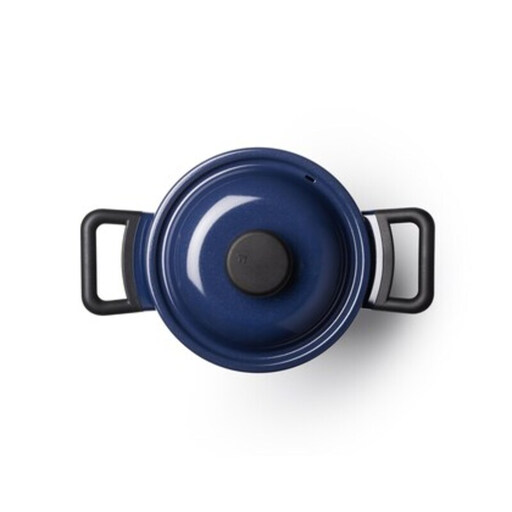
Why it stands out: The LocknLock Decore pot combines an appealing navy blue design with practical functionality. Its aluminium body ensures fast and even heating.
Pros:
Who is it for? Ideal for small to medium-sized households looking for a versatile and stylish pot for soups, stews, or pasta. With a 20 cm diameter and a 3.1-litre capacity, it's a practical all-rounder.
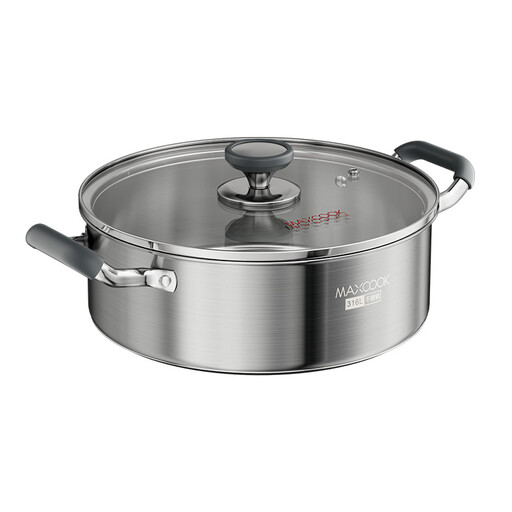
Why it stands out: This pot is distinguished by its 316L stainless steel construction and a right-angled design that, according to the manufacturer, increases capacity by 30% compared to round pots.
Pros:
Who is it for? A great choice for families or ambitious home cooks who need a large induction soup pot for cooking for several people or for meal prepping.
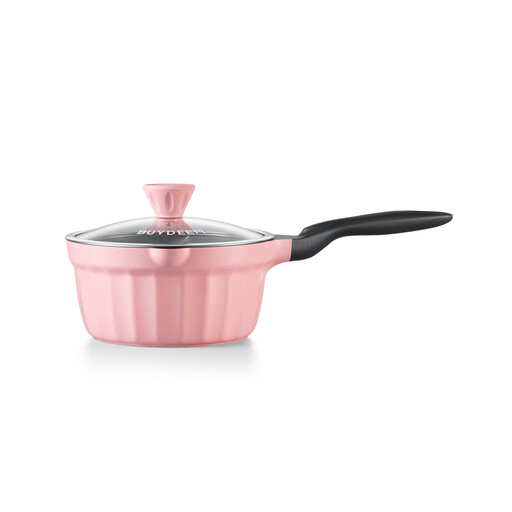
Why it stands out: This small pot from BUYDEEM's Cheflite series is made of cast aluminium and features a Swiss ceramic coating. An integrated pouring spout facilitates drip-free pouring of liquids.
Pros:
Who is it for? Perfect for singles, couples, or as a supplementary pot for preparing sauces, porridge, or small portions. Its thoughtful design makes it particularly user-friendly.
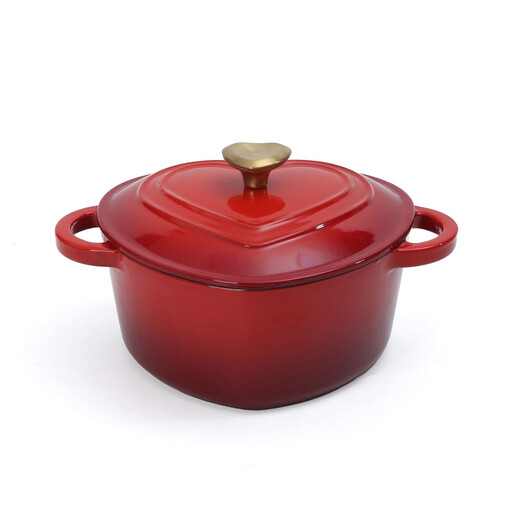
Why it stands out: This heart-shaped cast iron roaster is an eye-catcher in any kitchen. It combines the functional advantages of cast iron with a protective enamel coating.
Pros:
Who is it for? For anyone who loves to prepare braised dishes and values a pot that is both functional and decorative. Ideal as a casserole dish for slow cooking at low temperatures.
Was the right model for you not among this selection, or do you need a different size? A well-stocked selection offers further alternatives for different cooking styles and budgets.
Discover our entire range of stockpots with lids and find the perfect model for your kitchen.
A pot is suitable for induction if its base is magnetic. You can easily test this with a standard magnet: if it sticks to the bottom of the pot, the pot is induction-compatible. Additionally, many pots feature a coil symbol (a stylised spiral) on the base or packaging.
No, pots without a ferromagnetic base (e.g., pure aluminium, copper, or glass) will not work directly on an induction hob. However, there are adapter discs that can be placed between the hob and the pot. These discs heat up and transfer the heat to the pot, though this can result in some loss of efficiency.
A cast iron roaster is an excellent choice for induction hobs. The material reacts very well to the magnetic field and retains heat for an extremely long time and distributes it evenly. This is ideal for searing at high heat followed by long braising at a low temperature, as the heat is kept constant without the hob needing to run continuously at the highest setting.