
Lieferung heute & morgen

Qualitätsgarantie

Willkommens-Angebote freischalten: KOSTENLOSE Lieferung | Bis zu 80 % RABATT | Kostenlose 30-Tage-JoyPlus-Testphase
App herunterladen
Buying a new frying pan for your induction hob seems simple. But disappointment often follows: the pan heats unevenly, food sticks despite promises, or the coating peels off after just a few months. Many marketing claims don't stand up to the rigours of daily kitchen use. This guide shows you how to sidestep common purchasing traps and find an induction pan that truly meets your needs.
The 3 Most Common Pitfalls When Buying Induction Pans:
To make an informed decision, you should examine three core aspects of an induction frying pan. These determine its performance, durability, and cooking results.
The base is the most critical component of an induction pan. For the hob's energy to be efficiently converted into heat, the base must meet two criteria:
The choice of coating depends on your cooking habits and personal preferences.
Consider how you will use the pan in your daily routine.
Here are some recommendations tailored to specific user profiles that avoid the pitfalls mentioned above.
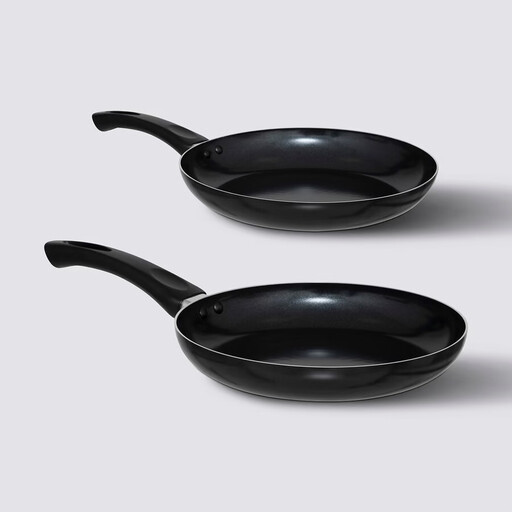
Why This Fits Their Persona: This set provides two common sizes for everyday meals, from fried eggs to roasted potatoes. It's a pragmatic solution for a basic kitchen setup without breaking the bank.
The aluminium body with an integrated stainless steel disc ensures solid and rapid heat conduction on induction hobs, avoiding the uneven "hot spots" typical of very cheap pans.
Offers a versatile induction cookware set for a foundational kitchen. The non-stick coating simplifies everyday cleanup.
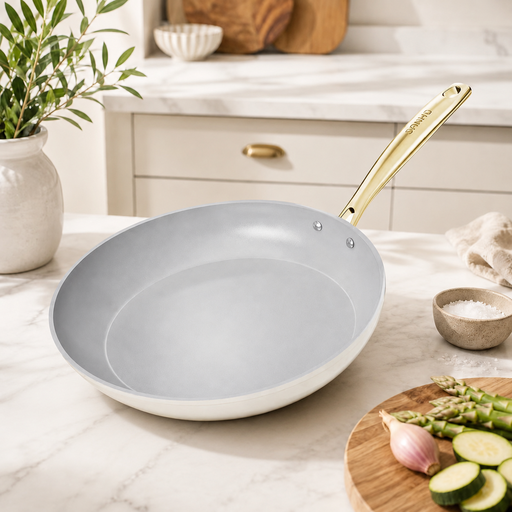
Why This Fits Their Persona: Ideal for users who want to consciously avoid PFAS/PFOA and are looking for a durable, robust pan for frequent use. Perfect for low-fat, healthy cooking.
The patented diamond-titanium ceramic coating is explicitly designated as a toxin-free pan and, according to the manufacturer, is more scratch-resistant than conventional ceramic coatings, which increases its lifespan.
The pan is oven-safe up to 260°C, and its encapsulated base ensures very even heat distribution, making it highly versatile.
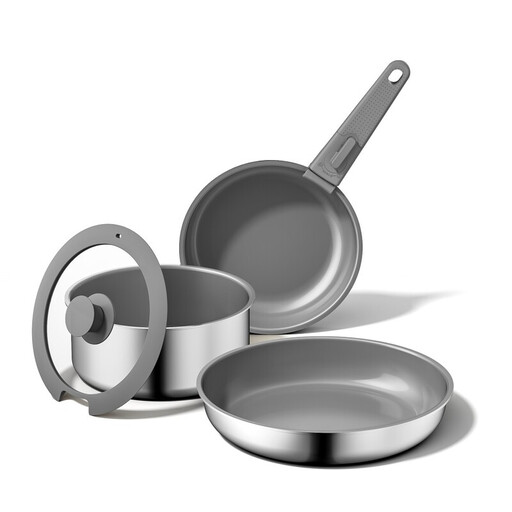
Why This Fits Their Persona: Perfect for anyone with limited storage, such as in small city kitchens, RVs, or for camping. The pots and pans are extremely stackable and space-saving thanks to the detachable handle.
Solves the problem of bulky pan handles that block valuable cupboard space. The secure detachable handle allows for compact storage and turns the pans into practical serving pans.
A complete, stackable induction cookware set with a ceramic coating. The pans are oven-safe (up to 250°C) and dishwasher-safe for maximum flexibility.
We have compiled a complete, up-to-date list of products that fully meet these strict selection criteria and safety regulations.
You can identify a good induction pan by its thick, perfectly flat base that is strongly magnetic. A multi-layered sandwich base (e.g., stainless steel-aluminium-stainless steel) is an indicator of high-quality heat distribution. Also, check that the materials of the handle and coating suit your cooking needs.
The lifespan heavily depends on the quality of the coating and how it's cared for. High-quality PTFE or ceramic coatings can last for several years with proper handling. To maximise their lifespan, avoid using metal utensils, clean the pan by hand with a soft sponge, and prevent overheating it while empty.
No, not every pan is oven-safe. Always check the manufacturer's specifications. The handle material is the deciding factor. Pans with stainless steel handles are often heat-resistant up to 260°C, while those with plastic or Bakelite handles are usually only suitable for lower temperatures (e.g., up to 70°C for keeping food warm) or not suitable for the oven at all. Pans with a detachable handle can generally be used in the oven without the handle.