
Lieferung heute & morgen

Qualitätsgarantie

Willkommens-Angebote freischalten: KOSTENLOSE Lieferung | Bis zu 80 % RABATT | Kostenlose 30-Tage-JoyPlus-Testphase
App herunterladen
Choosing a new hob is a major investment in your kitchen. An induction hob promises fast, safe, and energy-efficient cooking. However, the market is saturated with models boasting a vast array of features, making the choice difficult. Many buyers invest in unnecessary extras or overlook crucial technical details, leading to disappointment and unexpected costs.
As your Joybuy Product Recommendation Officer, I'm here to help you understand the essential criteria. This guide will show you how to navigate the common pitfalls and find a hob that truly suits your needs and your kitchen.
Before we dive into the technical details, it's important to be aware of the typical mistakes that often lead to a bad purchase.
To avoid these pitfalls, focus on the following three core aspects. These will determine if a hob is right for you.
The first decision concerns the design type. A standalone induction hob is the most flexible solution for modern kitchens. It has its own controls and can be installed anywhere in the worktop, independent of an oven. Paired hobs, on the other hand, are part of a set and are controlled via the controls on the oven situated below.
For maximum flexibility, especially in small kitchens, student flats, or for camping, a portable induction hob or a double induction hob is a practical alternative. These appliances simply plug into a standard 230V socket.
The standard width for built-in hobs is 60 cm. A 60 cm induction hob typically offers four cooking zones, which is sufficient for most households. However, pay attention not just to the number of zones, but also their flexibility.
The total power rating, specified in watts (W), determines how quickly your hob heats up. Models with 7,400 W or more typically offer a boost function, which can bring water to a boil in a very short time. Note that such powerful appliances require professional installation.
Instead of gimmicks, you should look for these practical features:
Instead of presenting a confusing list, we have selected models that meet specific requirements and avoid the pitfalls mentioned.
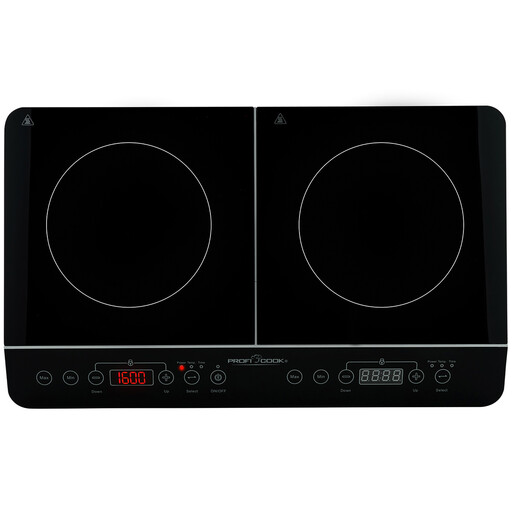
Why This Fits Their Persona: Ideal for students, singles, or as a supplementary hob in a family kitchen. This portable double hob offers flexibility without the hassle of installation and is perfect for small spaces or temporary use.
Completely sidesteps the installation error (Pitfall 2) as it plugs into a standard socket. It focuses on the core function of cooking without expensive, unnecessary extras (Pitfall 1).
Two hobs for simultaneous cooking; portable and ready to use instantly; simple operation via sensor-touch panel.
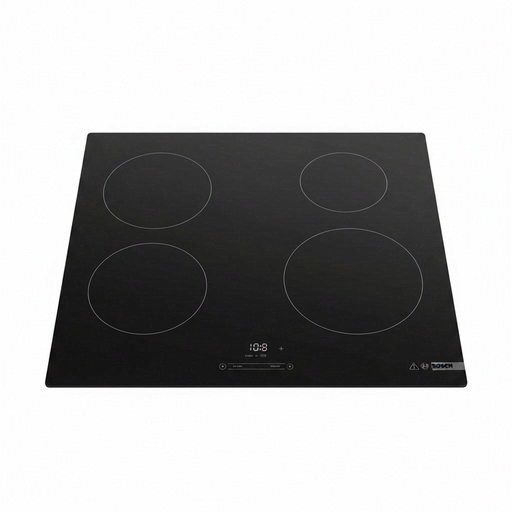
Why This Fits Their Persona: A solid choice for families and anyone looking to modernise their kitchen. This standalone Bosch hob in the standard 60 cm size offers proven quality and all the necessary functions for daily use.
Focuses on useful core features like PowerBoost and TouchSelect, rather than driving up the price with unnecessary gimmicks (Pitfall 1). The standard dimensions simplify installation into existing kitchens (Pitfall 2).
PowerBoost function for rapid heating on all four zones; 17 power levels for very precise temperature control; frameless design for seamless integration.
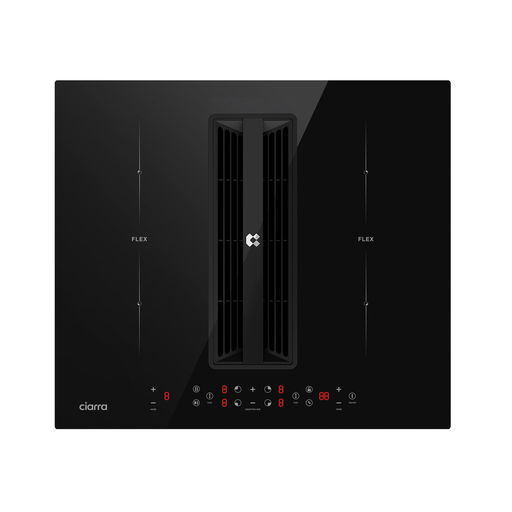
Why This Fits Their Persona: For those designing an open, minimalist kitchen who don't want to compromise on performance. This hob with an integrated extractor combines two appliances in one and offers maximum cooking flexibility.
Solves the problem of inflexible cooking zones (Pitfall 3) with two large FlexZones. The 2-in-1 function is a genuine practical advantage for kitchen design, not just a gimmick (Pitfall 1).
Integrated design saves space and eliminates the need for a separate extractor hood; FlexZones for maximum freedom in pan placement; Plasma filter technology for odour elimination.
Many users also consider buying a ceramic hob. While ceramic hobs are often cheaper to purchase and work with any type of cookware, induction technology offers clear advantages:
For most modern kitchens, an induction hob is the more future-proof and operationally efficient choice.
We have compiled a complete, real-time list of products that fully satisfy these strict selection criteria and UK safety regulations.
1. What cookware do I need for an induction hob? You need cookware with a ferromagnetic base. You can easily test if your existing pots and pans are suitable with a magnet: if it sticks to the bottom of the pot or pan, it's induction-compatible. Materials like cast iron, enamelled iron, and special induction-ready stainless steel will work.
2. Is cooking with induction more energy-efficient than with ceramic? Yes. With induction, heat is generated directly in the base of the cookware by an electromagnetic field. Almost no energy is lost to the glass-ceramic surface or the surrounding air. This results in shorter cooking times and lower energy consumption compared to ceramic hobs, where a heating element must first heat the glass plate.
3. Does an induction hob have to be installed by an electrician? Fixed, built-in hobs, especially high-power models (over 3,680 W), must be connected to a high-power supply (usually 400 V) by a qualified electrician. This is a mandatory requirement in many regions. In contrast, portable induction hobs with one or two zones are designed to operate on a standard household socket (230 V) and can be used without professional installation.