
Lieferung heute & morgen

Qualitätsgarantie

Willkommens-Angebote freischalten: KOSTENLOSE Lieferung | Bis zu 80 % RABATT | Kostenlose 30-Tage-JoyPlus-Testphase
App herunterladen
Buying a new wok for an induction hob seems straightforward at first. Yet, the reality in many kitchens paints a different picture: uneven heat distribution, a coating that wears out quickly, and disappointing cooking results. Before you buy a wok, it's crucial to understand the common pitfalls often hidden behind promising product descriptions.
As your Joybuy Product Recommendation Officer, I'm here to help you navigate these challenges. We'll focus on the facts and technical features that truly matter, ensuring your next wok becomes a worthwhile, long-term addition to your kitchen.
The 3 Most Common Mistakes When Buying an Induction Wok:
To avoid a bad purchase, you should check three core parameters. These determine the performance, durability, and overall cooking experience.
The material is crucial for heat conduction and retention. Each option has specific properties relevant to induction hobs.
For use on an induction hob, a flat bottom is essential to maximise contact with the cooking zone. The base must also be ferromagnetic so the hob's magnetic field can transfer energy. A thick, solid base not only distributes heat more evenly but also prevents the pan from warping at high temperatures.
The most common size for home use is a 32 cm wok. This diameter offers enough space to cook for a family (3–4 people) without ingredients spilling over the edge. A wok with a lid significantly expands its functionality. It allows for steaming, braising, and keeping food warm, and helps to lock in moisture and flavours.
Here are three recommendations tailored to different needs and cooking styles, specifically designed to avoid the pitfalls mentioned earlier.
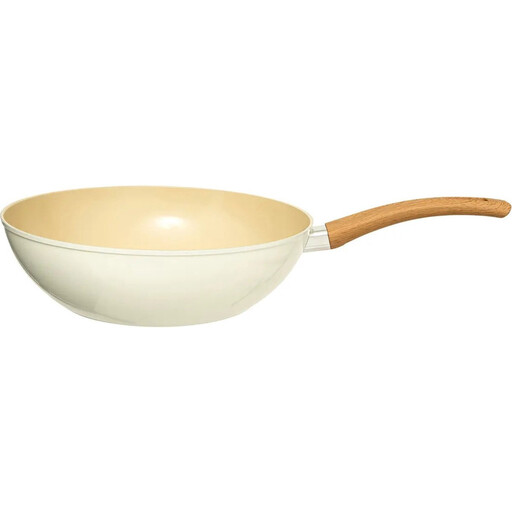
Why This Fits Their Persona: Ideal for those who want a straightforward, low-maintenance, and ready-to-use solution for daily cooking. Its light weight and non-stick coating make cooking and cleaning simple.
The dual-layer non-stick coating is designed for use on all hob types, including induction, and offers solid scratch resistance for everyday use, thus avoiding the trap of a quickly failing coating.
Lightweight body made from recycled aluminium; suitable for all hob types; easy to clean.
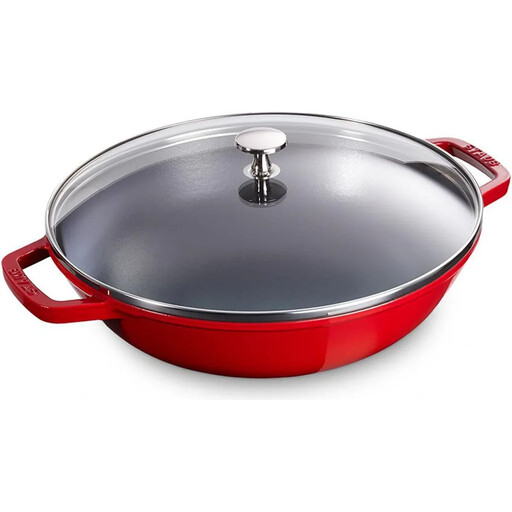
Why This Fits Their Persona: For ambitious home cooks who value material quality, durability, and maximum heat retention. Perfect for searing, braising, and deep-frying with consistent results.
The solid cast iron construction solves the problem of poor heat retention. The wok maintains a consistently high temperature even when cold ingredients are added, which is crucial for successful, authentic wok dishes.
Excellent heat retention; durable, matte black enamel interior; includes glass lid and draining rack; oven-safe.
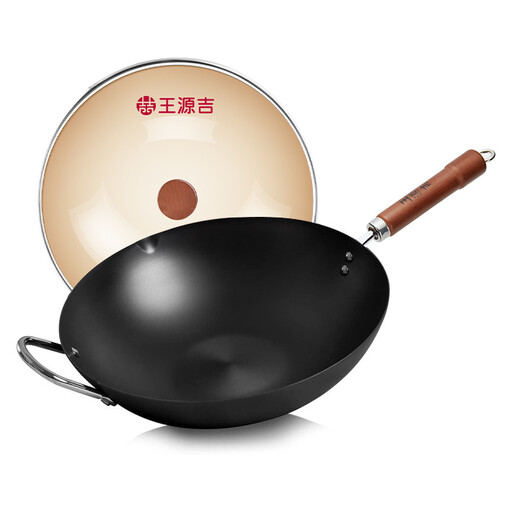
Why This Fits Their Persona: For cooks who appreciate traditional methods and are willing to maintain their pan. This wok allows for the creation of "wok hei" and develops a unique, natural non-stick patina over time.
This wok completely bypasses the trap of short-lived chemical coatings. Through seasoning and proper care, it develops a physical non-stick layer that is extremely durable and resistant to high heat.
Free of chemical coatings; develops a natural non-stick patina; excellent heat responsiveness; flat bottom for all hob types.
We have compiled a complete, up-to-date list of products that fully meet these strict selection criteria and safety regulations.
1. Does an induction wok need to be seasoned? That depends on the material. A coated wok pan (e.g., with Teflon, ceramic, or titanium) does not need to be seasoned and is ready to use out of the box. A wok made of carbon steel or uncoated cast iron must be seasoned before its first use. This process creates a natural, protective non-stick layer (patina) that improves with continued use.
2. How can I tell if my old wok is induction-compatible? The easiest way is the magnet test: hold a magnet to the base of the wok. If the magnet sticks firmly, the base is ferromagnetic and therefore suitable for induction hobs. Additionally, the base must be flat for efficient heat transfer.
3. Why isn't my wok getting hot enough on my induction hob? There are two main reasons for this. First, the diameter of the wok's base might not match the size of the induction coil. A base that is too small for a large coil (or vice versa) leads to inefficient energy transfer. Second, a wok made from low-quality material or with a base that is too thin cannot absorb and distribute heat effectively, resulting in poor heating performance.