
Lieferung heute & morgen

Qualitätsgarantie

Willkommens-Angebote freischalten: KOSTENLOSE Lieferung | Bis zu 80 % RABATT | Kostenlose 30-Tage-JoyPlus-Testphase
App herunterladen
An industrial-style wall-mounted clothes rail is more than just a storage solution; it's a design statement. It creates an open, airy look and transforms unused wall space into a functional, open wardrobe. However, the market is flooded with products of dramatically varying quality. Before you make a decision, it's crucial to understand the common pitfalls that often only become apparent after purchase.
Many buyers report three central problems:
black metal clothes rail, a cheap paint job can quickly chip or peel, which not only looks unsightly but can also lead to rust.To avoid these pitfalls, you should check three technical specifications. These determine the durability and functionality of your new industrial wall wardrobe.
The stability of a pipe clothes rail is directly dependent on its material and cross-section. Look for products made from robust steel or iron instead of lightweight aluminium alloys, which are intended for decorative purposes. A pipe diameter of at least 25 mm is a good indicator of a solid construction that can easily support heavier clothing. The pipe's wall thickness is also critical, but it is less frequently specified by manufacturers.
The stated maximum load capacity, for example 50 kg, is a laboratory value achieved only under ideal conditions: when mounted on a load-bearing wall made of solid concrete. For installation on plasterboard (drywall) or brick walls, you will need specialised mounting hardware.
wall clothes rail.A high-quality black metal clothes rail should feature a powder coating or a galvanic treatment. These processes create an impact- and scratch-resistant surface that protects against corrosion and ensures a uniform, matte appearance. Check the product description for details on the type of surface finish to ensure long-lasting aesthetics.
Instead of making a one-size-fits-all recommendation, we have selected products for specific user profiles.
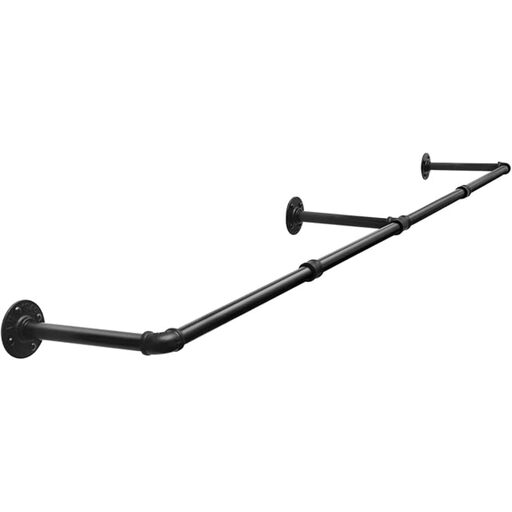
Why This Fits Their Persona: Ideal for users looking to create a single, long, continuous hanging space as an `open wardrobe` in an urban apartment. The 180 cm length offers ample room for a complete wardrobe without taking up any floor space.
The robust metal pipe construction and a stated maximum load capacity of 50 kg (according to the manufacturer, eSituro) address concerns about instability. Installation requires a careful choice of mounting hardware depending on the wall type.
Generous length for maximum capacity; clean, industrial aesthetic thanks to the pipe construction.
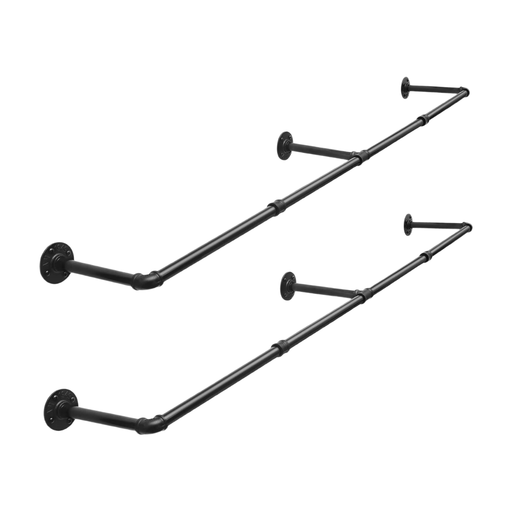
Why This Fits Their Persona: Perfect for designing an entire walk-in wardrobe or for users who need to organise a large amount of clothing clearly. The two rails can be mounted in parallel or one above the other to make optimal use of space.
The galvanised surface is described by the manufacturer, eSituro, as scratch-resistant, which alleviates concerns about chipping paint. The specified load capacity of 50 kg per rail allows for the planning of a heavy-duty system.
A set of two rails for flexible and expanded wardrobe solutions; uniform design for a harmonious room aesthetic.
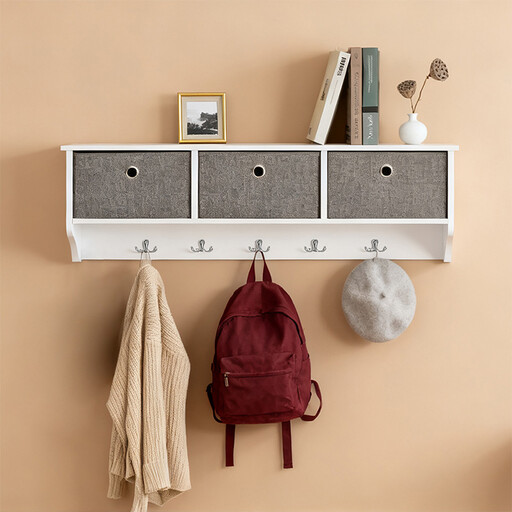
Why This Fits Their Persona: An excellent `space-saving wardrobe` for the hallway. It combines a clothes rail with hooks, a shelf, and baskets, offering an all-in-one solution for jackets, scarves, keys, and mail.
This model offers clear functional integration, avoiding the need to purchase multiple separate items. The use of FSC-certified wood (according to the manufacturer, SoBuy) is a verifiable quality mark for material origin and sustainability.
Multifunctional solution with a rail, hooks, shelf, and baskets; material from responsible forestry.
We have compiled a complete, up-to-date list of products that fully meet these strict selection criteria and safety standards.
The choice depends on your wall. For reinforced concrete, the included heavy-duty anchors are often sufficient. For plasterboard walls, metal cavity wall anchors that expand behind the board are required. For older brick walls, long frame fixings are often the best choice. Always check the condition of your wall before drilling.
A standard height is between 160 cm and 175 cm from the floor. This allows even long coats to hang freely. For a two-rail system, mounting heights of approximately 100 cm (for trousers) and 200 cm (for shirts and jackets) is a common configuration.
High-quality models use powder-coated or galvanised steel to prevent corrosion. A black metal clothes rail with an intact coating is very well protected indoors. Avoid scratching the surface to maintain this protection long-term.