
Lieferung heute & morgen

Qualitätsgarantie

Willkommens-Angebote freischalten: KOSTENLOSE Lieferung | Bis zu 80 % RABATT | Kostenlose 30-Tage-JoyPlus-Testphase
App herunterladen
An inflatable SUP board, also known as an iSUP, promises hassle-free fun on the water: it's easy to transport, quick to set up, and has a small storage footprint. However, the market is flooded with offers that seem attractive at first glance but quickly turn out to be poor investments. Before you make a decision, it's crucial to understand the common pitfalls often hidden behind tempting product descriptions.
As your Joybuy Product Recommendation Officer, I'm here to help you define objective criteria for your selection. This guide focuses on the facts, enabling you to make an informed decision and find the right stand-up paddling equipment for your needs.
Many buyers regret their decision after just the first season. The reason is often the same avoidable mistakes, fuelled by opaque marketing.
Stand Up Paddle Board Set at a very low price seems tempting. However, this is often where manufacturers skimp on the quality of the accessories. A paddle that's too heavy or flimsy, a leaky bag, or a low-performance hand pump that fails after just a few uses can significantly diminish your enjoyment and lead to expensive replacement purchases.SUP for beginners should be one thing above all: stable. A board that is too narrow leads to constant falls and frustration. Conversely, an overly thick board can be susceptible to wind and difficult to manoeuvre. The dimensions must match your body weight and intended use.To avoid these traps, you should focus on verifiable technical features. Two aspects are of central importance here: the board's construction and the pump's performance.
The rigidity and durability of an inflatable board depend directly on its internal structure and external dimensions.
The included pump determines how quickly and effortlessly your inflatable paddle board is ready for use. While a good manual dual-action pump is functional, an electric SUP pump represents a significant upgrade in convenience. An electric air pump for SUP gets the job done automatically in just a few minutes. Models with a battery offer maximum flexibility, as they don't rely on a power source like a car's cigarette lighter.
Here are some product configurations tailored to specific user needs that are designed to avoid the pitfalls mentioned above.
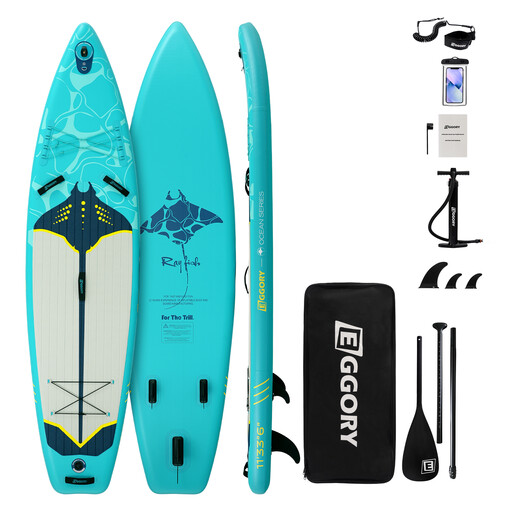
Why This Fits Their Persona: This board is designed for users who prioritise maximum safety and stability. It's ideal for first-timers on the water, for yoga exercises, or for bringing a child or dog along.
It avoids the "mismatched dimensions" trap with its generous 84 cm width, which ensures exceptional stability and prevents frustration for beginners.
The combination of 335 cm length and 84 cm width provides a stable platform with good tracking. The 15 cm thickness ensures high rigidity and load capacity.
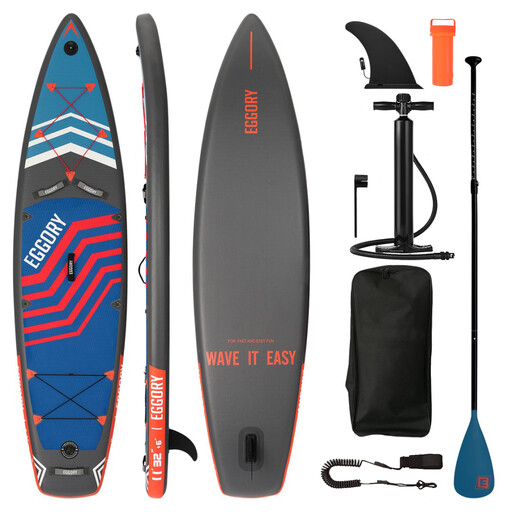
Why This Fits Their Persona: For paddlers seeking a versatile board for various conditions. It's suitable for relaxed tours on lakes as well as for small waves on the coast.
This board strikes a balanced compromise with its 81 cm width. It's stable enough for intermediate paddlers and athletic beginners without sacrificing glide performance.
The classic all-around shape (335x81x15 cm) makes it a versatile companion for different waters and demands. A solid choice for long-term paddling enjoyment.
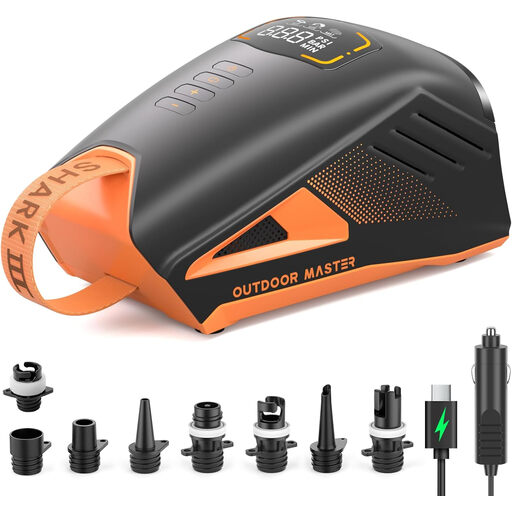
Why This Fits Their Persona: For anyone who would rather spend their time and energy on the water than on the shore. This accessory maximises convenience and is ideal for families or groups who need to inflate multiple boards.
This pump completely solves the problem of strenuous manual inflation. It prevents physical exhaustion before the fun has even begun.
The integrated 74 Wh battery allows for the inflation of up to 4 boards per charge. The auto-stop function upon reaching the target pressure prevents damage to the board.
We have compiled a complete, up-to-date list of products that fully meet these strict selection criteria and applicable safety regulations.
The recommended pressure for most iSUPs is between 12 and 15 PSI (approx. 0.8 to 1.0 bar). This value is crucial for the board's rigidity. Pressure that is too low will cause the board to bend in the middle, become unstable, and glide poorly. Always adhere to the manufacturer's specifications, which are noted on the board's valve.
Proper care is straightforward but important. Rinse the board with fresh water after each use, especially in saltwater. Let it air dry completely before rolling it up—do not fold it, to avoid creasing the material. Store it in a cool, dry place away from direct sunlight.
For people who paddle regularly, want to avoid physical exertion, or need to prepare multiple boards for family or friends, an electric air pump for SUP is a very worthwhile investment. It not only saves time and energy but also ensures a consistently optimal board pressure thanks to its digital pressure setting and automatic shut-off feature.