
Lieferung heute & morgen

Qualitätsgarantie

Willkommens-Angebote freischalten: KOSTENLOSE Lieferung | Bis zu 80 % RABATT | Kostenlose 30-Tage-JoyPlus-Testphase
App herunterladen
As a dog owner, you know that the weather can be unpredictable. A reliable, weatherproof outdoor shelter is therefore essential for your dog's health and well-being. An insulated dog house not only protects against the cold in winter but also provides a cool retreat in the summer.
However, choosing the right model can be a challenge given the many options available. This article is designed to offer you objective guidance. We will highlight the key features to look for and present a selection of models designed for durability, functionality, and protection.
To make an informed decision, it's helpful to understand the core features of a high-quality outdoor dog house. The following points are particularly relevant for use in climates with changing seasons.
The choice of material significantly influences the dog house's durability and comfort. A wooden dog house is a popular choice due to the material's natural insulating properties. Wood helps regulate temperature and creates a pleasant interior climate. Look for solid craftsmanship and weatherproof finishes to protect the material from moisture.
For dogs that tend to chew, a design with metal reinforcements can be a worthwhile investment. Models with a steel or iron frame enclosing the wooden edges offer increased stability and make the house significantly chew-proof. Such a wooden dog kennel combines the benefits of both materials.
An all-season dog house must withstand extreme weather conditions. The most important feature is effective insulation to keep your dog warm during the cold season. Some models come with factory-integrated insulation layers in the walls and roof.
In addition to insulation, weatherproofing is crucial. A weatherproof dog house should have the following features:
These features make the house a suitable dog house for winter while also protecting against summer heat.
The size of the dog house is crucial for comfort and heat regulation. A house that is too large is difficult for a dog to warm with its own body heat in winter. A house that is too small does not offer enough room to move.
As a rule of thumb, the dog should be able to stand, turn around, and stretch out comfortably inside. Especially with a dog house for large dogs, it's important to check the interior dimensions carefully and compare them to your dog's size.
Based on the criteria mentioned above, we have compiled a selection of dog houses that stand out for their construction and functionality.

Why it stands out: This model is distinguished by its fully enclosing steel frame. This eliminates exposed wooden edges that could invite chewing, significantly increasing durability and making the house exceptionally sturdy.
Advantages:
Who it's for: For dog owners seeking an extremely durable and chew-resistant dog house for small, medium, or large dogs, who value a solid, weatherproof foundation.
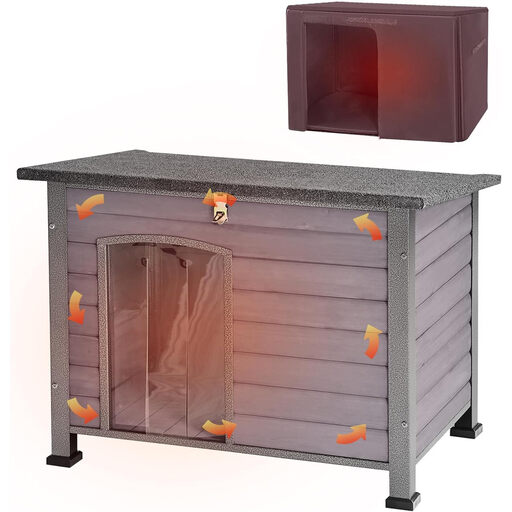
Why it stands out: This model is specifically designed as an insulated dog house. The integrated insulation in the walls provides enhanced thermal protection in winter, making it a true all-season solution.
Advantages:
Who it's for: Ideal for dog owners in colder regions or for anyone who wants to provide their dog with maximum comfort and protection during the winter months.
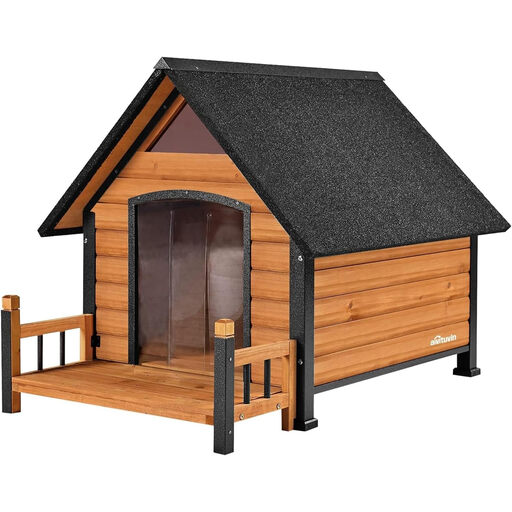
Why it stands out: The combination of a sheltered interior and a covered porch offers the dog versatile options for use. The robust iron frame reinforces the entire structure, ensuring high bite resistance.
Advantages:
Who it's for: For owners of small to medium-sized dogs looking for a versatile retreat with both sheltered indoor and outdoor areas.
If the models presented here don't exactly meet your needs, or if you're looking for a shelter for a specific breed like a German Shepherd, you can find a wider selection of models in our category.
Discover more outdoor dog houses
A non-insulated dog house can be retrofitted with styrofoam panels on the inner walls. Be sure to cover the panels with wood panelling to prevent the dog from chewing on them. A thick layer of straw or special thermal blankets on the floor also helps to retain heat. However, a factory-insulated dog house is often the more efficient and safer solution.
A combination of materials is often ideal. Solid, treated wood serves as a good natural insulator. A waterproof roof, for example, covered with asphalt shingles, and a raised base on feet are crucial for keeping out moisture. A metal frame can further reinforce the structure and protect it from chewing damage.
The house should be sized so the dog can comfortably stand up, turn around, and lie down stretched out. As a guideline, the interior height should be the dog's shoulder height plus approx. 10-15 cm. The length and width should allow the dog to stretch out comfortably. A house that is too large is harder to keep warm in the winter.