
Lieferung heute & morgen

Qualitätsgarantie

Willkommens-Angebote freischalten: KOSTENLOSE Lieferung | Bis zu 80 % RABATT | Kostenlose 30-Tage-JoyPlus-Testphase
App herunterladen
Proper care for cats, especially those living exclusively indoors, requires targeted stimulation of their natural instincts. Interactive cat toys help satisfy their hunting drive, reduce boredom, and promote cognitive skills. A lack of stimulation can lead to behavioural issues and health problems. This article analyses various types of interactive toys and presents a selection of products based on their technical specifications and functional features.
Selecting the right toy depends on the individual needs of your cat as well as objective product features. The following criteria are relevant for making an informed decision.
Material composition is a crucial factor for durability and safety. Common materials include:
Interactive toys can be categorised by the type of stimulation they provide:
Most electronic toys are powered either by batteries or an integrated rechargeable battery. Models with a USB-C charging port offer a modern and flexible charging solution. Ease of cleaning is also an important aspect. Removable and washable covers or smooth, wipeable surfaces facilitate hygiene.
The following selection is based on an analysis of product specifications and intended use cases.
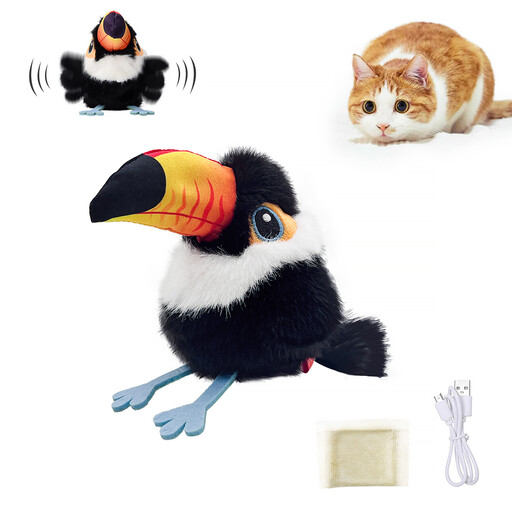
Why we're analysing this product: This smart cat toy combines multiple forms of stimulation. A patented motor enables dynamic wing movements that mimic a fluttering bird. The visual stimulation is complemented by realistic bird sounds. The product is designed as an enrichment toy for cats that provides entertainment even when the owner is away.
Pros:
Who it's for: This model is suitable for cats with a strong hunting drive, especially those that react to birds. It is a great option for owners looking for a toy for cats to play with alone that mentally and physically challenges their pet.
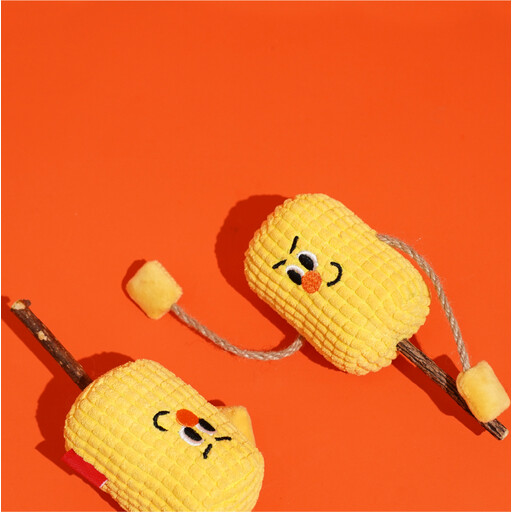
Why we're analysing this product: This toy focuses on the combination of chewing instinct and dental care. It is designed as a chew toy for cats and contains natural components that both encourage play and can contribute to oral hygiene.
Pros:
Who it's for: This product is ideal for cats that enjoy chewing and biting. It is aimed at owners looking for a simple, non-electronic solution for enrichment and to support dental health.
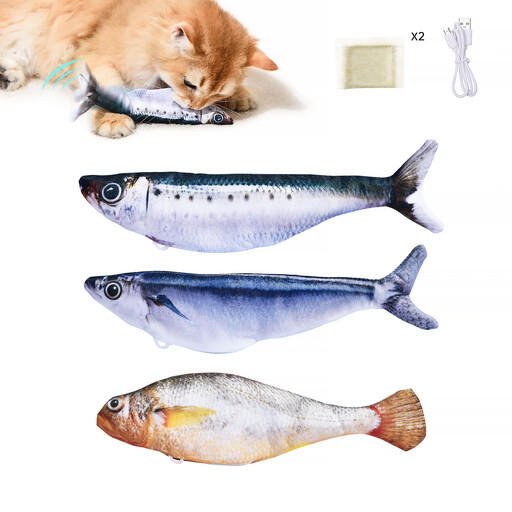
Why we're analysing this product: This set of three fish offers variety and uses smart activation technology. It falls into the cat puzzle toy category, as the pet learns to activate the toy itself through touch. The biomimetic tail movement simulates a wriggling prey animal.
Pros:
Who it's for: This set is intended for cat owners whose pets quickly lose interest in a single toy. The touch-activation makes it an excellent electronic cat toy for independent play.
For cats that are particularly responsive to botanical attractants, the market offers a wide range of products. You can find a specialised selection in our Cat Toys with Catnip category.
1. Are electronic cat toys safe? When used properly and under supervision, electronic cat toys are generally safe. It is important to regularly inspect the toy for damage, especially to the housing or moving parts. If visible damage is present, the product should be taken out of use to avoid risk of injury or ingestion of small parts. Always follow the manufacturer's safety warnings.
2. How often should you play with an indoor cat? For a well-balanced indoor cat, several short play sessions of 10 to 15 minutes each day are recommended. Interactive toys can supplement these sessions and also provide your cat with an opportunity for engagement when you are not present.
3. Why doesn't my cat respond to cat toys? Play behaviour is individual to each cat. Not every cat responds to the same stimuli. Reasons could include: the wrong type of stimulation (e.g., sound instead of movement), a lack of response to catnip (which is genetically determined in about 30–50% of cats), or a toy that is too loud or frantic in its operation. It can be helpful to test different types of toys to discover your own cat's preferences.