
Lieferung heute & morgen

Qualitätsgarantie

Willkommens-Angebote freischalten: KOSTENLOSE Lieferung | Bis zu 80 % RABATT | Kostenlose 30-Tage-JoyPlus-Testphase
App herunterladen
The decision to buy a juicer is often the first step toward a more health-conscious diet. The market offers a plethora of models, all promising fresh, nutrient-rich juices. However, many appliances prove impractical in daily use and end up collecting dust in a cupboard after a short time. This guide will help you identify the crucial features, bypass marketing traps, and make an informed choice.
Before diving into specific models, it's important to understand the typical problems that often only become apparent after the purchase.
To avoid a bad purchase, you should focus on two fundamental technical features that determine everyday usability.
The method of juice extraction is the most important distinction. Both systems have specific pros and cons.
Centrifugal Juicers: These devices shred fruit and vegetables with a fast-spinning cutting disc (often over 10,000 RPM) and force the juice outwards through a fine sieve.
Slow Juicers (Cold Press Juicers): These appliances, also known as cold press juicers, use a slowly rotating auger (typically 40–80 RPM) to crush the ingredients and press the juice through a sieve.
A practical appliance is characterized by a thoughtful design that facilitates daily use.
Instead of making a one-size-fits-all recommendation, we have identified models tailored to specific needs and usage habits.

Why This Fits Their Persona: Ideal for users who want to make a fresh juice quickly in the morning without spending a lot of time pre-cutting ingredients. The high speed is perfect for hard fruits and vegetables.
This model bypasses the slow preparation trap. The 75 mm feed chute processes whole fruits and minimises the effort required before juicing.
The 900-watt motor and two speed settings ensure fast and efficient juice extraction. Dishwasher-safe parts make cleaning easier.
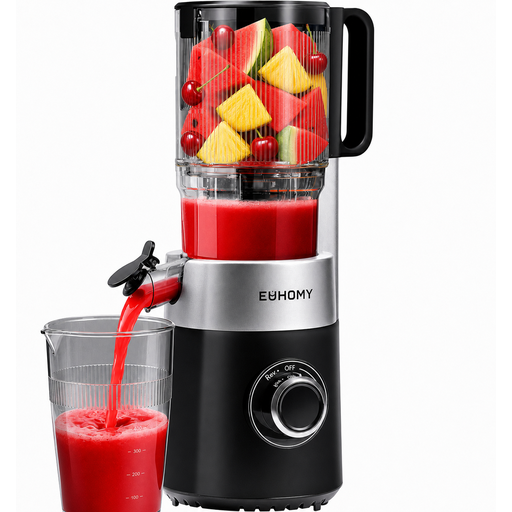
Why This Fits Their Persona: Perfect for anyone aiming for maximum nutrient retention. The slow-juicing technology works gently, while the huge feed chute maximises convenience.
This model resolves the conflict between gentle juicing and high preparation effort. The 135 mm feed chute is a rarity in slow juicers and makes the device extremely practical.
The combination of cold-press technology for high juice quality and an XXL feed chute for whole fruits offers great everyday utility. The manufacturer claims a juice yield of up to 99%.
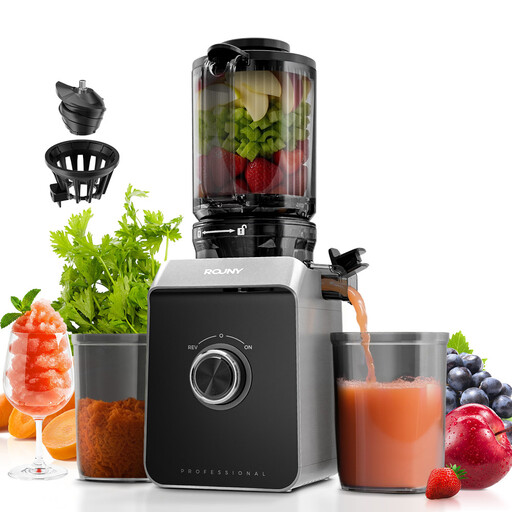
Why This Fits Their Persona: For users seeking a balanced solution: gentle juicing without the dreaded cleaning effort. The added function for making fruit sorbet increases its practical value.
This device directly addresses the "Easy to Clean" trap. The filter-free design replaces the traditional, hard-to-clean metal sieve, making rinsing under water significantly easier.
The combination of a filter-free construction and a 130 mm feed chute makes this model exceptionally user-friendly for regular use.
We have compiled a complete, up-to-date list of products that fully meet these strict selection criteria and German safety regulations.
1. How often do I need to clean a juicer? For optimal hygiene and to prevent the build-up of hard-to-remove residue, a juicer should be cleaned immediately after each use. Rinse the removable parts directly under running water before the fruit pulp dries.
2. Which juicer is suitable for green leafy vegetables like spinach or kale?Slow juicers are significantly better suited for leafy greens than centrifugal juicers. The slow pressing process efficiently extracts juice from the fine structures of spinach, kale, or herbs, whereas centrifugal models often just shred and incompletely press such ingredients.
3. Can I process hard vegetables like carrots with any juicer? Most electric juicers are designed for hard vegetables like carrots or beetroot. Centrifugal juicers process them very quickly due to their high speed. Slow juicers take a bit more time but often achieve a higher juice yield. Look for a sturdy construction and sufficient motor power for the respective model.