
Lieferung heute & morgen

Qualitätsgarantie

Willkommens-Angebote freischalten: KOSTENLOSE Lieferung | Bis zu 80 % RABATT | Kostenlose 30-Tage-JoyPlus-Testphase
App herunterladen
By the Joybuy Product Recommendation Officer
Deciding to incorporate more fresh juice into your daily routine is a positive step towards a healthier diet. However, the market for juicers is vast, and the options can be overwhelming. From high-speed centrifugal models to gentle slow juicers, the technologies and features vary significantly.
This guide is here to help. We'll explain the fundamental differences between juicer types and present a selection of models that cater to various needs. Our goal is to give you the information you need to make an informed choice, unswayed by marketing hype.
Before choosing a model, it's helpful to understand a few key criteria. These features determine how well a fruit and vegetable juicer will fit into your lifestyle.
The juice extraction method is the most important distinguishing factor.
Centrifugal Juicers: These machines operate at high speeds. Fruits and vegetables are shredded by a cutting disc, and the juice is then spun out through a fine mesh screen using centrifugal force.
Slow Juicers (Cold Press Juicers): Also known as masticating juicers or an electric juice press, these appliances use a slow-rotating auger. They slowly crush and press ingredients to extract the juice.
Beyond the core technology, it's the practical details that make a difference in daily use.
Here is a selection of models that meet different demands for speed, juice quality, and user-friendliness.
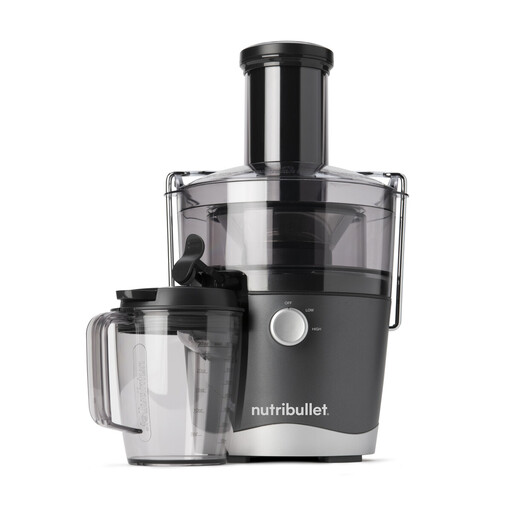
Why this model stands out The nutribullet Juicer is equipped with an 800-watt motor and offers two speed settings to efficiently process both soft and hard ingredients. The large 7.6 cm feed chute allows for juicing whole fruits, significantly reducing prep work.
Pros
Who is it for? This model is an excellent choice for individuals and families who value speed and convenience. It's an all-rounder that quickly and easily meets the daily demand for fresh juice.

Why this model stands out This centrifugal juicer from WOOX focuses on the essentials: fast and efficient juice production. With a 600-watt motor and a wide feed chute, it's designed for making a quick juice in the morning. The stainless steel housing gives it a robust look.
Pros
Who is it for? Ideal for beginners or users for whom speed is a top priority. Anyone looking to primarily juice hard produce like apples, carrots, or beetroot will find this to be a functional and straightforward device.
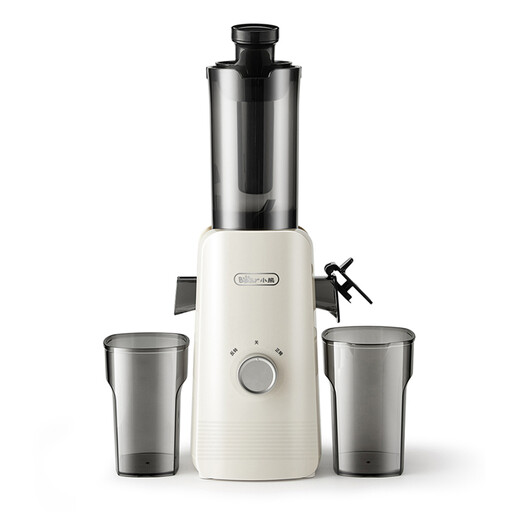
Why this model stands out The Bear YZJ-F01D6 is a cold press juicer designed for gentle juice extraction. According to the manufacturer, it achieves a juice yield of over 90%. A standout feature in this category is its 80 mm wide feed chute, which allows this slow juicer to process whole fruits.
Pros
Who is it for? This model is aimed at health-conscious users who want to maximise nutrient content and juice quality. It is particularly well-suited for processing leafy greens, herbs, and soft fruits, but it also handles hard ingredients thanks to its robust auger.
A juicer provides fresh juice, but what about the leftover pulp? Instead of discarding it, it can be creatively repurposed in the kitchen, for example, as an ingredient in baked goods, vegetable patties, or soups. If you're looking for ideas on how to use up fruit pulp, you might find inspiration in our selection of accessories and bakeware for [fruit cakes].
A centrifugal juicer operates at high speed (several thousand RPM) to extract juice quickly. A slow juicer, on the other hand, slowly presses ingredients with an auger (approx. 40-80 RPM). This process is gentler and takes longer, but it often results in a higher juice yield and less foam.
An easy-to-clean juicer is characterised by having few parts and dishwasher-safe components. Models like the nutribullet NBJ100G are explicitly designed with this in mind. As a general rule, the simpler the assembly and disassembly, the quicker the manual cleaning process.
The importance of wattage varies depending on the juicer type. For centrifugal juicers, a higher wattage (e.g., 600W or more) indicates a more powerful motor that can effortlessly process hard vegetables like carrots. For slow juicers, the wattage is often lower (e.g., 130-250W) because power is determined by torque and the auger's design, not speed.