
Lieferung heute & morgen

Qualitätsgarantie

Willkommens-Angebote freischalten: KOSTENLOSE Lieferung | Bis zu 80 % RABATT | Kostenlose 30-Tage-JoyPlus-Testphase
App herunterladen
Buying a juicer is often the first step towards a healthier lifestyle. But the market is crowded and full of marketing claims that rarely deliver on their promises. Many devices turn out to be impractical, difficult to clean, or produce disappointing results. As your Joybuy Product Recommendation Officer, I'll help you recognise the typical pitfalls and make an informed decision that fits your needs.
Before we dive into the technical details, let's look at the three most common reasons why many juicers end up gathering dust in a cupboard after a short time.
To make a good choice, focus on three verifiable criteria that make the difference between daily delight and daily frustration.
This is the most fundamental decision. Both systems are suitable as juicers for fruits and vegetables, but they have different strengths:
A juicer with a large feed chute (75 mm diameter or more) saves a significant amount of time, as apples or carrots can often be processed whole without needing to be chopped first.
For a juicer that is easy to clean, look for the following features:
A stainless steel juicer or models with stainless steel components are often more durable and hygienic than all-plastic devices. They are less prone to staining from deeply coloured vegetables like carrots or beetroot. However, BPA-free plastics are now standard in most brand-name appliances and are safe for your health.
Here are some models that represent a compelling option for different user profiles based on objective features.

Why This Fits Their Persona: Ideal for users who want to quickly prepare a fresh juice from hard fruits and vegetables like apples or carrots in the morning. The centrifugal principle delivers results in seconds, and the price is attractive for beginners.
The 600-watt power rating is appropriate for a centrifugal juicer, sidestepping the "wattage trap." The design is streamlined to the essentials, which keeps the number of parts to clean manageable, even though the sieve requires care.
High Speed: Juice preparation in a very short time. Large Feed Chute (7.6 cm): Reduces prep time, as whole fruits can be processed.
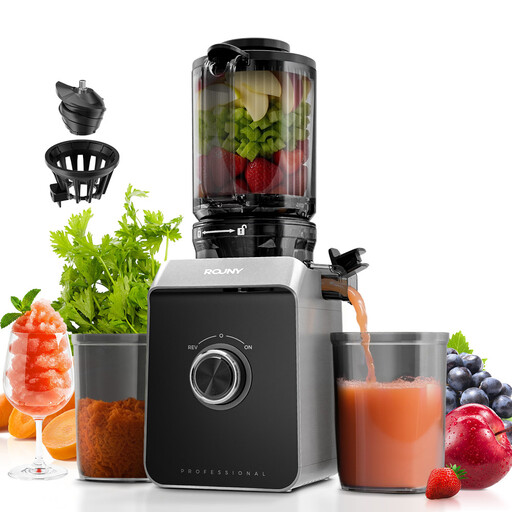
Why This Fits Their Persona: Perfect for users who value high juice quality and yield, especially from leafy greens. The cold press method works gently, and the device is designed for regular use.
The filter-free design is a direct answer to the biggest pain point: cleaning. Instead of a fine-mesh sieve, it has components that can be easily rinsed under running water.
Extra-Large Feed Chute (130 mm): Allows for juicing whole apples and oranges. High Juice Yield: The slow-juicing process extracts more juice and leaves behind drier pulp.
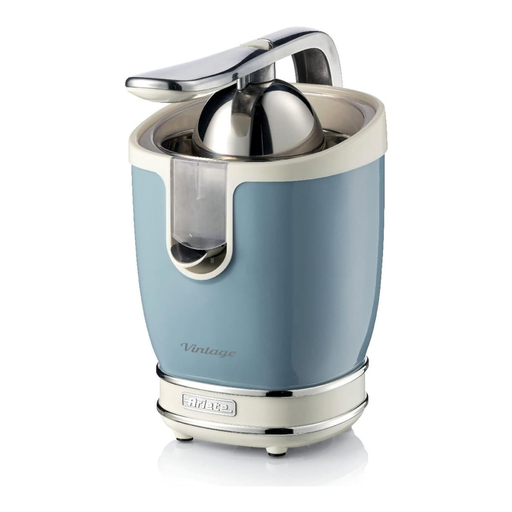
Why This Fits Their Persona: For anyone who mainly juices citrus fruits and values aesthetics and simple operation. The lever mechanism makes juicing effortless and safe, also ideal for a quick orange juice on Sunday morning with the family.
As a specialised citrus press, it has a very simple, robust mechanism without a complex sieve. Cleaning is straightforward, as only a few parts come into contact with the juice and they are easily removable.
Lever Mechanism: Allows for effortless pressing without exertion. Quiet Motor: The 85-watt motor operates quietly and won't disturb the morning peace. Two Juicing Cones: Suitable for large and small citrus fruits.
Specialised devices exist, particularly for your daily orange juice. We've compiled a list of products that meet our selection criteria.
1. How long does freshly pressed juice last? It's best to drink juice immediately after preparation. Contact with oxygen begins the degradation of nutrients. Stored in an airtight container in the refrigerator, juice from a centrifugal juicer is generally good for up to 24 hours. Juice from a cold press juicer (slow juicer) can often be stored for up to 48 hours without a significant loss in flavour, due to lower oxidation.
2. Which juicer is best for leafy greens like spinach or kale? For leafy greens, herbs, and wheatgrass, a slow juicer (cold press juicer) is the far better choice. The slow, crushing process can break down the cell walls of leafy greens more efficiently and delivers a much higher juice yield than centrifugal juicers, where the light material is often processed inadequately.
3. Are juicer parts dishwasher-safe? This varies greatly by model and manufacturer. On many modern devices, the removable plastic and stainless steel parts (e.g., juice container, pulp container, auger) are dishwasher-safe. However, the fine sieve and the motor base must almost always be cleaned by hand. Be sure to read the manufacturer's instructions before purchasing and before the first cleaning to avoid damage.