
Lieferung heute & morgen

Qualitätsgarantie

Willkommens-Angebote freischalten: KOSTENLOSE Lieferung | Bis zu 80 % RABATT | Kostenlose 30-Tage-JoyPlus-Testphase
App herunterladen
By Joybuy Product Recommendation Officer, August 30, 2026
A dead car battery is more than just an annoyance—it means lost time, missed appointments, and unnecessary stress, especially in the cold or in remote locations. A portable jump starter, often called a jump starter or car battery booster, promises a quick and independent solution. However, the market is confusing, and many devices don't live up to their marketing promises.
Before you make a decision, it's crucial to understand the most common pitfalls that can lead to a bad purchase.
To make an informed decision, you should check three core technical parameters. These determine whether a portable jump starter is suitable for your vehicle and your needs.
The most important metric is the starting current required to start your vehicle's engine. This depends directly on the displacement and type of engine.
Pay attention to the manufacturer's specifications for the maximum recommended engine size (in liters) for gasoline and diesel engines. When in doubt, always choose a model with a little more power reserve, especially if you live in a region with cold winters.
The battery capacity, specified in milliampere-hours (mAh), determines how many jump-start attempts are possible and how often you can charge your mobile devices. A capacity between 12,000 mAh and 20,000 mAh is a good benchmark for most use cases.
However, more important than pure capacity is the underlying battery technology:
A good 12V jump starter should have modern safety features like reverse polarity protection, short-circuit protection, and overheat protection.
If you are considering a multifunction device, check the specifications of the additional features carefully.
Here are some recommendations tailored to different user profiles that avoid the pitfalls mentioned.
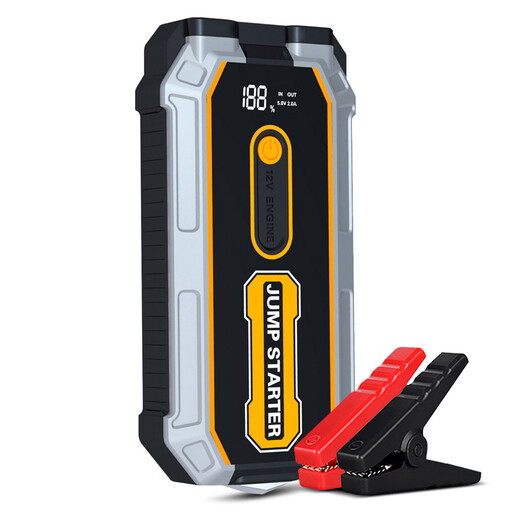
Why it fits: Ideal for drivers of small and mid-size cars who need a straightforward and very compact emergency solution for the glove compartment. It focuses on the core function of jump-starting without superfluous extras.
This model forgoes an underpowered compressor and focuses on a reliable jump-start function with clear performance data for common vehicle classes.
Extremely compact and lightweight: Weighing only about 330g and with small dimensions, it fits easily into any glove compartment. The LCD display clearly shows the charge status.
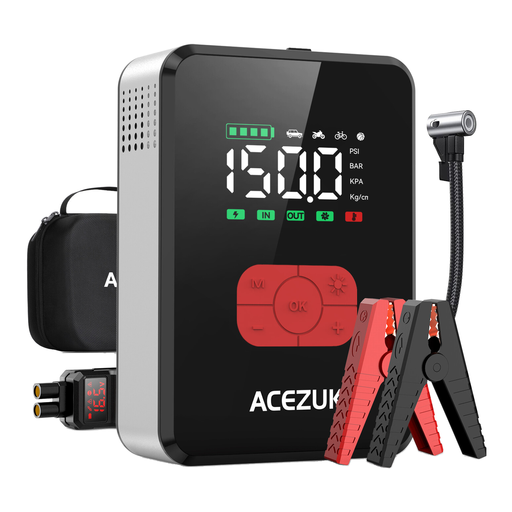
Why it fits: Perfect for travelers, campers, and families who want a single device for breakdowns and tire maintenance. It combines very high jump-starting power with a full-fledged compressor.
Unlike many combo devices, the integrated 150 PSI compressor with automatic shut-off offers practical performance that goes beyond just inflating balls.
High power for all vehicle types: With 7000A peak current, it's suitable for all gasoline and large diesel engines (up to 12L according to the manufacturer). The large display for the compressor is easy to read.
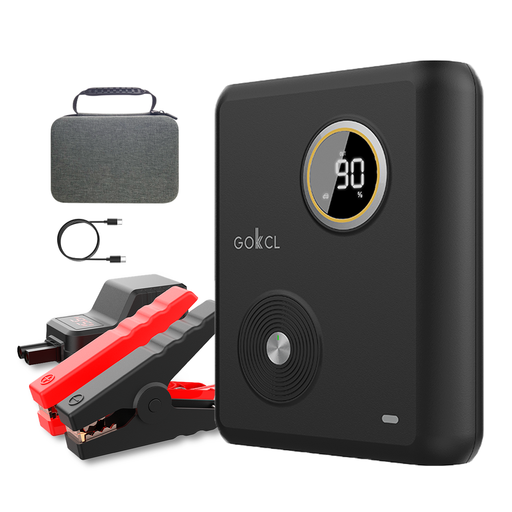
Why it fits: For drivers who prioritize absolute reliability and longevity. Ideal for people living in extreme climates or those looking for a device that remains ready for years without constant maintenance.
Sodium-ion technology solves the problem of self-discharge. According to the manufacturer, it has a standby time of up to 5 years, meaning it's still ready to use even after long-term storage in the car.
Extreme temperature resistance and longevity: Operates in a temperature range of -40°C to 80°C and, according to the manufacturer, offers a cycle life of over 6,000 charge cycles.
We have compiled a complete, up-to-date list of products that fully meet these strict selection criteria and safety regulations.
For conventional lithium-ion models, it is recommended to check the charge level every 2 to 3 months and recharge the device if necessary to maintain battery life. Models with sodium-ion technology have a significantly lower self-discharge rate and need to be charged less frequently, often only once a year or less, depending on the manufacturer's specifications.
Yes, but it is crucial to choose a sufficiently powerful model. Diesel engines require a much higher starting current than gasoline engines due to their higher compression. Pay attention to the manufacturer's specifications regarding suitability for diesel engines and the recommended maximum displacement. Models with a peak current of 2000A or more are a safe choice for most diesel cars and SUVs.
Yes, modern jump starters are equipped with smart clamps that have multiple protection mechanisms. These include reverse polarity protection, short-circuit protection, over-current, over-voltage, and over-heat protection. These systems prevent damage to the vehicle's onboard electronics as long as the device is connected correctly. An audible or visual signal will warn the user in case of incorrect use.