
Lieferung heute & morgen

Qualitätsgarantie

Willkommens-Angebote freischalten: KOSTENLOSE Lieferung | Bis zu 80 % RABATT | Kostenlose 30-Tage-JoyPlus-Testphase
App herunterladen
A dead car battery on a cold morning or a flat tire on a remote country road are scenarios every driver wants to avoid. Relying on roadside assistance or the help of other motorists can be a test of time and patience. Multifunctional jump starters with integrated air compressors offer a practical solution, ensuring you're prepared for such emergencies and always in control.
This article serves as a guide to help you choose the right device. We will introduce various models and explain the key technical features relevant to making an informed decision.
Selecting the right device depends on your vehicle type and individual needs. Three key criteria will help you objectively compare specifications.
Peak current, measured in amperes (A), is one of the most critical metrics. It indicates the maximum energy the device can deliver in a short burst to start the engine. A 12V jump starter is the standard for most cars, SUVs, and motorcycles.
Always check the manufacturer's specifications for compatibility with your engine (e.g., up to 8.0L Gas / 6.0L Diesel).
A car booster is often more than just a jump starter. Combining it with a tire inflator compressor turns it into a versatile tool. Pay attention to the maximum pressure (rated in PSI or Bar) and convenience features like a digital pressure preset with an auto-shutoff function. This prevents over-inflating your tires.
Additional features, such as an integrated power bank with jump start capability, are especially useful on the road. USB ports allow you to charge mobile devices like smartphones or tablets. A built-in LED flashlight with multiple modes (solid, strobe, SOS) enhances safety during a breakdown after dark.
The battery technology inside the jump starter affects its longevity, safety, and readiness for use. While lithium-ion batteries are common, newer technologies are gaining prominence.
A Sodium-Ion Battery, for example, is characterized by a high cycle life, low self-discharge, and a wide operating temperature range. According to manufacturer claims, these batteries are often safer because they do not pose a fire risk from oxygen release if damaged or exposed to high temperatures. This makes them a reliable option for storage in a vehicle through both heat and cold.
Here is a selection of devices that cover a range of different needs. The descriptions are based on product data provided by the manufacturers.
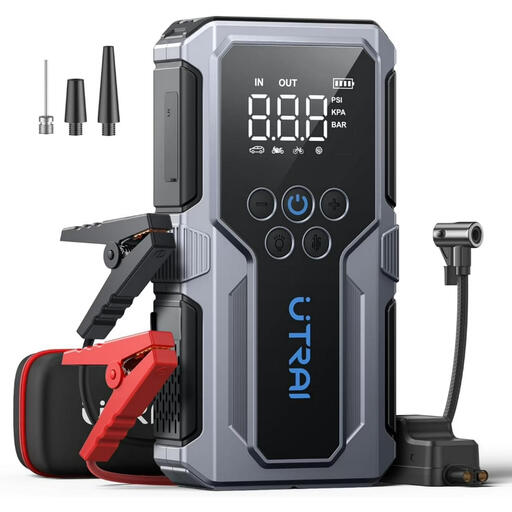
What sets this model apart: The UTRAI JS-9 is a 5-in-1 multifunctional device that combines high jump-starting power with a capable compressor. The digital LCD for presetting pressure and the auto-shutoff function make tire inflation straightforward and precise.
Advantages:
Who is it for? For drivers of cars, SUVs, and light commercial vehicles who are looking for a comprehensive all-in-one emergency solution that covers both jump-starting and tire maintenance.

What sets this model apart: The WOLFBOX 3000A focuses on delivering very high starting power and rapid recharging. With its 65W PD fast-charging capability, the device itself is quickly ready for action, making it an efficient companion.
Advantages:
Who is it for? For users who prioritize maximum starting power and fast recharging, and who either already own a separate compressor or don't need one. Ideal for owners of vehicles with large engines.
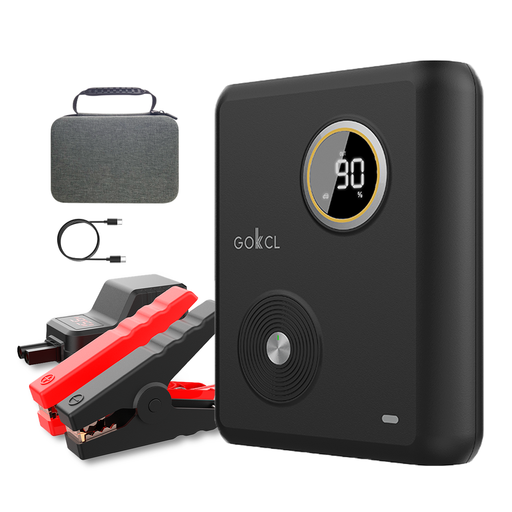
What sets this model apart: The GOKKCL GK03 utilizes innovative Sodium-Ion Battery technology. According to the manufacturer, this offers exceptional longevity, very low self-discharge, and a wide operating temperature range from -40°C to 80°C.
Advantages:
Who is it for? For safety-conscious drivers seeking a low-maintenance and exceptionally durable solution that performs reliably even in extreme weather conditions.
The models featured here cover common use cases. If you haven't found the perfect solution for your specific needs or vehicle model, it's worth exploring a broader range of products.
In our Best Battery Charger and Jump Starter category, you will find more devices with different performance features and specifications to compare.
1. Can I use a jump starter to start a diesel vehicle? Yes, this is possible as long as the device has a sufficiently high peak current. Diesel engines require more power to start than gas engines. Pay attention to the manufacturer's specifications on engine compatibility (e.g., "suitable for diesel engines up to 6.0L"). Models with 2000A or more are often a good choice here.
2. How often does a power bank with jump start capability need to be charged? This depends on the battery technology and its self-discharge rate. Conventional lithium-ion devices should be checked and recharged every 3 to 6 months to ensure they are ready for use. Models with a Sodium-Ion Battery have a significantly lower self-discharge rate and, according to manufacturers, require less frequent charging.
3. What is the advantage of a sodium-ion battery in a jump starter? According to manufacturer claims, sodium-ion batteries offer several advantages: enhanced safety, as they do not combust when damaged; a longer lifespan with more charging cycles; and better performance in extreme temperatures (both hot and cold), making them particularly suitable for storage in a car.