
Lieferung heute & morgen

Qualitätsgarantie

Willkommens-Angebote freischalten: KOSTENLOSE Lieferung | Bis zu 80 % RABATT | Kostenlose 30-Tage-JoyPlus-Testphase
App herunterladen
A dead car battery is more than just an inconvenience—it can derail your plans and lead to stressful situations, especially in the winter. A modern car jump starter, often called a car battery booster or a power bank with jump start capability, promises a quick fix. However, the market is saturated and filled with technical specifications that often confuse more than they clarify. Many devices don't live up to the promises on their packaging. Before you make a decision, it's crucial to understand the most common pitfalls.
Written by: Joybuy Product Recommendation OfficerLast updated: 30 August 2026
Manufacturers often advertise impressive numbers, but not all of them are relevant in practice. These three points frequently lead to poor purchasing decisions:
To make an informed decision, you should focus on the following practical and relevant metrics. These determine whether a 12V jump starter is suitable for your vehicle.
The most important value is the cranking current required to turn over your vehicle's engine. This depends on the engine type and displacement:
Check the manufacturer's specifications for the maximum recommended engine size (in litres) and ensure it matches your vehicle. When in doubt, choose a model with a little more power reserve.
The capacity, given in milliampere-hours (mAh), determines how many start attempts are possible on a full charge and how many times you can charge external devices. A capacity of 10,000 to 20,000 mAh is a good benchmark for versatile use.
Modern devices are more than just a portable jump starter. They are a multifunctional emergency car kit. Look for useful additional features:
We have identified models based on objective parameters that cover typical user profiles.
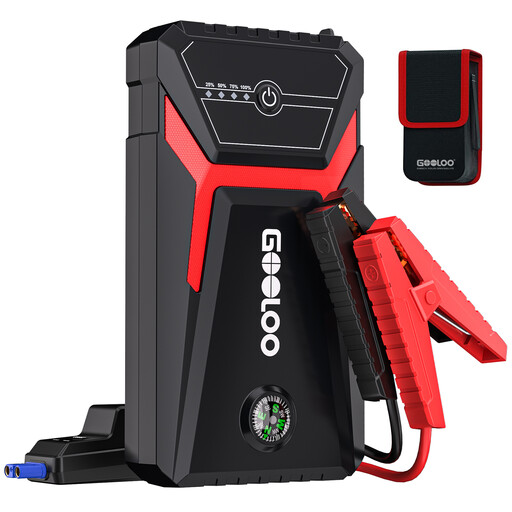
Why it's a good fit: Ideal for drivers of small to mid-size cars with petrol or smaller diesel engines who need a reliable and straightforward basic solution for emergencies, without paying for professional features they won't use.
With a 1500 A peak current, the device offers a realistic power rating for engines up to 6.0L petrol / 4.0L diesel and features 10 declared safety functions, including reverse polarity protection.
Compact design and low weight (0.88 kg). Includes two USB outputs and a 400-lumen LED light with 3 modes, making it a practical everyday companion.
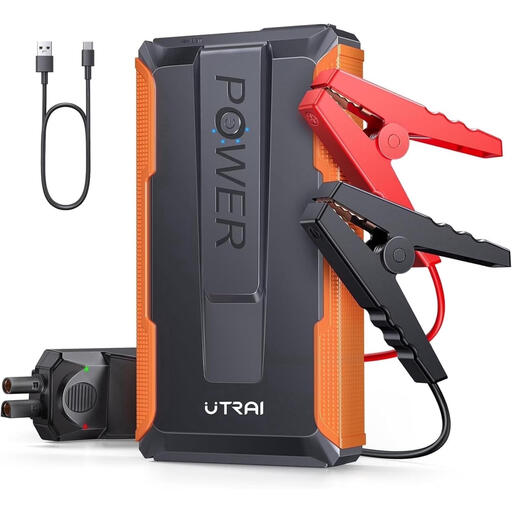
Why it's a good fit: A balanced solution for drivers of SUVs, vans, or larger saloons. It provides enough power for larger engines and serves as a fully-fledged power bank for the whole family on road trips, thanks to its fast-charging function.
The 13,200 mAh capacity is a realistic figure for a multifunctional device. The smart clamp with an audible alarm and LED indicator actively prevents user error and protects the electronics.
The USB output with Quick Charge 3.0 charges compatible devices significantly faster than standard power banks. The rugged housing is designed for operation between -20 °C and +60 °C.
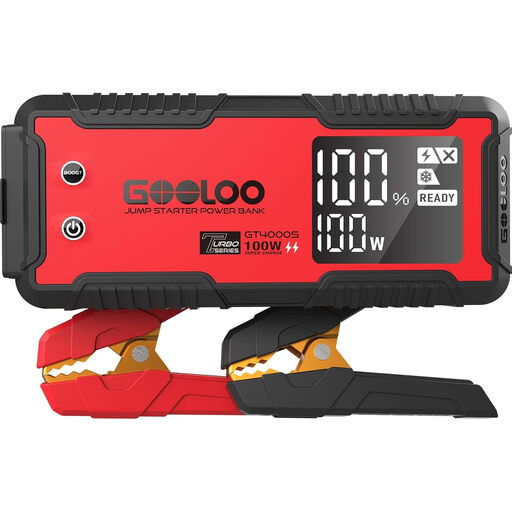
Why it's a good fit: For owners of vehicles with large-displacement diesel (up to 10.0L) or petrol engines, such as vans, RVs, or boats. Its high power and rapid recharging capability make it a reliable tool for demanding applications.
Instead of just advertising a high peak current, this device is explicitly designed for large engines. The 100W fast-charging function is a concrete, measurable advantage that goes beyond pure marketing figures.
100W Two-Way Fast Charging: According to the manufacturer, the device can be fully recharged in just 1.2 hours and can even serve as a fast charger for laptops. The 3.2-inch display clearly shows its status.
The requirements are particularly high for vehicles with diesel engines. We have compiled a selection of devices specifically designed for this purpose.
1. How often should you charge a jump starter power bank? Even when not in use, it is recommended to fully charge the device every 3 to 6 months. This maintains the health of the lithium-ion battery and ensures the jump starter is ready for an emergency. Most models have a charge level indicator.
2. Can a jump starter damage the car battery or electronics? When used correctly and with a device that has integrated safety features, the risk is minimal. Modern jump starters are equipped with reverse polarity, short circuit, and overvoltage protection. These mechanisms prevent power delivery if the clamps are connected incorrectly, thus protecting both the vehicle and the user.
3. What is the difference between a jump starter and jumper cables? A classic set of jumper cables requires a second vehicle with a working battery to transfer power. A portable jump starter, on the other hand, is a self-contained power source. It includes its own battery and allows you to start your vehicle without assistance from another car, making it more flexible and practical for emergencies.