
Lieferung heute & morgen

Qualitätsgarantie

Willkommens-Angebote freischalten: KOSTENLOSE Lieferung | Bis zu 80 % RABATT | Kostenlose 30-Tage-JoyPlus-Testphase
App herunterladen
A new kids' bookshelf should create order while also fostering your child's independence. But the market is flooded with models that look great at first glance but prove impractical or even unsafe in daily use. Before you make a decision, it's crucial to know the most common pitfalls that lead to frustration and unnecessary expense.
Many parents invest in shelves that start to wobble after a short time, are inaccessible to little hands, or have surfaces that wear out quickly. This guide will show you what to look for to find a durable, safe, and educationally valuable kids' bookshelf.
To avoid these pitfalls, you should base your choice on objective criteria. Three aspects are non-negotiable.
Your child's safety is the top priority. Therefore, be sure to look for the following features:
A good kids' bookshelf is more than just storage for the kids' room. It's a tool for fostering independence.
The material determines not only the look but also the robustness and maintenance effort.
Instead of making a blanket recommendation, we have selected models that meet the specific needs of families and adhere to the quality criteria mentioned.
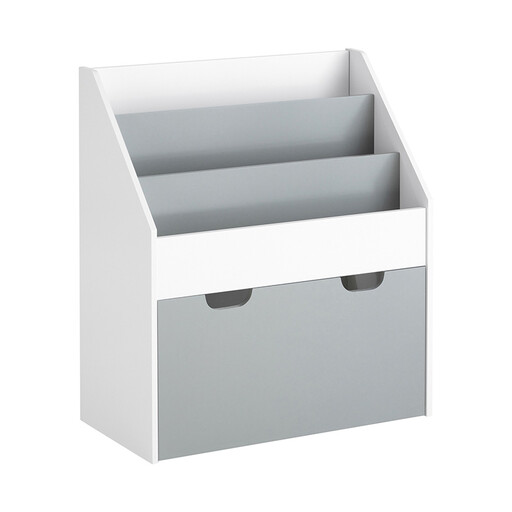
Why This Fits Their Persona: Ideal for parents seeking an all-in-one solution for books and toys without breaking the bank. The combination of a shelf and a mobile box is extremely practical for daily use.
It counters the design trap with its low height of 70 cm, allowing toddlers easy access. Softened corners and edges minimise the risk of injury.
The removable toy box on wheels encourages flexible play and makes tidying up easier. The unit thus combines a toy shelf with a bookshelf.
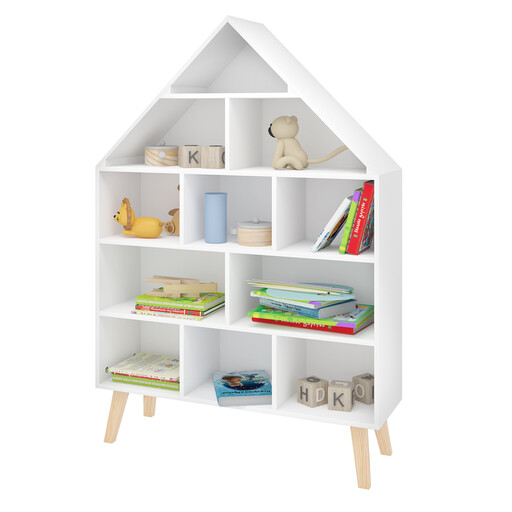
Why This Fits Their Persona: Perfect for families who value aesthetics and want to furnish the kids' room with a piece that invites both play and organisation. The house shape is a decorative eye-catcher.
This shelf avoids the "form over function" trap by combining a child-friendly height of 116 cm with a sturdy construction of E1-MDF and solid wood legs. It is both functional and safe.
The 11 open compartments of various sizes provide a clear structure for books and toys, helping children to keep things tidy on their own.
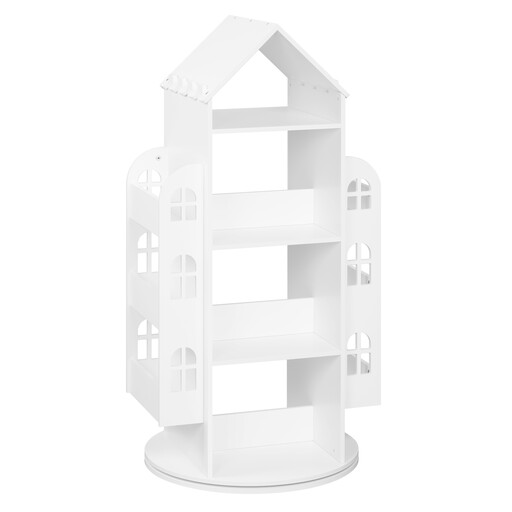
Why This Fits Their Persona: The solution for anyone needing to store many books and toys in a limited space. The rotating design is space-saving while offering an enormous amount of storage.
It solves the problem of impractical, deep shelves. Thanks to the 360° rotation, all items are easily accessible. The wide, stable base and rounded corners address the safety trap.
Maximum storage utilisation with 7 main compartments and 6 side pockets. The rotating feature turns finding and putting away items into an interactive experience.
We have compiled a complete, up-to-date list of products that fully meet these strict selection criteria and German safety regulations.
Every kids' bookshelf that comes with an anti-tip device typically includes a bracket or strap and screws. Attach the bracket to the top of the shelf and to the wall. Be sure to use wall plugs and screws appropriate for your wall type (e.g., concrete, drywall). Installation must be carried out according to the included instructions to ensure stability.
A Montessori shelf is beneficial for toddlers from as early as 1.5 to 2 years old. As soon as a child can stand and grasp things securely, they benefit from a shelf that gives them eye-level access to a limited, rotating selection of books and toys. This promotes concentration and the ability to make their own choices.
The ideal height depends on the child's age. For toddlers (2-4 years), the top usable shelf should be no higher than 70-80 cm. For preschoolers (4-6 years), the shelf can be up to 100-120 cm high. The important thing is that the child can safely reach and put back items without climbing or stretching.