
Lieferung heute & morgen

Qualitätsgarantie

Willkommens-Angebote freischalten: KOSTENLOSE Lieferung | Bis zu 80 % RABATT | Kostenlose 30-Tage-JoyPlus-Testphase
App herunterladen
By the Joybuy Product Recommendation Officer, August 30, 2026
A well-organised children's room not only fosters your child's autonomy but also creates a calm and inviting environment for play and learning. However, the search for the right kids' room bookshelf can quickly become overwhelming. Many products promise order but fail in practice to meet basic requirements. Before you make a decision, it's important to understand the most common pitfalls that lead to frustration and unnecessary expense.
To avoid these problems, you should focus on a few core parameters. These objective criteria will help you find a functional and safe kids' room storage shelf.
Keeping a low-profile kids' shelf is crucial. For toddlers and preschoolers (approx. 2-6 years), the total height of the shelf should ideally be under 100 cm. This allows them to reach the top shelves without help. A Montessori shelf follows this exact principle: all materials are presented at the child's eye level to support free choice and autonomy. Look for shelves that allow books to be placed with their covers facing forward. This sparks interest and makes it easier for children to choose.
Stability is non-negotiable. Look for the following features:
A thoughtful design combines different types of storage. A kids' shelf with a toy box is a particularly practical solution. Narrow compartments are excellent for displaying picture books, while a large, often removable box at the bottom provides space for building blocks, dolls, and other bulky toys. This combination of a toy shelf and bookshelf creates a central hub for toy storage and helps the child tidy up independently after playing.
Based on these objective criteria, we have identified several products suitable for different needs and room situations.
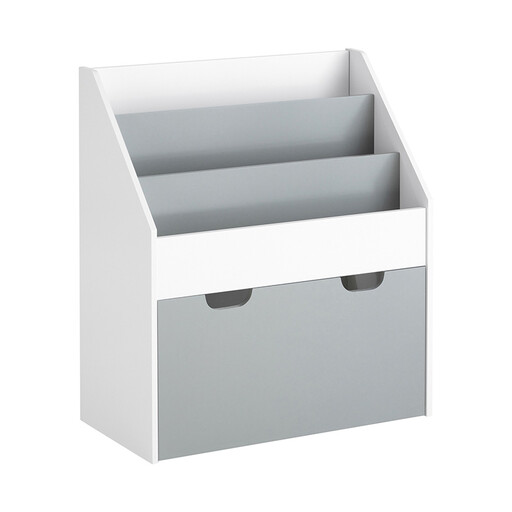
Why This Fits Their Persona: This shelf combines open compartments for books with a large, removable toy chest, addressing the two main sources of clutter in a single, compact piece of furniture.
At a height of 70 cm, it is easily accessible for toddlers. The manufacturer states the corners are soft-edged, and the compartments allow for a front-facing display of books.
The large toy box is on casters and can be completely removed for easy use. According to the manufacturer, the total load capacity is up to 25 kg.
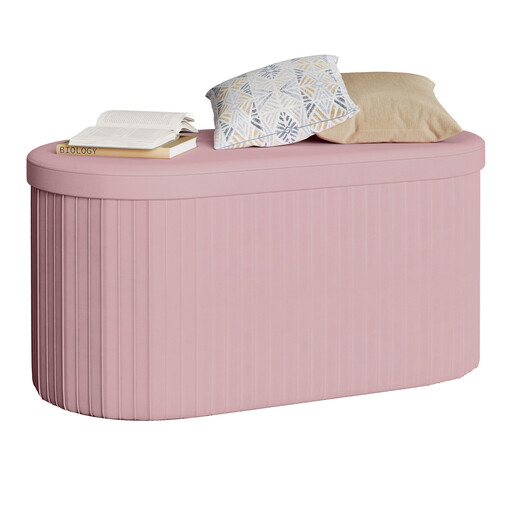
Why This Fits Their Persona: This storage bench doubles as a comfortable seat and a spacious toy box. It is ideal for smaller rooms where furniture must serve multiple functions to save space.
As a low, stable chest, there is no tipping risk like with a tall shelf. The storage is concealed, which reduces visual clutter and simplifies tidying up toys.
Offers a large 76-litre storage capacity and is foldable when not in use. Its dual function as a bench and storage maximises the use of available space.
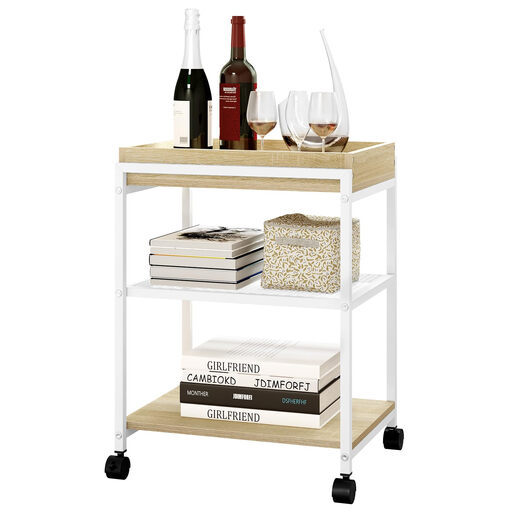
Why This Fits Their Persona: This rolling cart is a mobile storage solution that adapts to a child's changing needs. It can serve as a nightstand, an art cart, or a small bookshelf next to the play mat.
As a low, mobile unit, it bypasses the problem of rigid, cumbersome furniture. The lockable wheels provide stability when it needs to stay in a fixed position.
Mobility from four caster wheels (two of which are lockable) allows for flexible use throughout the room. The top tray is removable and can be used separately.
We've compiled a complete, up-to-date list of products that fully meet these strict selection criteria and stringent safety regulations.
Most kids' shelves come with anti-tip hardware. This kit usually consists of a strap or bracket and the appropriate screws. Secure one end firmly to the shelf and the other end firmly into the wall. For wall mounting, use anchors suitable for your wall material (e.g., drywall, brick). This step is essential for your child's safety and should never be skipped.
The Montessori principle of accessible storage can be applied as soon as a child begins to move independently and explore their environment, typically around 1 to 2 years of age. A low toddler bookshelf, where books and selected toys are placed within reach, promotes decision-making and self-directed play from the very beginning.
The maximum load capacity varies greatly depending on the model, material, and construction. It is crucial to always check the manufacturer's specific details. For example, a shelf made of MDF boards might have a total load capacity of up to 25 kg, while individual compartments may only be designed for 5-10 kg. Always place heavier items like large books or toy boxes on the lower shelves to keep the centre of gravity low and increase stability.