
Lieferung heute & morgen

Qualitätsgarantie

Willkommens-Angebote freischalten: KOSTENLOSE Lieferung | Bis zu 80 % RABATT | Kostenlose 30-Tage-JoyPlus-Testphase
App herunterladen
The safety of children on the ski slopes is the top priority. A properly fitting and certified helmet is an indispensable piece of equipment. However, given the multitude of models and technologies, making a choice can be a challenge. This article provides practical guidance and presents a selection of kids' ski helmets equipped with the MIPS safety system. The goal is to give you the necessary information to make an informed decision to protect your child.
Before you make a decision, several fundamental criteria should be considered. These factors are crucial for safety and comfort, ensuring the helmet performs its protective function optimally.
A helmet can only provide protection if it fits correctly. It must not wobble or apply pressure. Measure your child's head circumference with a flexible measuring tape at its widest point, about one centimetre above the eyebrows and ears. Most manufacturers specify a size range in centimetres for their helmets. An adjustable ski helmet is particularly advantageous for children, as it can be precisely fitted to the head circumference using a dial at the back, allowing it to grow with them over a longer period. The chin strap should be adjusted so that no more than one finger can fit between the strap and the chin.
The acronym MIPS stands for Multi-directional Impact Protection System. It is a low-friction layer inside the helmet, designed to allow a slight rotation of the head relative to the helmet during an angled impact. According to the manufacturer, MIPS technology is intended to help reduce the rotational forces that occur in certain types of falls. A ski helmet with MIPS represents an advancement in helmet technology and is a key feature for a modern safety helmet for winter sports.
Look for recognised safety standards. In Europe, the CE EN 1077 standard is the benchmark for ski and snowboard helmets. Some helmets also meet the American ASTM F2040 standard. These certifications guarantee that the helmet has passed impact absorption tests. Modern helmets, suitable for both boys and girls, are often made using an in-mold process. This involves directly fusing the robust polycarbonate (PC) outer shell with the shock-absorbing EPS (expanded polystyrene) inner foam. The result is an exceptionally lightweight ski helmet that still offers a high level of protection and is equally suitable as a snowboard helmet for kids.
Based on the criteria mentioned above, we have compiled a selection of helmets that stand out for their features and construction.
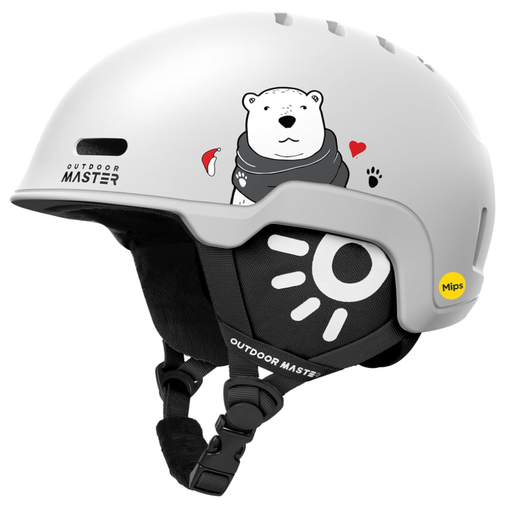
What sets it apart: This model combines the MIPS system with a sophisticated ventilation system and high wearing comfort. The in-mold construction ensures a low weight, while 12 vents provide optimal air circulation and prevent overheating.
Advantages:
Who it's for: For parents looking for a ski helmet for boys or a ski helmet for girls that, in addition to MIPS protection, places a special emphasis on comfort and climate control, making it ideal for long days on the slopes.
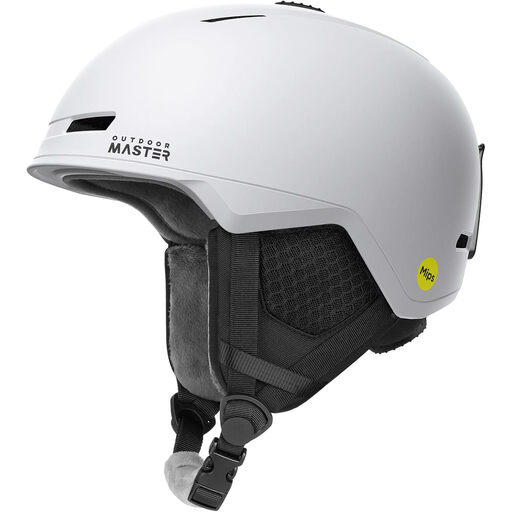
What sets it apart: The Diamond II MIPS is a versatile helmet certified to both ASTM F2040 and CE EN 1077 standards. A special feature is its adjustable ventilation system with 8 vents, allowing manual control of airflow depending on the weather and level of exertion.
Advantages:
Who it's for: For families who prefer a technically advanced OutdoorMaster ski helmet with customisable features like adjustable ventilation and audio compatibility for their children aged 5 and up.
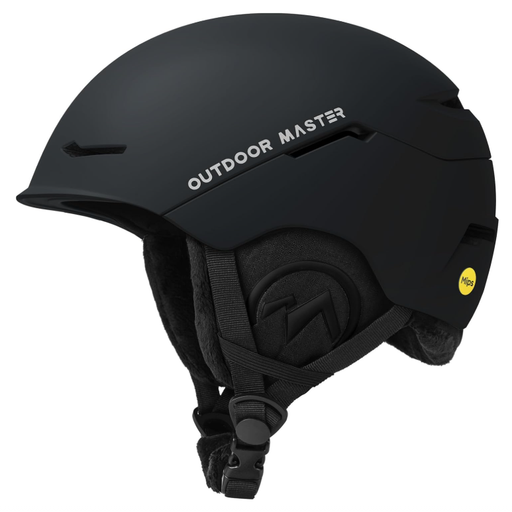
What sets it apart: The ELK MIPS focuses on the essentials: safety and low weight. Thanks to its in-mold technology, it is particularly light, making it suitable not only for skiing but also for other winter sports like snowboarding or ice skating.
Advantages:
Who it's for: For parents seeking a straightforward, lightweight, and versatile safety helmet for winter sports that offers reliable protection through MIPS.
A safe helmet is the foundation of protection on the slopes. However, other components are also crucial for a complete and functional setup. In particular, well-fitting and warm boots contribute significantly to enjoyment and safety.
Discover our selection of [ski boots] to complete your child's gear and ensure they are prepared for all conditions on the mountain.
1. When should a child's ski helmet be replaced? A ski helmet should be replaced immediately after any significant impact, even if no external damage is visible. The internal EPS foam structure can become compressed and will no longer provide adequate protection. Regardless of falls, most manufacturers recommend replacement every 3 to 5 years, as materials like plastic and foam can degrade over time due to UV radiation and temperature fluctuations, losing their protective properties.
2. Is a MIPS system necessary for a child's ski helmet? A MIPS system is an additional safety feature. It was developed to reduce the rotational forces acting on the brain during an angled impact. While all certified helmets provide a baseline level of protection, a ski helmet with MIPS can offer enhanced protection in certain accident scenarios. The decision to opt for one is a consideration for achieving the most comprehensive safety setup possible.
3. Can my child wear a ski helmet for snowboarding? Yes, most modern helmets certified under the CE EN 1077 or ASTM F2040 standards are suitable for both skiing and snowboarding. They are designed as a universal snowboard helmet for kids and ski helmet. To be certain, always check the manufacturer's specifications regarding the intended use.