
Lieferung heute & morgen

Qualitätsgarantie

Willkommens-Angebote freischalten: KOSTENLOSE Lieferung | Bis zu 80 % RABATT | Kostenlose 30-Tage-JoyPlus-Testphase
App herunterladen
A remote-control car can keep children, teenagers and adults entertained for hours – provided you choose a model that suits the user, the terrain and their age. Product descriptions often use terms such as “High Speed”, “All Terrain” or “Stunt”, but these labels alone tell you little about how the car will perform in everyday use.
Before you buy, check for these three common pitfalls:
A 4WD drive system sends power to all four wheels. This can be useful on uneven ground, when climbing small obstacles or when performing controlled drifts. For a basic remote-control toy car used on smooth indoor surfaces, two-wheel drive is often enough.
The tyres should suit how you plan to use the car:
For a remote-control off-road vehicle, also consider the suspension, the body’s ground clearance and how well the drive system is protected. Always check the surfaces listed in the product description rather than relying on the phrase “All Terrain”.
A 2.4 GHz remote control is common in many current RC models. It can make it easier to use several vehicles at once, provided the specific model is designed for this. Other important features include clear button layouts, responsive steering and good straight-line handling.
For children aged 3 and over, simple forward, reverse and steering controls are often easier to use than lots of extra functions. Older children and hobby drivers may benefit from proportional throttle and steering, adjustable speed or a gyroscope to help with drifting.
A rechargeable RC car reduces the need for disposable batteries in the vehicle. Before ordering, check:
The running time stated by the seller depends on the surface, driving style, temperature and battery condition, so treat it as a guide. Lithium batteries should only be charged using the recommended charging accessories and stored safely after play.
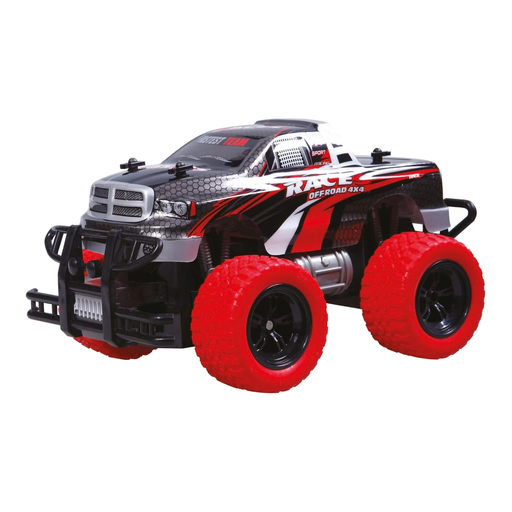
Why it suits this profile: According to the product details, this model is designed for children aged 5 and over and measures around 24 × 15 × 11 cm. Its stated top speed of up to 12 km/h and range of up to 30 metres make it suitable for first driving sessions in safe, open areas.
The product details specify the recommended age, range and power requirements. They also explain which batteries are needed for the car and remote control.
2.4 GHz remote control, sturdy plastic construction and batteries included, according to the seller.
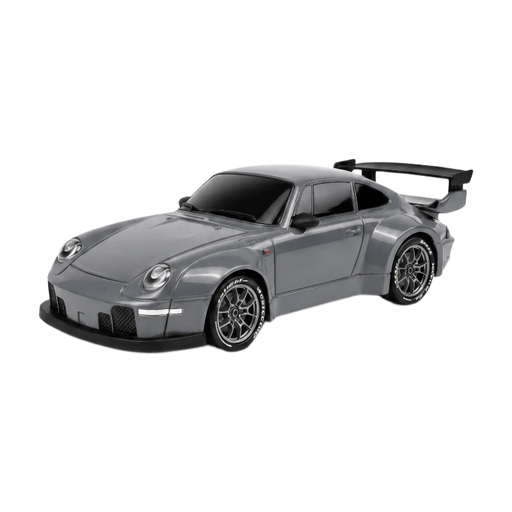
Why it suits this profile: This 1:24 model combines 4WD, two speed settings, an adjustable gyroscope and interchangeable drift and racing tyres. That means you can set it up for different driving styles on smooth surfaces.
The lower speed setting makes it easier to get started, while the interchangeable tyres mean you’re not limited to just one driving style.
ABS body, lithium battery with stated overcharge and deep-discharge protection, and LED lighting, according to the product description.
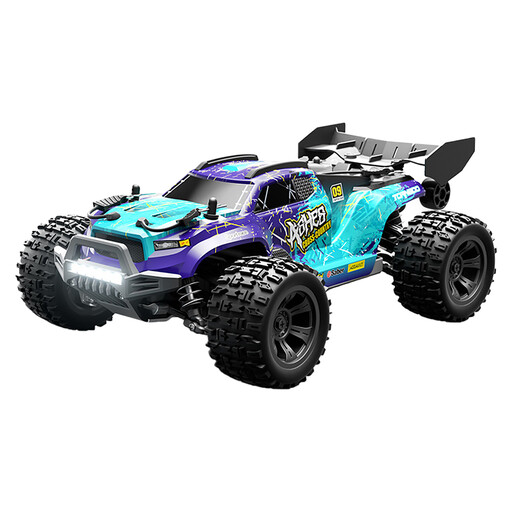
Why it suits this profile: This model is aimed at teenagers and adults looking for a remote-control off-road vehicle for sand, grass, mud or uneven surfaces. Features include four-wheel drive, a metal chassis, shock absorbers and treaded tyres.
The product details list specific components for uneven terrain, rather than relying on a general claim that it’s suitable for off-road use. The 7.4 V, 1,500 mAh battery is also specified.
4WD, an aluminium chassis, independent shock absorbers and bright LED headlights, according to the seller.
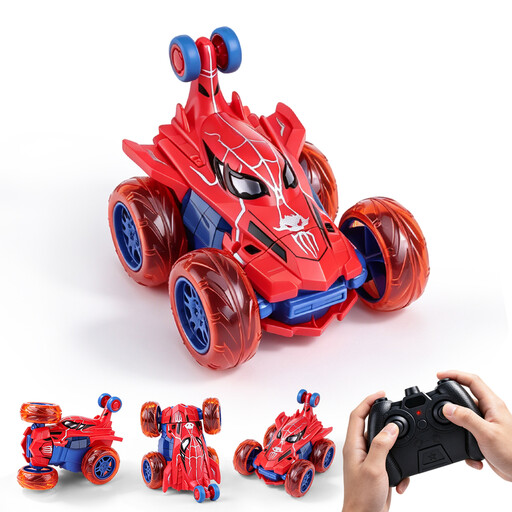
Why it suits this profile: According to the product description, this remote-control stunt car is suitable for children aged 4 and over and offers flips, spins and demonstration functions. The 3.7 V battery charges via USB.
The seller lists the battery, USB cable and two additional AA batteries required for the remote control, making it easier to see what’s included.
2.4 GHz remote control, illuminated wheels and stated suitability for use on sand, grass and roads.
We’ve put together a complete, regularly updated list of products that meet these strict selection criteria and fully comply with the safety regulations in force in the EU.
When choosing a remote-control car for children, check the age guidance on the product page and packaging. Models with small parts are not suitable for children under 3. Younger children should be directly supervised by an adult, especially when using fast cars, stunt functions or playing outdoors.
For safe use, choose:
Look for a clear age recommendation, straightforward controls and a speed that’s easy to manage. For children aged 3 and over, check for small parts, the battery cover and warning labels in particular. More powerful off-road or drift models are generally better suited to older children and teenagers.
Running time depends on battery capacity, the surface, speed and driving style. Some drift models are stated to run for around 20 to 40 minutes per charge. A removable battery can be handy if you want longer play sessions. Always follow the manufacturer’s charging instructions.
An RC drift car is best suited to smooth, flat surfaces. For grass, sand or gravel, choose a model with treaded tyres, 4WD and suspension. Before taking it outside, also check whether the vehicle is protected against moisture – don’t assume it is unless this is specifically stated.