
Lieferung heute & morgen

Qualitätsgarantie

Willkommens-Angebote freischalten: KOSTENLOSE Lieferung | Bis zu 80 % RABATT | Kostenlose 30-Tage-JoyPlus-Testphase
App herunterladen
The selection of kids' scooters is vast, and at first glance, many models look similar. However, a closer look reveals crucial differences in design, materials, and functionality. A hasty decision often leads to the scooter being left unused in a corner after a short time—whether because it becomes too small too quickly, is frustrating for the child to handle, or raises safety concerns. As your Joybuy Product Recommendation Officer, I'll help you avoid the common purchasing pitfalls and find a model that truly fits your child's needs.
The three most common mistakes when buying a kids' scooter are:
To make an informed decision, you should focus on a few critical product features. These determine the safety, durability, and enjoyment your child will get from their scooter.
The number of wheels is the most obvious distinguishing feature. For the youngest riders, a 3-wheel kids' scooter is often the more sensible choice. Two wheels at the front and one at the back provide a stable base that makes tipping over difficult.
Closely related is the steering mechanism. Modern scooters for toddlers use lean-to-steer technology. Instead of turning the handlebar like on a bicycle, the child leans their body in the desired direction. This intuitive movement naturally promotes balance and motor coordination.
A height-adjustable scooter is not an option, but a necessity for a lifespan of more than one season. Look for models that offer multiple adjustment levels to precisely adapt the handlebar to your child's height.
For children ages 3 and up, a scooter with a seat can be a particularly clever solution. These 2-in-1 models can initially be used as a ride-on toy. Once the child is more confident, the seat can be easily removed or folded up, transforming the vehicle into a full-fledged kick scooter.
Good kids' scooters are distinguished by thoughtful details:
Here are some recommendations tailored to different needs and age groups.
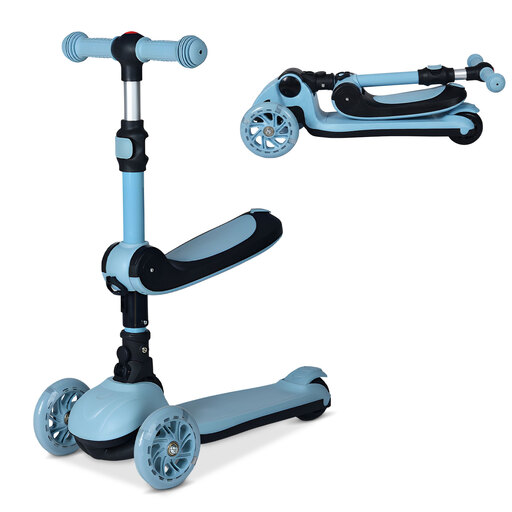
Why This Fits Their Persona: Ideal for the transition from a ride-on toy to a scooter. The foldable seat allows less confident children to gradually get used to riding while standing. The combination of a seat, light-up wheels, and a glowing deck ensures lasting motivation.
The 2-in-1 function with a seat bypasses the "growth trap" in the earliest phase. The 3-wheel design and lean-to-steer system solve the "stability dilemma" for beginners.
Convertible seat for two modes of use; light-up wheels and glowing deck for high visibility and fun.

Why This Fits Their Persona: A classic and reliable kick scooter for kids who are already steady on their feet and no longer need a seat. The wide age range is made possible by the multi-level height adjustment, making it a long-lasting companion.
The 3-level adjustable handlebar effectively counters the "growth trap." The robust, non-slip deck and sturdy wheels address the "material deception" and ensure a long service life.
3-level adjustable handlebar height; sturdy construction with a non-slip deck; light-up wheels.

Why This Fits Their Persona: For parents seeking an exceptionally robust and durable solution. The 4-wheel design offers maximum stability, while the manufacturer's stated maximum load capacity of 100 kg promises an unusually long lifespan, far beyond the standard.
The extremely high load capacity is the best answer to the "material deception." The 4-wheel layout maximises stability, making the scooter ideal even for very cautious children, completely solving the "stability dilemma."
Very high load capacity (up to 100 kg according to the manufacturer); 4-wheel design for maximum stability; also includes a convertible seat.
The practical 2-in-1 models are especially popular with parents. We have compiled a complete, up-to-date list of products that meet these selection criteria.
A scooter for toddlers can be a great choice from around 2 to 3 years of age. It's important that the child can walk confidently and has developed a basic sense of balance. Models with three wheels and an optional seat, i.e., a scooter for ages 3 and up, are ideal for starting out as they offer the greatest stability and won't overwhelm the child.
With this type of steering, the handlebar is not rigidly connected to the front wheels. Instead, the child leans the handlebar and their body weight to the left or right to change direction. This mechanism is very intuitive and promotes the child's balance and coordination in a way similar to skiing or skateboarding.
Scooters with light-up wheels have two main advantages. Firstly, they increase the child's visibility to others, especially in low-light conditions such as at dusk. Secondly, the visual effect is a huge fun factor for children. This motivates them to use the scooter more often and be active outdoors. So, it's a combination of safety and motivation.