
Lieferung heute & morgen

Qualitätsgarantie

Willkommens-Angebote freischalten: KOSTENLOSE Lieferung | Bis zu 80 % RABATT | Kostenlose 30-Tage-JoyPlus-Testphase
App herunterladen
Choosing a new kitchen knife set can quickly become overwhelming. The market is flooded with options, ranging from a few individual knives to comprehensive knife blocks. However, not every set that looks impressive at first glance proves to be a durable and useful companion in the daily kitchen routine. Often, clever marketing and vague product descriptions lead to purchasing decisions you'll later regret.
Before you make an investment, it's crucial to understand the most common pitfalls that lead to useless knives and unnecessary expenses.
To find a suitable knife set that meets your needs, you should focus on a few crucial technical features. These objective criteria will help you separate the wheat from the chaff.
The blade material is the most important factor for cutting performance and maintenance requirements.
Instead of an overloaded knife block, consider which knives you actually need on a daily basis. A solid basic set, sufficient for most home cooks, includes:
A knife block is a sensible addition for safe, blade-friendly storage, but it shouldn't be the main criterion for your purchase decision.
The handle ensures safety and comfort. It should fit securely in your hand, not be slippery even when wet, and have a seamless transition to the blade to prevent bacteria buildup. Common materials include robust plastic (polypropylene), classic wood, or modern composite materials. The balance of the knife is also crucial: a well-balanced knife causes less hand fatigue and allows for more precise control.
Instead of making a blanket recommendation, we have selected products that cater to different user profiles and their specific requirements.
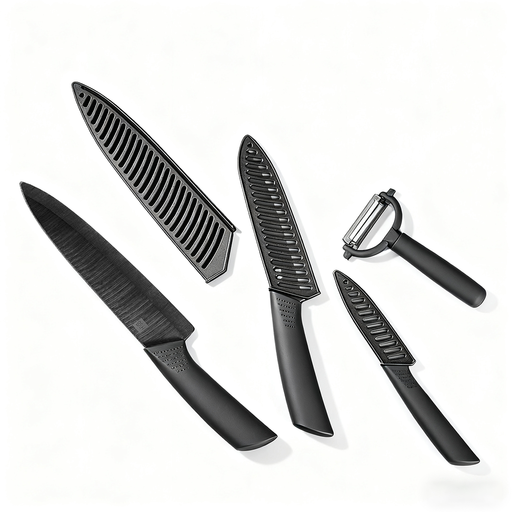
Why it's a great fit: Ideal for cooking novices or for a first kitchen. It provides a functional basic set (chef's, utility, fruit knife, and peeler) at a very accessible price. The light weight and long-lasting sharpness make kitchen tasks straightforward.
This set bypasses the trap of vague material specs by explicitly using zirconium oxide ceramic, whose properties (high hardness, no sharpening needed) are clearly defined. The composition is practical and not overloaded.
The blades stay extremely sharp for a long time without maintenance and are resistant to acids and rust. The low weight reduces wrist fatigue.
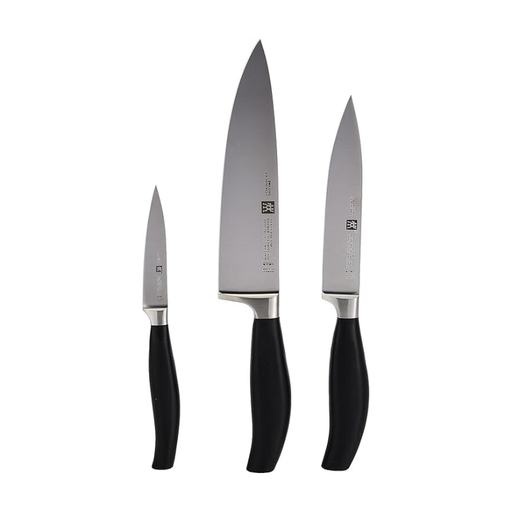
Why it's a great fit: For anyone who cooks regularly and values precision, durability, and excellent balance. This Zwilling knife set from Solingen is an investment in a professional knife set for home use.
It counters the quantity trap by focusing on three essential, forged knives. The material quality is clearly defined by the ice-hardened Friodur blade made from special formula steel, ensuring high edge retention and corrosion resistance.
The blade, forged from a single piece of steel, provides outstanding stability and balance. The seamless transition from handle to blade is hygienic, and the ergonomic grip allows for fatigue-free work.
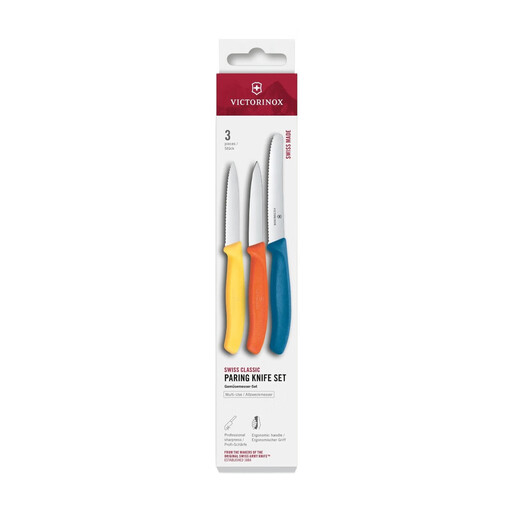
Why it's a great fit: Perfect for anyone who prepares a lot of fruits and vegetables. This Victorinox knife set offers specialised blades for various tasks, from peeling to slicing soft-skinned tomatoes, and is an ideal complement to an existing chef's knife.
This set avoids the "one-size-fits-all" trap. It's a deliberate specialisation, offering a better solution for precision cutting tasks than a large, unwieldy knife. The lightweight, ergonomic handles are optimised for detail work, thus bypassing the ergonomics trap.
The combination of a straight blade, a serrated edge, and an all-purpose blade offers great versatility for all types of vegetables and fruits. The knives are dishwasher-safe, making them very low-maintenance.
We've compiled a complete, up-to-date list of products that fully meet these strict selection criteria and German safety regulations.
1. How do you properly care for a high-quality kitchen knife set? Even if some knives are labelled as dishwasher-safe, hand washing with warm water and mild detergent is recommended to maintain sharpness. Dry the knives immediately to prevent flash rust. Use cutting boards made of wood or plastic, as hard surfaces like glass or stone can damage the blade. For storage, a knife block or a magnetic strip is suitable.
2. What is the difference between a ceramic knife set and a steel knife set? The main difference lies in the material and its associated properties. Steel knives are robust, flexible, and can be easily resharpened, but they require regular care. Ceramic knives are extremely sharp, lightweight, and hygienic, but also brittle and can break if handled improperly. They are a good choice for precise cuts on soft foods.
3. Is a professional knife set worth it for home use? That depends on your cooking habits. If you cook daily and value efficiency and durability, a professional knife set can be a worthwhile investment. The superior materials and better construction (e.g., forged instead of stamped) result in better cutting performance and a longer lifespan, which justifies the higher initial cost.