
Lieferung heute & morgen

Qualitätsgarantie

Willkommens-Angebote freischalten: KOSTENLOSE Lieferung | Bis zu 80 % RABATT | Kostenlose 30-Tage-JoyPlus-Testphase
App herunterladen
A dull knife in the kitchen is not only frustrating but also a safety hazard. When searching for a new knife set, it's easy to get overwhelmed by marketing promises and a confusing selection. Before you make a decision you'll later regret, it's crucial to understand the most common pitfalls and know what truly matters in a durable kitchen knife set.
As your Joybuy Product Recommendation Officer, I'll help you find objective criteria for your choice and navigate around common marketing traps.
Many buyers invest in sets that become useless after a short time or include accessories that are never used. Watch out for these three typical problems:
To avoid a bad purchase, focus on three verifiable characteristics that define a sharp knife set.
The quality of the blade depends directly on the steel used. A reliable choice is knives made from German stainless steel, such as the steel type X50CrMoV15. This alloy is known for its excellent balance of corrosion resistance, hardness, and ease of sharpening. It provides a solid foundation for durable knives that can withstand the rigours of daily kitchen use. Look for products where the manufacturer transparently specifies the steel type.
Beyond the raw material, the manufacturing process is crucial for performance. One example of such a process is the Tefal Ice Force technology. According to Tefal, the blades are flash-cooled to -120°C after being heated. This thermal shock is intended to refine the steel's structure, making the blade more durable and improving its edge retention. Tefal claims this helps the blade stay sharp for up to twice as long compared to the brand's other stainless steel ranges. Such specific, technology-based claims are often an indicator of thoughtful product design.
A functional starter set doesn't need ten different specialty knives. A practical, essential kit typically consists of:
A knife set with shears already covers over 90% of all daily cutting tasks in an average kitchen.
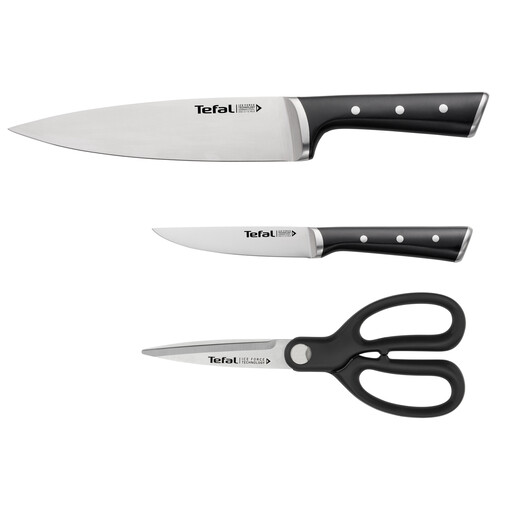
Why This Fits Their Persona: Ideal for home cooks and beginners looking for a reliable starter kit from a well-known brand. The set covers the most important daily tasks without being overwhelming with unnecessary pieces. The 10-year warranty provides added peace of mind for the investment.
This set focuses on three essential tools (chef's knife, utility knife, shears), thus avoiding the purchase of superfluous blades. Its performance claims are based on the verifiable Ice Force technology.
German stainless steel blade with a 10-year warranty (according to the manufacturer). The Ice Force technology provides longer edge retention compared to other Tefal stainless steel ranges.
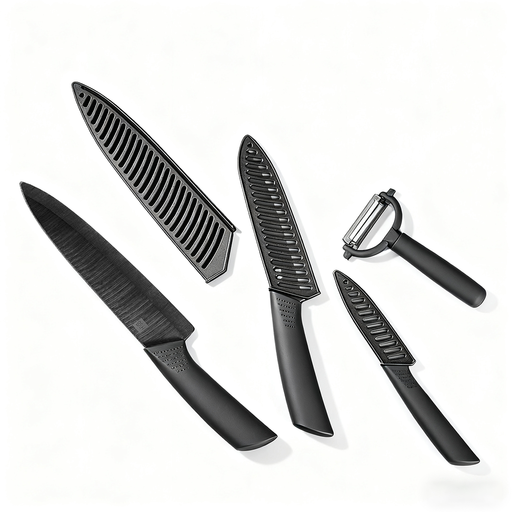
Why This Fits Their Persona: Perfect for users who cut a lot of fruits and vegetables and want an extremely lightweight, sharp tool. Ceramic blades are non-reactive and prevent odour transfer, which is an advantage when preparing delicate foods.
This set makes no false promises. It's a specialized tool, not an all-rounder. The material properties of zirconium oxide ceramic are clearly defined and ideal for its intended purpose (soft ingredients). It is not an alternative to a steel chef's knife, but a complement.
Extremely low weight reduces wrist fatigue. The blades are rust-proof, acid-resistant, and do not require sharpening when used properly on soft ingredients.
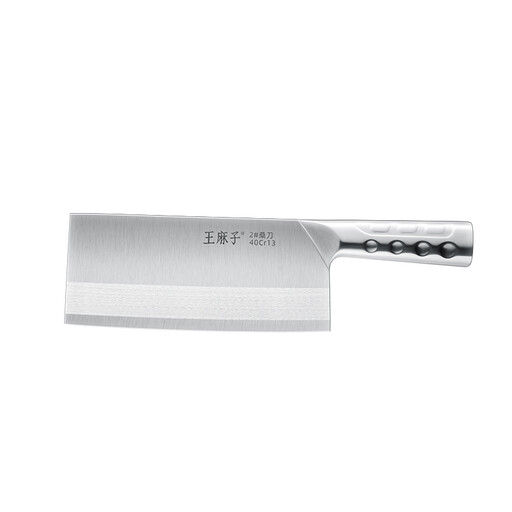
Why This Fits Their Persona: For cooks who prefer a single, robust tool over a set for specific tasks like chopping vegetables or slicing meat. The shape of the Chinese chef's knife (often called a Mulberry Knife) allows for an efficient rocking-chop technique.
This product bypasses the trap of overloaded sets by focusing on a single, highly functional knife. It represents a deliberate choice for a specialized tool instead of a compromise of many pieces.
The wide stainless steel blade is suitable not only for cutting but also for scooping and transferring ingredients. A versatile single tool for experienced users.
We have compiled a complete, up-to-date list of products that fully meet these strict selection criteria and German safety regulations.
The frequency depends on usage and the blade's edge retention. For daily household use, it's advisable to maintain the knives with a honing steel every few weeks and to resharpen them with a knife sharpener or whetstone every 2-6 months, depending on the loss of sharpness. A good knife loses its edge slowly and evenly.
"German stainless steel" is not a protected term, but it often refers to proven alloys like X50CrMoV15. This steel offers an excellent compromise between corrosion resistance, hardness (approx. 55-58 HRC), and easy maintenance. It is not necessarily "better" than high-quality Japanese steel (which is often harder but more brittle), but it is a very reliable choice and well-suited for everyday use in European kitchens.
Although many manufacturers claim their knives are dishwasher-safe, hand washing is strongly recommended. Harsh detergents, high temperatures, and contact with other dishes can damage the blade, fade the handle, and reduce sharpness more quickly. A quick wash by hand with a soft sponge is gentler on the material and preserves the longevity of your knife set.