
Lieferung heute & morgen

Qualitätsgarantie

Willkommens-Angebote freischalten: KOSTENLOSE Lieferung | Bis zu 80 % RABATT | Kostenlose 30-Tage-JoyPlus-Testphase
App herunterladen
Selecting the right dish sponge is a technical decision that depends on two primary factors: the material composition of the object being cleaned and the type of soil. The wrong cleaning sponge can permanently damage delicate surfaces, while a sponge that is too soft will be ineffective against tough, baked-on grime. This guide analyses the material properties and applications of various sponge types to facilitate an informed product choice.
The effectiveness of a kitchen sponge is determined by its abrasiveness and absorbency. These properties are a direct result of the materials used.
Cellulose and Synthetic Polymers (e.g., Polyurethane):
Abrasive Non-Woven Fabrics (often Polyamide or Polyester):
Stainless Steel and Steel Wool:
| Surface | Recommended Sponge Type | Sponge Types to Avoid | | :--- | :--- | :--- | | Non-stick Coating (Teflon, etc.) | Soft cellulose side, non-scratch sponge | Scouring pads, stainless steel, steel wool | | Stainless Steel (Pots, Sinks) | Scouring pad, stainless steel pot scrubber | No restrictions | | Cast Iron (uncoated) | Stainless steel pot scrubber, scouring pad | Soft sponges (ineffective) | | Glass, Porcelain, Ceramic | Soft cellulose side, microfibre cloth | Scouring pads, stainless steel, steel wool | | Enamel | Soft cellulose side, non-scratch sponge | Scouring pads, stainless steel, steel wool |
Based on technical specifications and defined applications, we present a selection of products for various cleaning requirements.

Why we recommend this product: This product combines mechanical cleaning power with a chemical component. The pads consist of fine microfibres infused with a plant-based soap. This allows for dissolving grease and removing burnt-on food in a single step, increasing efficiency. Its manufacturing in Germany and vegan certification by ProVeg e.V. are objective quality indicators.
Advantages:
Best for: Users looking for an efficient all-in-one solution for cleaning robust pots and pans, grills, and ovens. Not suitable for non-stick or other scratch-sensitive surfaces.

Why we recommend this product: This product focuses on maximum mechanical abrasiveness. Made from rust-resistant 304 stainless steel, it offers high durability and resistance to aggressive cleaning agents and high temperatures. The dense spiral winding, with a weight of 15 g per piece, ensures high structural integrity and cleaning performance.
Advantages:
Best for: Households that regularly deal with heavily burnt-on food on non-sensitive cookware like stainless steel pots, cast iron pans, or grill grates. A classic stainless steel pot scrubber for demanding tasks.
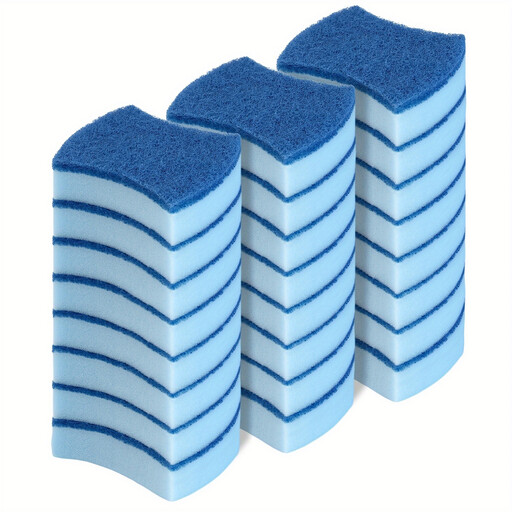
Why we recommend this product: This product offers high versatility with its dual-sided design. It combines a soft, absorbent cellulose side with a durable yet non-scratch scrubbing side. This makes the sponge a universal tool for modern kitchens with a variety of surfaces. The bulk pack of 24 also provides an excellent supply.
Advantages:
Best for: Users who need a universal kitchen sponge for daily use and value the protection of delicate surfaces. Ideal for households with non-stick pans and glass-ceramic cooktops.
The selection presented here covers the most common use cases in private households. For more specific requirements, such as sponges with special ergonomic shapes or those made from alternative materials, a wider range is available. You can find an overview of more products in our Abrasive Sponges category.
1. How often should you replace a dish sponge? For hygiene reasons and to maintain cleaning performance, it is recommended to replace cellulose sponges every one to two weeks with daily use. Replacement is also advisable if the sponge develops an unpleasant odour or shows visible signs of wear. Stainless steel scrubbers are more durable but should be replaced when their effectiveness diminishes or if they show signs of damage.
2. Can I use a scouring pad on a non-stick pan? No. Using an abrasive scouring pad or a stainless steel pot scrubber on a non-stick coating will cause scratches that destroy the non-stick properties and significantly shorten the pan's lifespan. For such surfaces, only use products explicitly labelled as a non-scratch sponge.
3. What is the difference between steel wool and a stainless steel pot scrubber? The primary difference is the material. Conventional steel wool is made of carbon steel and is prone to rusting when exposed to moisture. A stainless steel pot scrubber, typically made from alloys like 304 stainless steel, is corrosion-resistant. This makes it more hygienic, durable, and better suited for repeated use in the kitchen.
Written by: Joybuy Product Recommendation Officer