
Lieferung heute & morgen

Qualitätsgarantie
App herunterladen
Kategorien
A kitchen cart is a functional addition for households looking to flexibly expand their existing counter space and storage. Unlike fixed kitchen furniture, a rolling kitchen cart offers mobility and adaptability to various room layouts. This article analyses the key technical criteria for selecting a model and presents a curated selection of products with diverse specifications.
Choosing the right model depends on a careful analysis of materials, dimensions, mobility, and functional features.
The choice of material impacts the cart's durability, maintenance, and intended use.
Before purchasing, it is essential to accurately measure the available space.
The casters and frame construction determine the cart's handling and safety.
Additional components enhance the practical utility of a kitchen cart. These include drawers for cutlery, side hooks for tea towels or cooking utensils, towel racks, or removable trays that can also be used for a serving cart.
The following selection is based on an analysis of the products' technical specifications and intended applications.
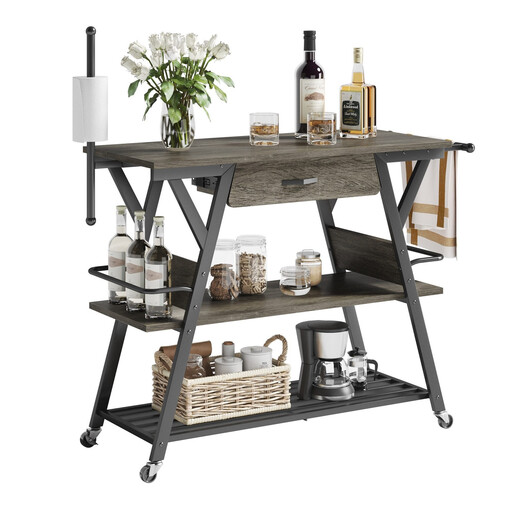
Why We Recommend This Product This model stands out for its generous dimensions and multifunctional features. The robust Y-shaped steel frame ensures high stability, while the combination of open shelves, a drawer, and a removable board opens up versatile uses as a mobile workstation or a mobile kitchen island.
Advantages
Who It's For This model is suitable for individuals seeking a substantial and mobile extension to their kitchen, whether as an additional prep area, storage for larger appliances, or a flexible serving cart for dining areas.
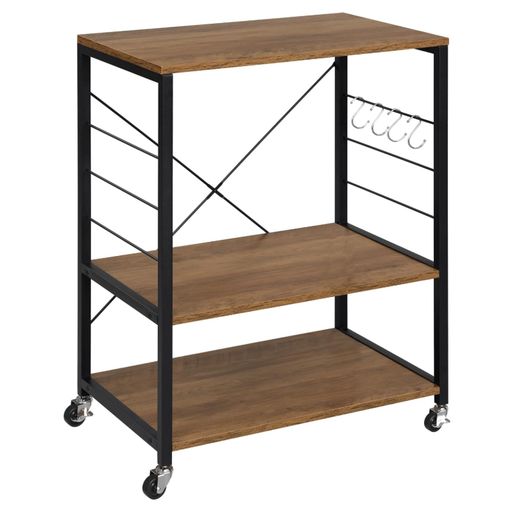
Why We Recommend This Product The WOLTU Kitchen Shelf on Wheels is a compact and stable solution specifically designed for organising kitchen appliances. The combination of a metal frame with X-bracing and low-maintenance engineered wood shelves offers high functionality in a small footprint. The specified load capacity of 10 kg per shelf is designed for standard appliances like microwaves or coffee machines.
Advantages
Who It's For This rolling shelf is ideal for users who need a dedicated and stable place for their kitchen appliances and value a space-saving design. It functions effectively as a mobile microwave stand or a general-purpose rolling kitchen cart.
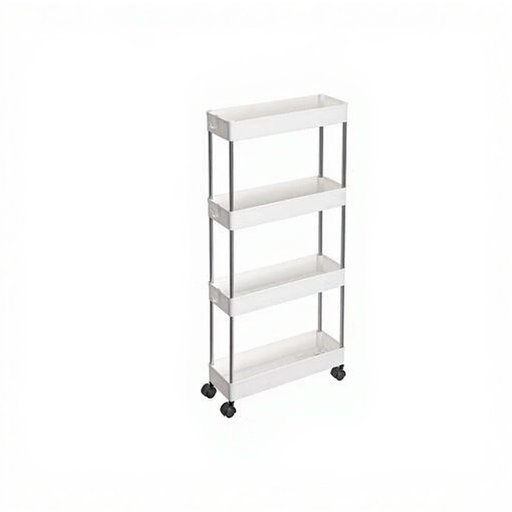
Why We Recommend This Product This slim storage cart from SONGMICS is designed for maximum space utilisation in narrow gaps. With a width of just 12.5 cm, it fits into areas that would otherwise remain unused. The waterproof polypropylene (PP) shelves and lightweight construction make it a flexible storage solution for the kitchen, bathroom, or pantry.
Advantages
Who It's For This product is aimed at individuals looking to specifically utilise narrow gaps in their home for storage. It is particularly practical for storing cleaning supplies, pantry items, or bathroom essentials.
The products presented here represent a selection that covers different requirements for size, material, and function. For a broader overview of models, ranging from compact utility carts to large workstations, we recommend exploring the full range.
Discover our entire range of kitchen carts
1. What is the best material for a kitchen cart? The choice of material depends on the intended use. Stainless steel is hygienic and very durable, ideal for food preparation. Engineered wood with a melamine coating offers a good balance of aesthetics and resilience. Plastic (PP) is optimal for humid environments or when a particularly lightweight and low-maintenance model is desired.
2. How much weight can a kitchen cart support? The load capacity varies significantly depending on the model and construction. Lightweight slim carts often support up to 5 kg per shelf, while sturdy models with metal frames and reinforced construction can hold 10 kg, 20 kg, or more per tier. It is essential to consult the manufacturer's specific guidelines on maximum static load capacity.
3. Can a kitchen cart replace a fixed kitchen island? Larger, sturdy models can serve as a flexible mobile kitchen island, offering additional workspace. However, they do not replace the stability and load-bearing capacity of a permanently installed island. For heavy-duty tasks or for use as a permanent dining spot, the cart's stability, particularly the function of the locking brakes, should be carefully evaluated.