
Lieferung heute & morgen

Qualitätsgarantie

Willkommens-Angebote freischalten: KOSTENLOSE Lieferung | Bis zu 80 % RABATT | Kostenlose 30-Tage-JoyPlus-Testphase
App herunterladen
A well-equipped knife block is the heart of many kitchens. It promises organization, quick access, and a complete set of tools for all cutting tasks. But the reality is often different: many buyers soon find that their new knife set with block doesn't deliver the expected performance. Before you make a decision, it's crucial to understand the most common pitfalls that lead to disappointment and unnecessary expense.
The two most common problems when choosing a set are:
This guide will help you avoid these problems and find a kitchen knife set designed for durability, functionality, and your actual needs.
To make an informed decision, you should focus on a few crucial technical features. These factors are key to determining the longevity, safety, and joy you'll get from your knives.
A knife's quality starts with its steel and how it's processed. There are fundamental differences that directly impact cutting performance and durability.
Zwilling from Solingen often use special steel alloys and hardening processes like FRIODUR ice-hardening, where blades are hardened at very low temperatures to optimize their corrosion resistance and flexibility. Hardness is measured in Rockwell (HRC); values around 57 HRC are considered a good compromise between sharpness and ease of resharpening.A functional knife set with block doesn't need twenty different knives. For over 90% of all tasks in a home kitchen, three to four high-quality knife types are sufficient:
A set that complements this basic lineup with kitchen shears and perhaps a honing steel provides a solid foundation for most home cooks.
The block itself is more than just a storage container. A good wooden knife block made from materials like beech, oak, or bamboo is gentle on the blades and visually appealing. Look for a stable construction and sufficiently large slots that allow for good air circulation to prevent moisture buildup.
An innovative development is the self-sharpening knife block. These models have small ceramic sharpening stones integrated into the slots for straight-edged knives, which lightly hone the blade at the correct angle every time it's inserted or removed. This helps maintain the basic sharpness for much longer.
Here are some recommendations tailored to different needs and cooking habits.
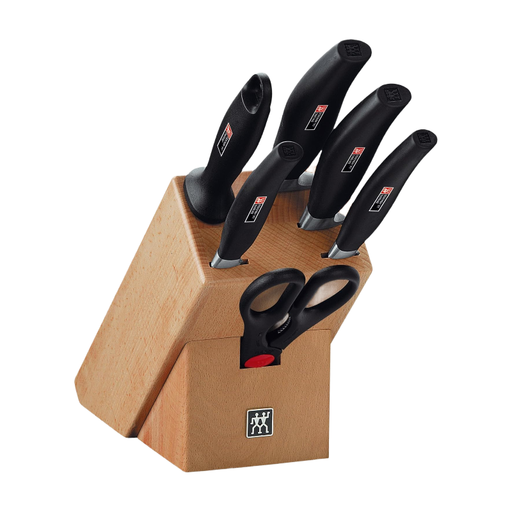
Why This Fits Their Persona: This set is ideal for home cooks looking for a durable and complete starter kit from a renowned Solingen brand. It covers all basic cutting tasks with high-quality tools without being overwhelming.
The set focuses on essential knife types, sensibly complemented by shears and a honing steel. According to the manufacturer, the ice-hardened FRIODUR blades offer high edge retention and prevent the problem of knives dulling quickly.
Comprehensive 7-piece set including a honing steel to maintain sharpness. Ergonomic synthetic handles ensure safe, fatigue-free handling.

Why This Fits Their Persona: For users who cook daily and demand professional-grade tools with optimal balance, sharpness, and extreme durability. This set is an investment in precision and reliability.
The knives, forged from a single piece of steel with a full tang (the steel part extending into the handle), offer maximum stability and edge retention. This is a clear mark of quality compared to less expensive, stamped blades.
Classic three-rivet design with a bolster for safe, balanced handling. According to the manufacturer, the ice-hardened blades are exceptionally corrosion-resistant and hold their edge well.
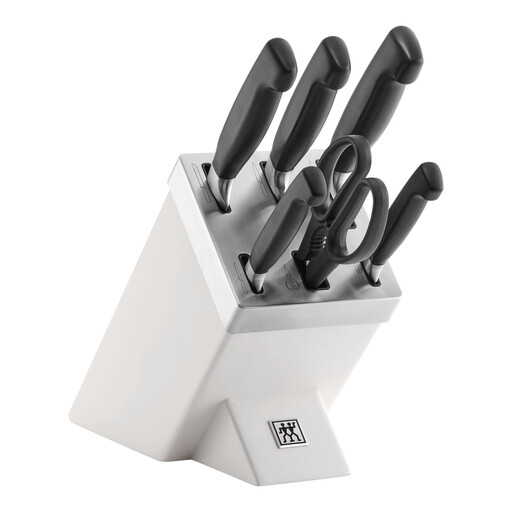
Why This Fits Their Persona: Perfect for users who appreciate the quality of forged knives but want to minimize the effort of manual sharpening. The innovative technology ensures they are always ready for use.
The self-sharpening knife block with KIS technology actively counteracts the most common problem—blades dulling from lack of maintenance. It protects the investment and preserves functionality.
Integrated ceramic sharpening stones set at the ideal angle hone the knives with every use. Pictograms indicate the correct slot for each knife.
We've compiled a complete, up-to-date list of products that fully meet these strict selection criteria and safety standards.
Knives should never be placed in the block while wet. Clean the knives by hand and dry them thoroughly. You can empty the knife block itself and use a narrow brush or compressed air to remove dust and crumbs. Wipe the exterior with a slightly damp cloth. Avoid using harsh cleaning agents or soaking the wooden block in water.
The main difference lies in the manufacturing process. Forged knives are heated and shaped from a single piece of steel, making them more robust and balanced. They typically have a bolster (the thick part between the blade and the handle). Stamped knives are cut from a sheet of steel, making them lighter and less expensive to produce. For demanding and frequent use, forged knives generally offer greater durability and better performance.
The frequency depends on usage and blade quality. A simple rule of thumb: as soon as you notice you need to apply more pressure to cut (e.g., with a tomato), it's time to sharpen. With regular household use, this might be necessary every few months. Regularly using a honing steel before or after cooking helps to realign the blade's edge and maintain its basic sharpness for longer. A self-sharpening knife block handles this task automatically.