
Lieferung heute & morgen

Qualitätsgarantie

Willkommens-Angebote freischalten: KOSTENLOSE Lieferung | Bis zu 80 % RABATT | Kostenlose 30-Tage-JoyPlus-Testphase
App herunterladen
By Joybuy Product Recommendation Officer, July 05, 2026
Caring for the trees and shrubs in your own garden is a rewarding task, but it requires the right equipment. Given the multitude of tools on the market—from simple garden shears to motorized mini chainsaws—the selection can quickly become overwhelming. The decision for the right tree pruning tool depends on the type of plant, the thickness of the branches, and the desired level of working comfort.
This guide is designed to help you make an informed decision. We will introduce different types of tools, explain their areas of application, and present a selection of products suitable for specific gardening tasks.
Before you decide on a tool, you should consider a few fundamental criteria. These will help you find a durable product that is right for your needs.
The decisive factor is the diameter of the branches you want to cut.
The quality of the blade determines the cutting performance and longevity of the tool.
A good tree care tool should fit comfortably and securely in your hand. Look for ergonomically shaped handles, ideally with a non-slip rubber coating. On loppers, shock-absorbing bumpers can protect your joints. For saws, a secure locking mechanism on folding models provides additional safety during transport and storage.
Based on the criteria mentioned, we have compiled a selection of tools for various pruning applications.
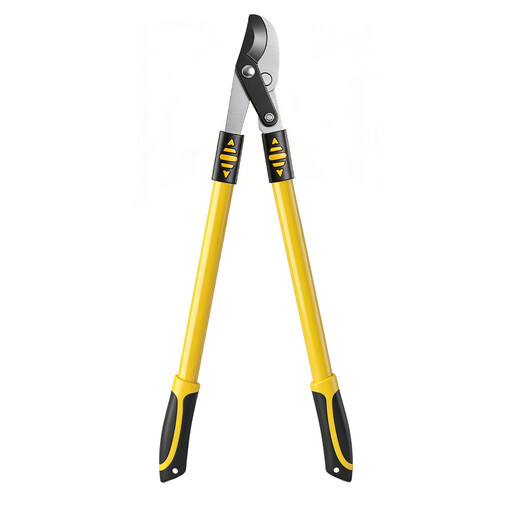
Why it stands out: These loppers combine a robust construction with thoughtful ergonomic features. The blade, made of hardened SK5 steel, is designed for clean cuts, while the long handles provide high leverage.
Advantages:
Who is it for? For garden owners who regularly cut medium-thick branches on trees and larger shrubs and are looking for a manual tool with excellent power transmission.
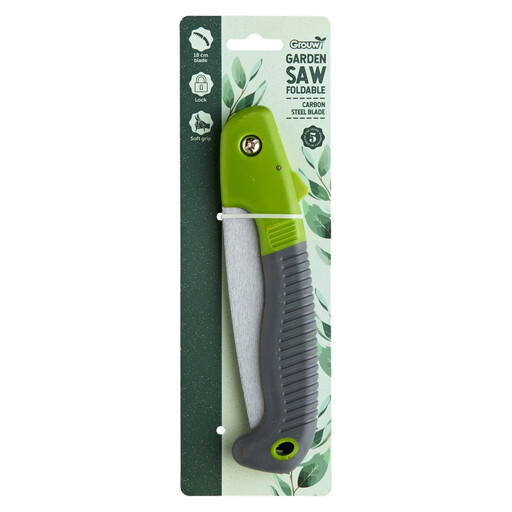
Why it stands out: This foldable pruning saw is a compact and safe solution for branches that are too thick for shears. Its design makes it ideal for mobile use in the garden and for space-saving storage.
Advantages:
Who is it for? For hobby gardeners who need a lightweight, portable tool for precise sawing of small to medium-sized branches.

Why it stands out: This cordless mini chainsaw offers high performance for fast and effortless cutting of thick branches and logs. The brushless motor and automatic oiling system stand for efficiency and low maintenance.
Advantages:
Who is it for? For home and garden owners who regularly need to cut thick branches and are looking for a powerful, efficient alternative to manual saws.
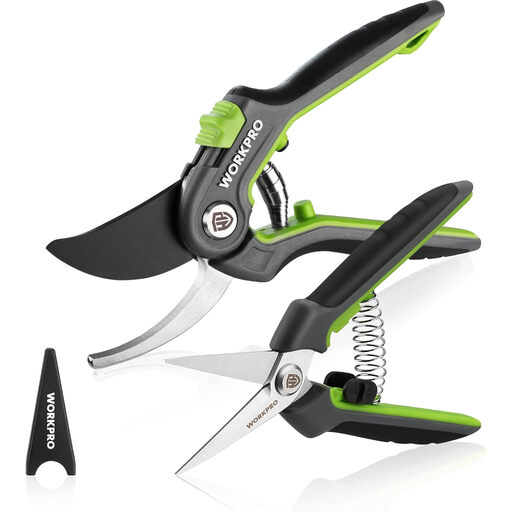
Why it stands out: This set offers two specialized tools in one package: a robust pair of bypass pruning shears for trimming woody plants and a pair of fine harvesting shears for more delicate tasks.
Advantages:
Who is it for? For gardeners looking for a versatile basic kit for various cutting tasks, from pruning roses and shrubs to harvesting flowers and herbs.
The selection of tools for the garden and workshop is vast. If you are looking for more options or specialized equipment, you can find a wider range of products in our Hand Tools category.
1. Which tool do I need for which branch thickness? As a rule of thumb: Pruning shears are suitable for twigs up to approx. 0.8 inches (2 cm). For branches up to approx. 1.6 inches (4 cm), loppers with long handles are the right choice. Anything thicker requires a pruning saw or, for more comfort and speed, a motorized mini chainsaw.
2. What is the difference between bypass and anvil shears? With bypass shears, two sharp blades glide past each other, similar to household scissors. This creates a very clean and precise cut that is gentle on the plant and ideal for living wood. With anvil shears, one blade strikes a wide, flat surface (the anvil). This is more of a crushing cut, which is well-suited for dry and hard deadwood but can cause injury to fresh shoots.
3. How do I properly care for my pruning tools? Clean the blades of sap and dirt after each use to prevent the spread of diseases and maintain sharpness. Dry the tool thoroughly and store it in a dry place to prevent rust. A drop of oil on the joints and blades from time to time will keep the mechanism moving smoothly. Sharpen the blades as needed to ensure consistently clean cuts.