
Lieferung heute & morgen

Qualitätsgarantie

Willkommens-Angebote freischalten: KOSTENLOSE Lieferung | Bis zu 80 % RABATT | Kostenlose 30-Tage-JoyPlus-Testphase
App herunterladen
A sideboard in the living room is more than just a piece of furniture. It's a central element that combines style and function, creating order while also serving as a display surface for personal items. However, choosing the right model can be a challenge given the variety of designs, materials, and sizes. This guide is designed to help you make an informed decision and find a sideboard that perfectly suits your needs and your living space.
Before you decide on a specific model, several fundamental aspects should be considered. These criteria will help you narrow down your choices and find a piece of furniture that is both aesthetically pleasing and practical.
The dimensions of the sideboard are crucial for its harmonious integration into your living room. Measure the available space accurately, considering not only the width but also the height and depth. An overly bulky living room cabinet can overwhelm a small room, while a model that's too delicate can look lost in a large space. Ensure there is enough room to open doors and drawers, as well as to walk past. The height should align with other furniture, such as the sofa or dining table, to create a cohesive overall look.
Consider what you want to store in the sideboard. Do you primarily need space for dishes, books, or media devices? A sideboard with drawers is excellent for smaller items like cutlery, documents, or cables. Compartments behind doors, often with adjustable shelves, offer flexible storage for larger objects. Open compartments, in turn, are ideal for displaying decorations, books, or a soundbar. A thoughtful combination of open and closed elements makes a sideboard a versatile piece of storage furniture.
The material and colour significantly determine the furniture's impact. A modern sideboard with a high-gloss finish appears minimalist and elegant, while models in wood decors like oak radiate warmth and naturalness. A white sideboard is a timeless classic that fits into many interior styles and makes the room appear brighter. Pay attention to the surface finish: high-gloss surfaces are easy to clean but can be more prone to fingerprints. Matte or textured surfaces are often more resilient in daily use.
Here, we present three different models that are suited for various needs and living styles due to their specific features and designs.
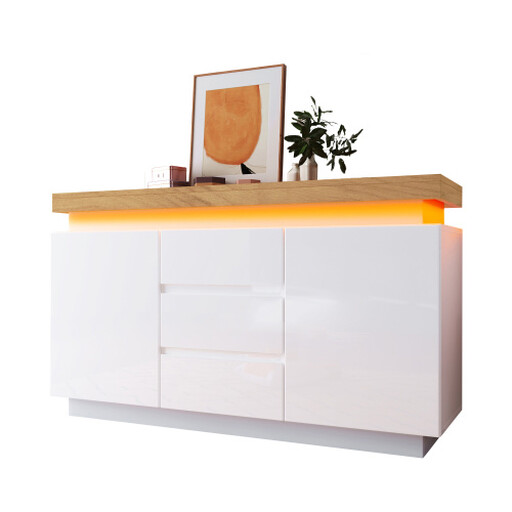
Why it stands out: This model combines a minimalist aesthetic with modern technology. The handleless front and the high-gloss white surface create a clean, uncluttered look. The highlight is the integrated LED lighting, which can be controlled via a touch switch or a smartphone app, allowing for customisable mood lighting.
Product Details:
Who is it for? This sideboard is a great choice for lovers of a modern, minimalist interior style who appreciate tech-savvy features. It fits perfectly in living rooms or bedrooms where a clean-lined design and a touch of futurism are desired.
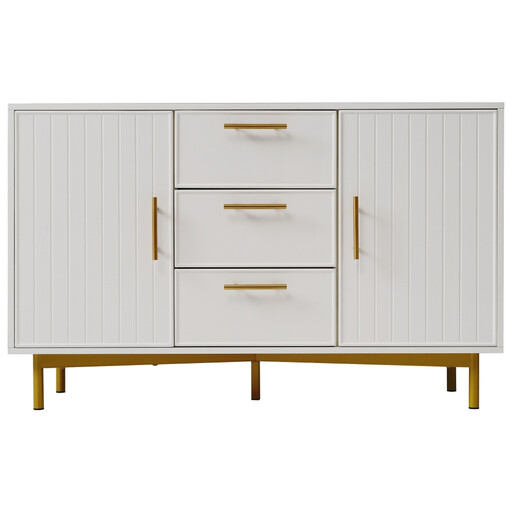
Why it stands out: The combination of a decorative grooved texture on the fronts, elegant gold handles, and a delicate metal frame gives this chest a touch of luxury. The design is modern yet timeless, adding a stylish accent to any room.
Product Details:
Who is it for? This model appeals to users who want to make a design statement without sacrificing functionality. It is suitable for anyone looking to combine modern elegance with practical storage and add a special touch to their living room or bedroom.
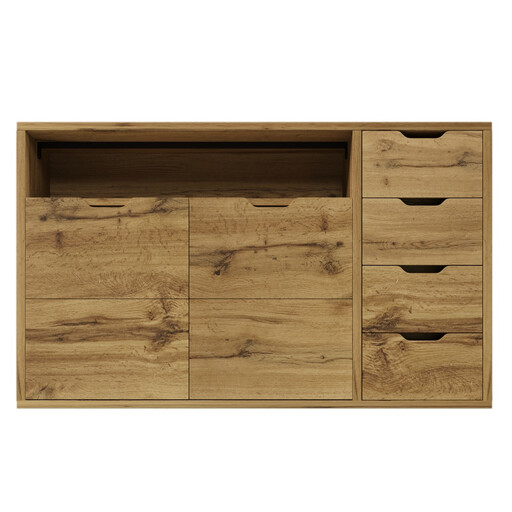
Why it stands out: With a width of 150 cm and a well-thought-out layout of doors, drawers, and an open compartment, this sideboard offers an exceptional amount of space. The warm oak effect combined with the black metal frame pairs well with industrial or Scandinavian interior styles.
Product Details:
Who is it for? Ideal for families or individuals with high storage needs. Thanks to its robust construction and versatile layout, it can be used not only as a living room sideboard but also as a credenza in the kitchen or a spacious chest of drawers in the hallway.
The models presented cover different styles and needs. However, if you are looking for a different size, colour, or a specific design, there is a wide range of alternatives to discover.
Browse through our entire selection and find the piece of furniture that is perfect for you. ? Discover More Living Room Sideboards Here
1. What is the difference between a sideboard and a chest of drawers? Traditionally, a chest of drawers is primarily equipped with drawers and is often taller than it is wide. A sideboard is typically longer and lower, combining doors, drawers, and sometimes open compartments. However, the terms are often used interchangeably today, with "sideboard" frequently referring to wider, lower furniture in the living or dining area.
2. How high should a living room sideboard be? A common height for sideboards is between 70 and 90 cm. A good reference point is the height of windowsills or the back of your sofa. If the sideboard is placed under a television, the height should be chosen so that the screen is at a comfortable viewing level.
3. What is the most low-maintenance material for a sideboard? Furniture with melamine-coated surfaces (as found on many wood-effect or high-gloss models) is very easy to care for. They can be easily cleaned with a slightly damp, lint-free cloth. Real wood occasionally requires special care with oil or wax to maintain its beauty. As a general rule, liquids should always be wiped up immediately to prevent damage to the material.