
Lieferung heute & morgen

Qualitätsgarantie

Willkommens-Angebote freischalten: KOSTENLOSE Lieferung | Bis zu 80 % RABATT | Kostenlose 30-Tage-JoyPlus-Testphase
App herunterladen
A good loaf pan might seem like a simple purchase. But anyone who has ever scraped a cake out of a warped pan or been frustrated by an unevenly baked loaf of bread knows: the devil is in the details. Many home bakers invest in models that become useless after just a few uses. Before you buy a new loaf pan, you should know the three most common pitfalls that lead to frustration and wasted money.
To avoid these problems, it's crucial to focus on verifiable product features rather than marketing promises. Three core parameters are decisive for successful baking results and long-term durability.
The material determines how well and evenly heat is transferred to your baked goods. Pans made from heavy-gauge carbon steel or aluminized steel offer excellent heat conduction and distribution. A critical but often overlooked feature is the material gauge. A thicker gauge prevents the pan from warping at temperatures above 200°C (400°F) and ensures a robust, durable structure. Thin, lightweight pans are often an indicator of lower quality and a shorter lifespan.
Creating a high-quality non-stick loaf pan is a science in itself. While simple PTFE coatings are common, not all are suitable for every type of dough. For bread baking in particular, a sourdough-safe loaf pan is a worthwhile investment. The acid in sourdough can chemically attack and break down inferior coatings. Reliable alternatives include:
The classic loaf pan for cakes typically comes in 25 cm (10-inch) or 30 cm (12-inch) lengths. While the 25 cm pan is sufficient for most simple cakes, the 30 cm version is ideal for larger loaves of bread or when baking for a crowd.
A special model is the loaf pan with a lid. Often called a Pullman loaf pan, it's designed to bake bread with perfectly straight sides and a flat top—ideal for uniform sandwich slices. The lid ensures the dough takes on an exact rectangular shape as it rises, resulting in a fine, even crumb.
Instead of presenting an overwhelming list, we have matched products based on typical home baker profiles.

Why This Fits Their Persona: Ideal for anyone who wants to bake classic, square sandwich or toast bread at home. The lid ensures a professional, uniform shape that is impossible to achieve with open-top pans.
The solid, high-quality material construction prevents warping at high temperatures, a common problem with cheaper pans. The non-stick coating is designed for easy release.
The included lid allows for baking perfectly shaped Pullman and sandwich loaves. The pan is versatile enough for both bread and cakes.
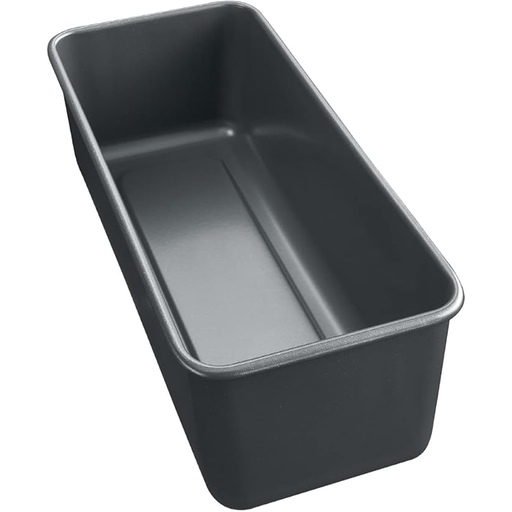
Why This Fits Their Persona: Designed for home bakers who regularly bake bread, especially sourdough, and need a durable, reliable pan that can withstand intensive use.
The cut-resistant enamel base and the ceramic-reinforced KAIRAMIC coating are explicitly sourdough-safe. This permanently solves the problem of flaking coatings.
Extreme durability, heat resistance up to 250°C (482°F), and a cut-resistant base that allows you to slice directly in the pan. The heavy-gauge steel ensures excellent heat distribution.
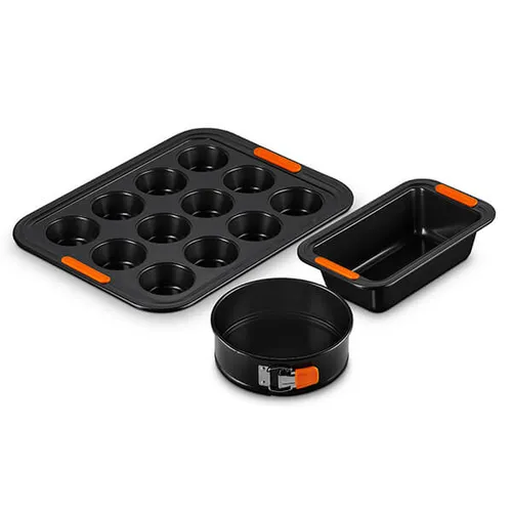
Why This Fits Their Persona: Provides a high-quality starter kit for various baking projects. For those who bake not only loaf bread but also muffins or round cakes, this offers a coordinated set with proven quality.
All pieces are made from heavy-gauge carbon steel that resists warping and ensures perfectly even heat distribution—no more unevenly baked spots.
A comprehensive set for a variety of baking needs. The premium non-stick coating is durable and makes cleanup easy. Heat resistant up to 240°C (464°F).
We have compiled a complete, up-to-date list of products that fully meet these strict selection criteria and safety standards.
The longevity of a non-stick coating heavily depends on proper care. After the pan has cooled, clean it exclusively by hand with warm water, a mild dish soap, and a soft sponge. Absolutely avoid metallic or abrasive cleaning tools like steel wool, as they will permanently damage the coating. Afterwards, dry the pan thoroughly to prevent rust from forming on any uncoated edges.
Not necessarily. The material quality and craftsmanship are more critical than the price tag. However, a more expensive bread pan from a specialized manufacturer is often made of thicker steel that won't warp and features a higher-quality, more durable coating. For someone who only occasionally bakes a simple cake, a more affordable model may suffice. But for those who bake regularly, especially bread or sourdough, investing in a more robust, acid-resistant model pays off in the long run.
Technically, it's possible, but it's not recommended for the lifespan of the pan. The acid in sourdough can attack and reduce the effectiveness of simple non-stick coatings over time. For regular sourdough baking, pans made of enamel, cast iron, aluminized steel, or models with a coating explicitly declared as sourdough-safe are a much more reliable and durable choice.