
Lieferung heute & morgen

Qualitätsgarantie

Willkommens-Angebote freischalten: KOSTENLOSE Lieferung | Bis zu 80 % RABATT | Kostenlose 30-Tage-JoyPlus-Testphase
App herunterladen
A good logic game for children can be a valuable, screen-free activity that is both fun and boosts cognitive skills. However, the market is overwhelming, and many products don't live up to their promises. As a Joybuy Product Recommendation Officer, I'll help you recognise the common pitfalls and make an informed decision that your child will genuinely enjoy.
Many parents invest in a brain game for their children, only to find it left unused after a short time. This is often due to three common problems:
To avoid a bad purchase, you should check a few objective criteria before making a decision. These features determine whether a game will be engaging in the long term and serve its purpose.
A crucial quality indicator is the number of challenges included. Products like those in the Smart Games series often offer over 100 challenges in a single game. A progressive difficulty curve is essential here. The game should start with very simple tasks that introduce the child to the mechanics, then gradually increase to more complex puzzles. This ensures long-lasting fun and allows the child to grow with the game. Such a single-player brain teaser promotes perseverance without being overwhelming.
The longevity of a game depends directly on its materials. Look for sturdy, warp-resistant plastic and a clean finish with no sharp edges. For a kids' travel game, a compact design with a securely closing lid or an integrated storage solution is essential. This keeps all the pieces safely in place, whether in the car, on the train, or on a plane. A game board where the pieces snap into place is a clear advantage over loose components.
The age recommendation on the packaging is only a guideline. Check which cognitive skills the game actually targets. A good puzzle game for ages 8 and up should require not just following instructions, but also spatial reasoning, logical deduction, and forward planning. Games that specifically boost concentration do so by enabling focused, uninterrupted engagement with a single, clearly defined task. This also makes them a thoughtful gift for school-aged children to playfully train the skills required in the classroom.
Based on these criteria, we have identified a few products that are well-suited for different user profiles.
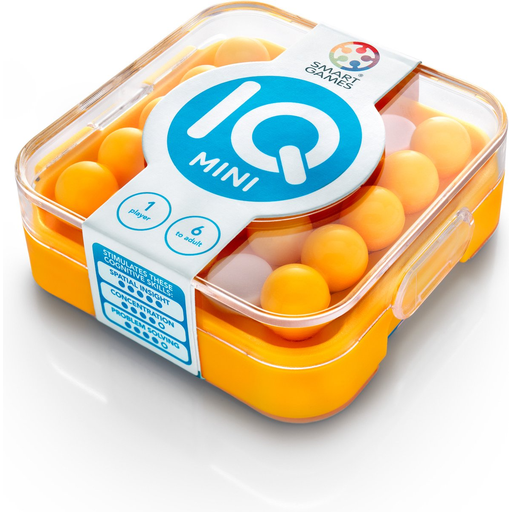
Why This Fits Their Persona: Ideal for children aged 6 and up who are new to logic games. The game concept is easy to understand, and the ability to create your own challenges provides creative freedom.
By moving the blockers, countless new challenges can be created. A QR code also provides access to thousands of additional challenges, which enormously increases its replay value.
Extremely compact, pocket-sized format; encourages creativity by allowing users to create their own puzzles.
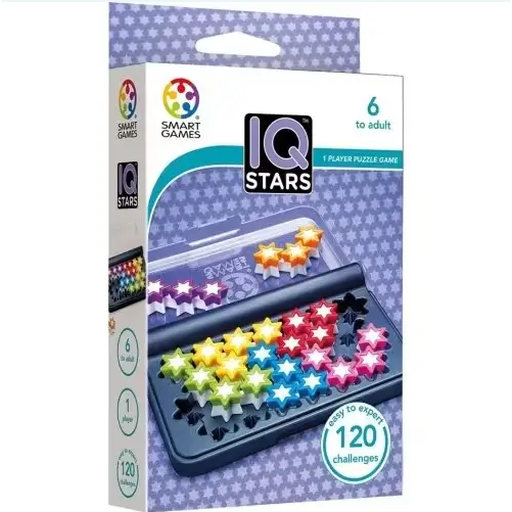
Why This Fits Their Persona: Perfect for families looking for a durable, self-contained game for travel. It fits into any carry-on and provides meaningful engagement on long journeys.
The game board has a transparent lid that keeps all puzzle pieces secure. The sturdy plastic construction withstands the rigours of travel and prevents parts from being lost.
120 challenges with increasing difficulty; very compact and travel-friendly design.
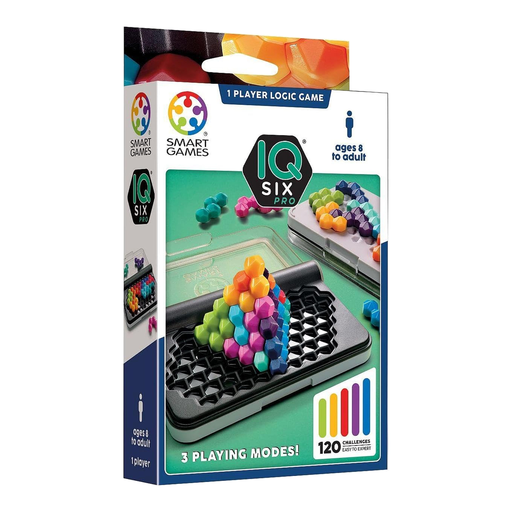
Why This Fits Their Persona: For children aged 8 and up who already have experience with logic games and are looking for a greater challenge. The different game modes offer variety and require different ways of thinking.
This game combines 2D and 3D challenges in one. When a child masters one mode, the other offers a completely new incentive. This prevents boredom and ensures a long-term challenge.
Three different game modes (2D, 3D pyramid, diagonal 2D); promotes high-level spatial reasoning.
We've compiled a complete, up-to-date list of products that meet these strict selection criteria and current safety regulations.
Logic games are beneficial for children from around age 6, as long as they are designed to be age-appropriate. For younger children, games with larger pieces and simpler rules are suitable. From primary school age, more complex IQ games with multiple difficulty levels can be introduced to specifically promote skills like problem-solving and spatial thinking.
A brain game for kids presents a clearly defined task that requires full attention to solve. Unlike digital media, there are no distracting pop-ups or rapid screen changes. The child must focus on a single problem for an extended period, try out different solutions, and remain patient through setbacks. This process trains the "concentration muscle" in a playful way.
Yes, most logic and IQ games are designed as single-player puzzle games. This is one of their major advantages. They allow a child to engage in an independent, quiet activity and foster the ability to solve problems on their own. The sense of accomplishment from mastering a tricky task without help can significantly boost self-confidence.