
Lieferung heute & morgen

Qualitätsgarantie

Willkommens-Angebote freischalten: KOSTENLOSE Lieferung | Bis zu 80 % RABATT | Kostenlose 30-Tage-JoyPlus-Testphase
App herunterladen
Choosing the right tool for pruning trees can be a challenge. An unsuitable device not only damages valuable plants but also quickly leads to fatigue and frustration during garden work. The goal of this guide is to provide you with clear, objective orientation. As your Joybuy Product Recommendation Officer, I've compiled the information you need to make an informed decision and select the perfect lopper model for your specific gardening requirements.
Before you decide on a model, there are several technical aspects to consider. These criteria will help you objectively evaluate a tool's functionality and suitability for your purposes.
The type of blade mechanism is fundamental to the cut quality and the tool's application.
The maximum branch thickness a tool can handle is a crucial performance feature.
The durability and comfort of a tool depend directly on the materials used and its design. Blades made of hardened steel or carbon steel retain their sharpness longer. A non-stick coating reduces friction and prevents plant sap from sticking to the blade, making cleaning easier. Lightweight materials and ergonomically designed handles minimise strain on your hands and arms during extended use.
Based on the criteria above, here is a selection of functional tools suitable for various gardening tasks.

Why It Stands Out: This two-piece set from BLACK+DECKER offers a comprehensive solution for most cutting jobs in the garden. It combines long-handled loppers for reach and power with handy pruners for precision work.
Benefits:
Who It's For: For garden owners looking for a complete pruning set to precisely cut both strong, high branches and delicate shoots on flowers and shrubs.
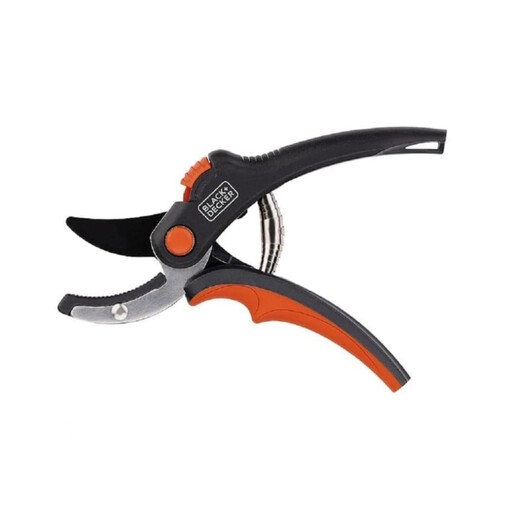
Why It Stands Out: These anvil pruners from BLACK+DECKER are a robust yet lightweight tool for everyday cutting tasks. Their focus is on reliability and ease of use.
Benefits:
Who It's For: Ideal for hobby gardeners who need reliable pruning shears for cutting flowers, trimming hedges, and maintaining smaller shrubs.
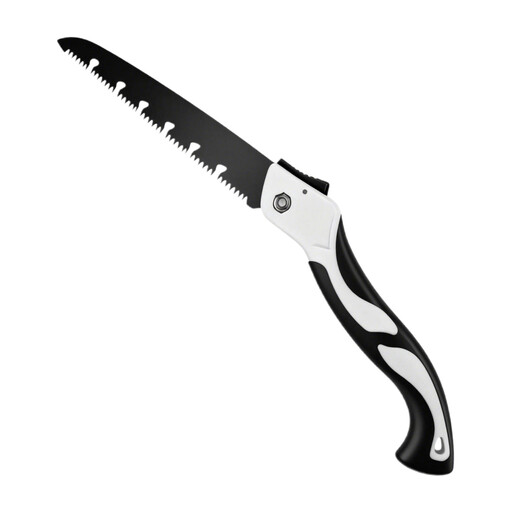
Why It Stands Out: The MADLANDGarden folding garden saw is the solution for branches that are too thick for shears. Its design combines safety, compactness, and high cutting performance.
Benefits:
Who It's For: For users who need a powerful tree trimming tool for thicker branches. It is an excellent complement to classic loppers or tree shears.
The products presented here cover a wide range of applications. If the ideal tool for your specific project isn't among them, there are other alternatives to explore. Every garden landscape has its own unique requirements.
Browse our assortment and find the device that is a perfect match for you and your garden. Discover our entire collection of black garden tools and find the perfect tool for your needs.
Bypass shears have two blades that slide past each other, creating a clean cut ideal for living wood. Anvil shears have one blade that presses against a flat surface, providing more power for cutting dead or hard wood.
The maximum cutting capacity depends on the model. Simple hand pruners are designed for diameters up to about 2 cm. Loppers with long handles can typically manage branches up to 4-5 cm. For anything thicker, a pruning saw is recommended.
To ensure the longevity and function of your tools, you should clean them after each use to remove plant sap and dirt. Dry the blades thoroughly and lightly oil the joint and blades occasionally to prevent rust and ensure smooth operation.