
Lieferung heute & morgen

Qualitätsgarantie

Willkommens-Angebote freischalten: KOSTENLOSE Lieferung | Bis zu 80 % RABATT | Kostenlose 30-Tage-JoyPlus-Testphase
App herunterladen
A missing or unreliable internet connection can significantly disrupt daily life—whether for your home office, evening streaming, or connecting a holiday home. A traditional fixed-line connection is often not an option, especially in rural areas, new housing developments, or for mobile applications like in a camper van. An LTE router offers a flexible and high-performance alternative by establishing an internet connection via the mobile network.
As your Joybuy Product Recommendation Officer, I have analysed various approaches and devices to provide you with clear guidance. This article introduces practical solutions to help you set up a stable Wi-Fi network without a fixed-line connection—from simple models for basic needs to advanced mesh systems for seamless coverage.
Before making a decision, there are several technical aspects to consider to find the right solution for your individual needs.
The primary use case determines the type of device you need.
The achievable speed depends on the supported LTE category (e.g., Cat4, Cat6) and your mobile provider's network coverage.
The size of your living space determines whether a single router is sufficient.
Based on these criteria, we have compiled a selection of products that cover different requirements.

What makes it stand out The TP-Link TL-MR100 is a plug-and-play solution for anyone who needs internet via mobile network quickly and without technical expertise. Simply insert a SIM card, connect the device to power, and your connection is ready.
Advantages
Who is it for? Ideal for users in holiday homes, small apartments, or as a cost-effective backup solution. It's the right choice when the priority is a basic, reliable internet connection without a complex setup.
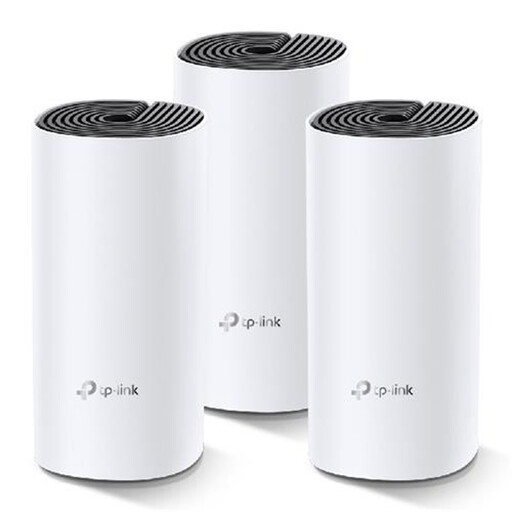
What makes it stand out The TP-Link Deco M4 is not an LTE router, but a Mesh Wi-Fi system designed to eliminate Wi-Fi dead zones. It works perfectly with an existing modem—such as a simple LTE modem or the TL-MR100 mentioned above—to seamlessly distribute its signal throughout a large home.
Advantages
Who is it for? For residents of large houses or multi-storey apartments who already have an internet source (or plan to get a simple LTE router) but struggle with inconsistent Wi-Fi coverage.
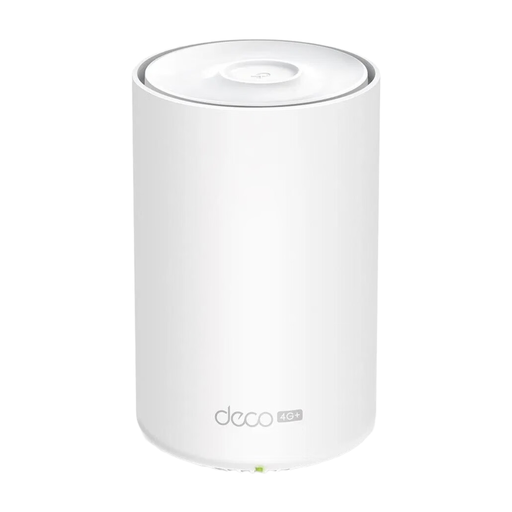
What makes it stand out The Deco X10-4G combines the best of both worlds: it is a powerful 4G router with a SIM card slot and a modern Mesh Wi-Fi system with Wi-Fi 6 technology. This device is designed to supply an entire home with fast, stable internet without a fixed-line connection.
Advantages
Who is it for? For demanding users seeking a future-proof, all-in-one solution for their home or large office. It is the perfect choice when both a fast mobile connection and excellent Wi-Fi coverage are required for numerous devices used for streaming, online gaming, and home office work.
Didn't find the right solution for you? Explore more router and network solutions in our range to find the ideal option for your needs.
An LTE router, also known as a 4G router, is a device that establishes an internet connection via the mobile network (4G/LTE) instead of a physical line like DSL or fibre optic. You insert a SIM card with a data plan into the router, which then connects to the nearest mobile tower. The router then creates a local Wi-Fi network that you can use to connect your devices, such as laptops, smartphones, or smart TVs.
You will need a SIM card with an active data plan. This can be a dedicated data-only plan for routers, which many mobile providers offer, or in some cases, a second SIM card from your existing mobile phone contract (Multi-SIM). When choosing a plan, ensure it has a sufficiently high data allowance, especially if you plan to stream video or download large files, as some plans severely throttle your speed after the included data is used up.
For many users, yes. Modern LTE connections (especially 4G+) offer speeds that can compete with many DSL connections and are sufficient for most applications, including streaming, working from home, and browsing. Potential disadvantages can include higher latency (ping) compared to fibre optic, which might be relevant for highly competitive online gamers, and potential data caps. However, for users in areas without high-speed fixed-line internet, internet via the mobile network is often by far the most powerful alternative.