
Lieferung heute & morgen

Qualitätsgarantie

Willkommens-Angebote freischalten: KOSTENLOSE Lieferung | Bis zu 80 % RABATT | Kostenlose 30-Tage-JoyPlus-Testphase
App herunterladen
By the Joybuy Product Recommendation Officer
Luosifen, the famous noodle soup from Liuzhou, has gained renown for its unique and intense flavour profile. The combination of sour, spicy, salty, and umami, paired with the distinctive aroma of fermented bamboo shoots, is unmistakable. For lovers of authentic Chinese cuisine in the UK, or for curious foodies whose interest was piqued by social media trends, the question often arises: Where can you buy authentic Luosifen, and which variety is right for you?
This article serves as a practical buying guide. We will introduce a selection of instant Luosifen and explain the key differences to make your decision easier. Our goal is to provide you with objective information so you can find the perfect snail noodles to suit your taste.
The selection of instant noodles from China can be overwhelming. With Luosifen, the details matter. Here are three points to help you choose.
Luosifen is known for its complexity. The characteristic smell comes from the pickled bamboo shoots, while the heat comes from the chilli oil.
A good packet of Luosifen contains more than just noodles and a soup base. The quality and variety of the topping sachets are crucial for an authentic experience. Look for the following components:
A packet with many separate toppings allows for a more customised preparation.
While the classic spicy noodle soup is the most well-known version, there are now many variations. Brands that specialise in Liuzhou rice noodles often offer the most traditional experience. However, it's also worth discovering new interpretations. For example, there are tomato-flavoured versions that offer a fruitier and milder alternative.
Based on the criteria above, we have compiled a selection of different Luosifen products that cater to various taste preferences.
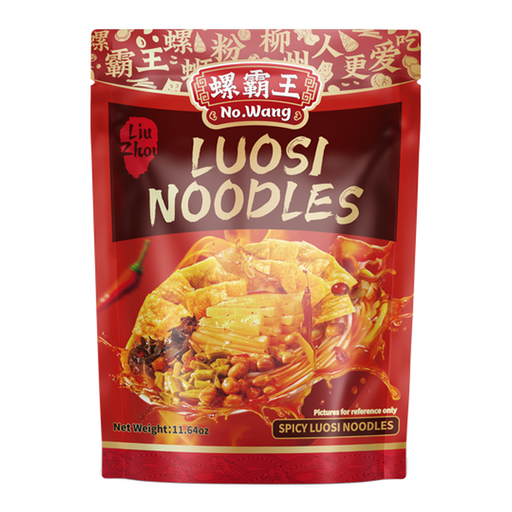
Why It Stands Out: This product from Luobawang aims to replicate the authentic taste of Liuzhou's night markets. It offers a complex interplay of sour, spicy, and savoury, complemented by Szechuan pepper for a light numbing effect (mala).
Pros:
Who It's For: Anyone seeking the classic, spicy, and slightly numbing taste of Luosifen and aiming for an authentic flavour experience.
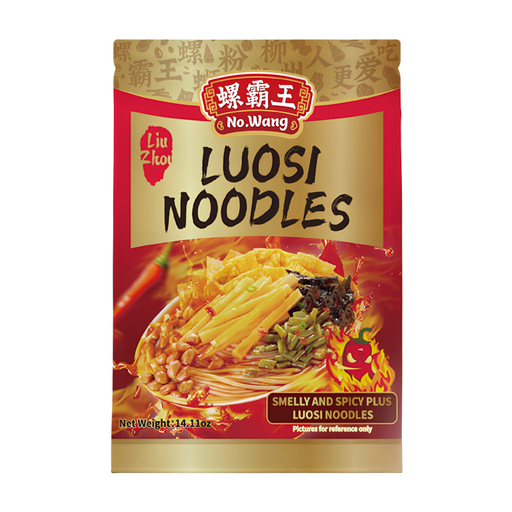
Why It Stands Out: This version from Luobawang is aimed at seasoned Luosifen eaters. The "Extra Spicy & Strong Smell" label clearly indicates a more intense experience, both in terms of heat and the aroma of the bamboo shoots.
Pros:
Who It's For: Luosifen lovers who appreciate particularly intense heat and the powerful, unmistakable aroma of fermented bamboo shoots.

Why It Stands Out: With this variety, Haohuanluo offers an interesting twist on the classic. The traditional flavour is enhanced with a rich tomato base, resulting in a fruitier and slightly milder broth.
Pros:
Who It's For: Curious foodies who want to try a more approachable version of Luosifen, as well as fans looking to discover a new flavour of the popular dish.
These three products offer a great introduction to the world of Luosifen. But the variety is even greater. There are numerous other brands and flavours to discover, from mild to extremely spicy.
If you're curious about other varieties or didn't find your favourite brand here, you can find more options in our comprehensive category.
Explore All Snail Noodles Here
Luosifen is a traditional Chinese noodle soup from the city of Liuzhou in the Guangxi region. It consists of rice noodles in a spicy broth, typically made from river snails and pork bones. The intense and often described as "pungent" smell does not come from the snails, but from the fermented bamboo shoots, which are an essential ingredient.
Not necessarily. The spiciness of Luosifen mainly comes from the chilli oil, which is included as a separate sachet in most instant packets. You can decide how much chilli oil to add or leave it out entirely to enjoy a mild version. There are also varieties, like the tomato version, that are naturally less spicy.
The preparation is straightforward. Typically, the dried rice noodles are first boiled in water until soft, then drained. In a new pot, fresh water is brought to a boil with the soup base and liquid seasoning packets. The cooked noodles are then added and briefly simmered. Finally, the remaining toppings like peanuts, tofu skin, bamboo shoots, and vinegar are added. The exact instructions are always on the packaging.