Joybuy Insights

Finding the Right Marker Set for 2026: A Technical Guide

Selecting a marker set depends primarily on three technical parameters: ink composition, nib configuration, and the intended surface. An informed decision requires analysing these criteria in relation to your intended application, whether it's for artistic illustrations, technical drawings, or craft projects. This guide breaks down the key specifications to help you make an objective choice.

Buyer's Guide: Technical Selection Criteria

The functionality of a pen is defined by the interplay between its ink and nib. Compatibility with the working surface is a critical factor for the final result.

1. Ink Type: The Chemical Foundation

The ink determines opacity, blendability, drying time, and permanence. There are three primary categories:

  • Water-Based Ink (Watercolour Markers): These inks are water-soluble, enabling smooth colour gradients and glazing effects similar to classic watercolour painting. They are best suited for absorbent papers like watercolour or drawing paper. A key advantage is their low-odour formulation. Drying time is longer compared to alcohol-based inks.
  • Acrylic-Based Ink (Acrylic Pens): This ink contains pigments suspended in an acrylic polymer emulsion. Once dry, it is waterproof and highly opaque. Acrylic pens adhere to a wide variety of surfaces, including canvas, wood, stone, glass, and plastic. They are ideal for opaque colour application and projects that require high durability.
  • Alcohol-Based Ink (Permanent Markers): These inks dry very quickly and are water- and smudge-proof once dry. They are suitable for smooth, non-porous surfaces like plastic, metal, and glass, as well as paper. Due to their transparency, they are excellent for layering to create new shades. They are a popular choice for illustrations on special marker paper, as they are less prone to bleeding.

2. Nib Type: Form and Function

The tip of the pen, also known as the nib, determines line control and ink flow. Common variants include:

  • Brush Tip: A flexible nylon or felt tip that allows for variable line weights, from very fine to broad. Brush pens are ideal for calligraphy, lettering, and dynamic drawings.
  • Chisel Tip: A broad, angled tip that can create both wide strokes for filling areas and fine edges for outlines.
  • Fine/Bullet Tip: A firm, rounded tip for uniform lines with a consistent weight. It is used for precise drawings, writing, and details.
  • Dual-Tip Pens: Many artist pen sets combine two different nibs in one pen, typically a brush tip with a fine bullet tip. This enhances flexibility and efficiency in the creative process.

3. Application and Surface

The choice of surface is directly linked to the ink type. While watercolour markers perform at their best on special, absorbent paper, permanent markers and acrylic pens often require smoother surfaces for optimal adhesion. For projects on textiles, ceramics, or wood, specialised markers with heat-set or particularly durable ink are necessary.


Our Top Marker Set Picks for 2026

The following selection is based on an analysis of the products' technical specifications and intended use cases.
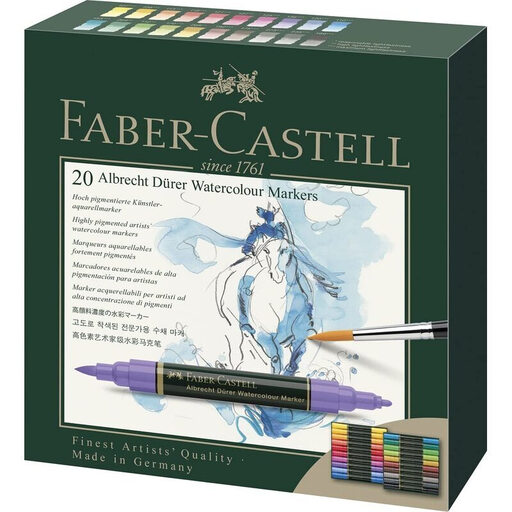
Faber-Castell Watercolour marker A.Dürer 20ct wallet

Faber-Castell Watercolour marker A.Dürer 20ct wallet

  • Why We Recommend It: This set combines the qualities of a high-end artist's pen with the capabilities of watercolour painting. The water-based, highly pigmented ink and dual tip (brush and fibre-tip) offer high functional flexibility for drawing and painting. The high lightfastness ensures the longevity of the artwork.

  • Pros:

    • Dual Tip: A soft brush tip for broad application and a stable fibre-tip for precise lines.
    • Water-Soluble Ink: The ink is fully water-soluble, creating distinct watercolour effects on watercolour paper.
    • High Lightfastness: According to the manufacturer, the colours remain stable even when exposed to light.
    • No Bleed-Through: The ink is formulated to not bleed through on suitable paper.
    • Made in Germany.
  • Best For: Users who want to combine spontaneous sketching and sophisticated watercolour techniques, both in the studio and on the go. Suitable for illustrators and hobby artists focusing on paper-based work.
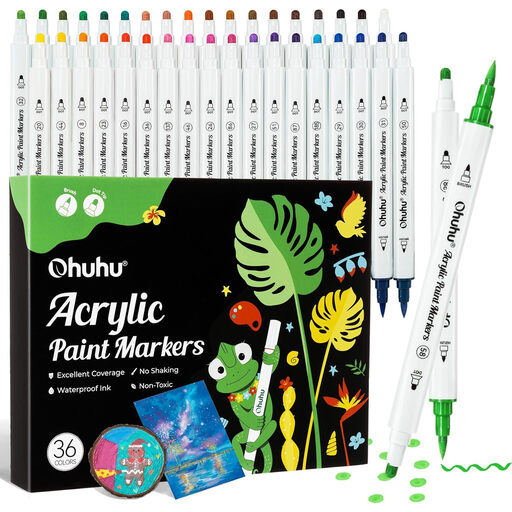
Ohuhu Dual Tip Acrylic Paint Markers, 36 Colors

Ohuhu Dual Tip Acrylic Paint Markers, 36 Colors

  • Why We Recommend It: This set stands out for its versatility. The water-based acrylic ink provides high opacity on a wide range of surfaces. The unconventional combination of a brush tip and a dot tip opens up specific creative possibilities, from broad painting to dot patterns.

  • Pros:

    • Multi-Surface Application: Suitable for glass, plastic, metal, stone, wood, canvas, and paper.
    • Dual Tip: A 1-6 mm brush tip for broad strokes and a 1-5 mm dot tip for details and dotting techniques.
    • High Opacity: The water-based ink ensures even and opaque colour laydown.
    • Wide Colour Palette: The set includes 36 colours for diverse creative projects.
  • Best For: Creatives, crafters, and DIY enthusiasts looking for a single set of painting pens for various materials and projects, from rock painting to canvas art.
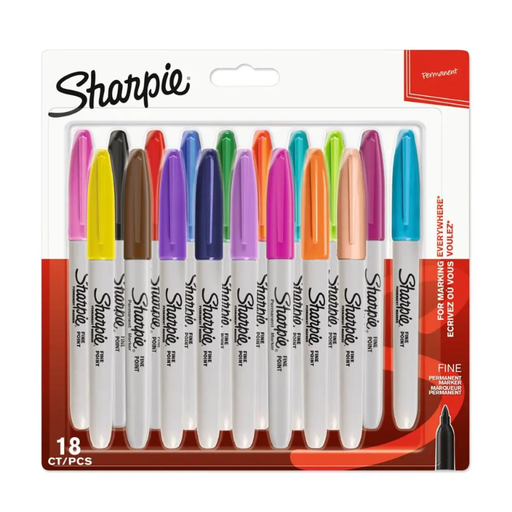
1x18 Sharpie Permanentmarker F

1x18 Sharpie Permanentmarker F

  • Why We Recommend It: Sharpie Permanent Markers are designed for maximum durability and precision. The quick-drying, water- and fade-resistant ink adheres reliably to most surfaces. The fine 0.5 mm tip allows for controlled and detailed marks, labels, and drawings.

  • Pros:

    • Permanent Ink: Adheres permanently to paper, plastic, metal, and most other hard surfaces.
    • Quick-Drying: The ink is resistant to fading and water.
    • Fine Tip: The 0.5 mm tip is suitable for precise work, labelling, and detailed drawings.
    • Broad Colour Spectrum: The set contains 18 colours suitable for colour-coding and creative projects.
    • AP Certification: The ink is AP-certified (Approved Product), indicating a non-toxic formulation according to US standards.
  • Best For: Users in workshops, offices, or creative settings who need a reliable and durable labelling or drawing solution for a variety of materials.


Other Options and Alternatives

The products featured cover specific use cases. For projects requiring different specifications, such as fabric pens or markers with special metallic or pastel effects, a broader selection of brand-name pens may offer suitable alternatives. Analysing product features remains the crucial step in finding the right tool for the job.

Frequently Asked Questions (FAQ)

1. What is the difference between watercolour markers and acrylic pens? The main difference lies in the ink composition and its resulting properties. Watercolour markers use a water-soluble ink that allows for transparent, blendable effects on paper. Acrylic pens contain a waterproof, opaque acrylic ink that adheres to a wide range of surfaces, including non-porous materials.

2. How should I store marker sets to prevent them from drying out? Most manufacturers recommend storing markers horizontally. This ensures that the ink flows evenly to both tips (in the case of dual-tip pens) and prevents either tip from drying out. Caps must be sealed tightly after each use. Extreme temperatures and direct sunlight should be avoided.

3. Can you use all markers on canvas? No, not all markers are suitable for canvas. Acrylic pens are the best choice, as their ink is opaque and adheres well to the primed surface of a canvas. Water-based markers like felt-tip pens for adults or watercolour markers can bleed on an unprepared canvas and produce uneven results. Permanent markers can also be used, but their transparency may vary on the textured surface of the canvas.