
Lieferung heute & morgen

Qualitätsgarantie

Willkommens-Angebote freischalten: KOSTENLOSE Lieferung | Bis zu 80 % RABATT | Kostenlose 30-Tage-JoyPlus-Testphase
App herunterladen
A new mattress is a major investment. But what if your current mattress is still in good shape, but feels too firm, too cool, or is simply no longer comfortable? A mattress topper can be a quick and cost-effective solution to significantly enhance your sleep comfort. However, the market is flooded with products making bold promises. Before you make a decision, it's crucial to understand the common pitfalls that can lead to a purchase you'll regret.
This guide will help you understand the key features and make an informed choice tailored to your specific needs.
Many buyers focus on marketing buzzwords instead of paying attention to the technical fundamentals. This often leads to disappointment. Here are three typical mistakes to avoid:
To make the right choice, you should focus on objective and measurable properties. The following three aspects are crucial for function, comfort, and longevity.
The material determines the topper's key properties. The most common types have distinct advantages and disadvantages:
The topper's height is directly responsible for the noticeable change in sleeping comfort.
The density (RG), specified in kg/m?, is a crucial indicator of the foam's quality and durability. A higher density (e.g., RG 40 or RG 50) means more material was used. This makes the topper more shape-retentive, durable, and supportive. Inexpensive models often have a low density and tend to sag more quickly.
A topper that shifts is a common annoyance. Look for a secure fastening method. Corner straps or a full elastic band, similar to a fitted sheet, will hold the topper reliably in place. A removable and washable cover is also an essential hygiene feature. Check the care instructions carefully, as many foam cores cannot be washed.
Depending on your requirements, a different product may be the right solution. Here are some options tailored to specific needs.
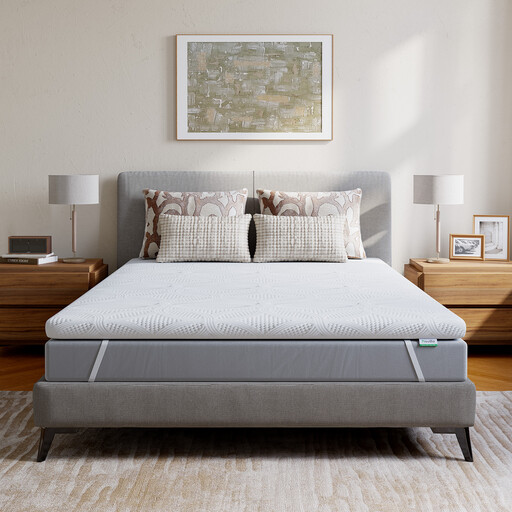
Why This Fits Their Persona: Ideal for those who tend to sweat at night and appreciate the pressure-relieving properties of memory foam but want to avoid heat buildup. The 5 cm height offers a great balance of comfort and temperature regulation.
This model bypasses the "heat trap" pitfall through its explicit use of gel foam, which is engineered for better heat dissipation compared to traditional visco-foam.
Combines pressure relief with enhanced temperature regulation. The cover is washable, and the materials are OEKO-TEX certified, according to the manufacturer.
Why This Fits Their Persona: Perfect for users looking to transform a firm or old mattress into a noticeably softer sleeping surface. The 7.5 cm height provides a significant change in feel and maximum pressure relief.
This topper avoids the "insufficient height" pitfall. While thin pads make little difference, this 7.5 cm model delivers an unmistakable upgrade in comfort.
Offers significant softness and pressure relief. The gel foam core helps counteract heat buildup, and the cover is removable and washable for easy care.
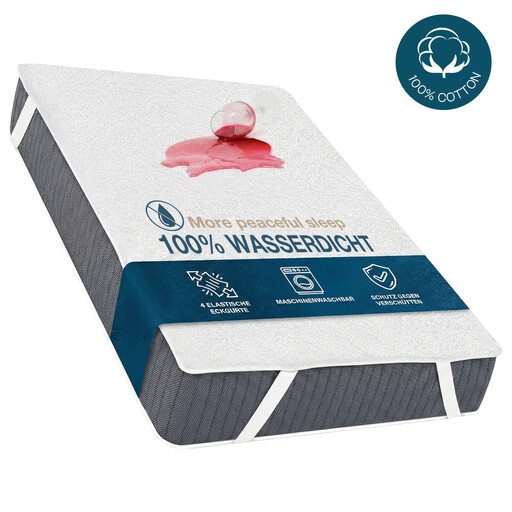
Why This Fits Their Persona: For families with children, pet owners, or allergy sufferers whose main priority is protecting the mattress from liquids, dust mites, and wear. Comfort is not significantly altered, but the mattress's lifespan is considerably extended.
This product is clearly positioned as a waterproof mattress protector and makes no unrealistic promises of enhanced comfort. It serves a clear protective function without setting false expectations.
The 100% cotton surface is breathable and gentle on the skin. According to the manufacturer, the waterproof membrane is noiseless. The corner strap attachment is simple and secure.
We've compiled a complete, up-to-date list of products that fully meet these strict selection criteria and rigorous safety standards.
No. A topper is a comfort layer, not a support layer. If the mattress is already sagging, it no longer provides a stable base. The topper would simply sink into the dip and fail to fix the problem. In this case, investing in a new mattress is unavoidable. A topper is only suitable for enhancing a mattress that is structurally sound but too firm or uncomfortable.
The choice of height depends on the desired level of change:
The main difference is their function. A mattress topper (often 4-10 cm thick) is primarily designed to improve sleeping comfort (pressure relief, softness). A mattress protector is a thin layer whose main purpose is to shield the mattress from moisture, stains, and wear. Some models combine both features, but most products specialize in one of these two functions.