
Lieferung heute & morgen

Qualitätsgarantie

Willkommens-Angebote freischalten: KOSTENLOSE Lieferung | Bis zu 80 % RABATT | Kostenlose 30-Tage-JoyPlus-Testphase
App herunterladen
By Joybuy Product Recommendation Officer, 28 August 2026
Deciding which mineral water to buy seems simple at first glance. On closer inspection, however, the water market reveals itself to be a field of marketing promises and unclear labelling. Many consumers pay for products that don't deliver on their promises. This guide will help you avoid the most common pitfalls and make an informed choice that meets your needs.
Before you make your next purchase, be aware of these common issues to avoid disappointment and unnecessary expense.
To find the right mineral water, focus on these three objective criteria. They will help you assess quality, regardless of advertising messages.
The most fundamental decision concerns the level of carbonation. The designations are relatively standardised in Germany:
The term "mineral water" is only justified if it contains a significant amount of dissolved minerals. You can find the exact values in the "analysis summary" on the bottle's label. Pay special attention to:
Brands like Gerolsteiner Mineral Water or Adelholzener Water are often distinguished by their transparent and high mineralisation, which is based on their geological origin.
The origin is not just a marketing tool; it determines the unique mineral composition of a water. Water from the Volcanic Eifel region (e.g., Gerolsteiner) is typically rich in calcium, magnesium, and bicarbonate because it is filtered through volcanic rock. Water from the Alps (e.g., Adelholzener) often has a different, yet equally balanced, mineral profile. The "Bottled at the source" statement guarantees that the water is bottled in its pristine purity.
Here are some recommendations tailored to specific profiles that meet the criteria mentioned above.
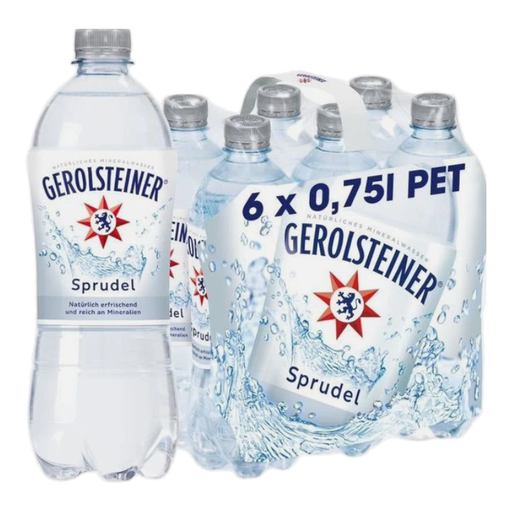
Why This Fits Their Persona: Ideal for post-workout recovery. The high mineral content helps to replenish electrolytes like calcium and magnesium lost through sweat. The strong carbonation provides maximum refreshment.
It sidesteps the trap of vague mineral claims with a clear declaration. According to the manufacturer, 1 litre covers more than 1/3 of the daily calcium requirement and 1/4 of the magnesium requirement.
High content of calcium (348 mg/l) and magnesium (108 mg/l). Natural origin in the Volcanic Eifel region.
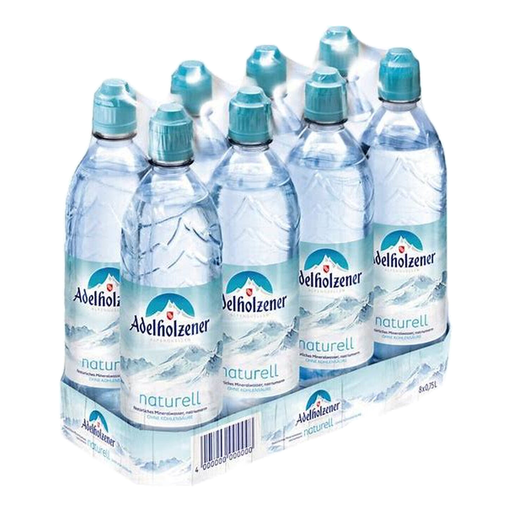
Why This Fits Their Persona: With its pure and gentle taste, this still water is ideal for daily enjoyment for the whole family. Without carbonation, it is particularly gentle and versatile, and can also be used for preparing food.
This is a certified "Natural Mineral Water" from the Bavarian Alps. There are no misleading labels – just pure water bottled at the source.
Balanced mineralisation with 70.4 mg/l calcium and 32.8 mg/l magnesium. Sourced from a protected spring in the Alps.
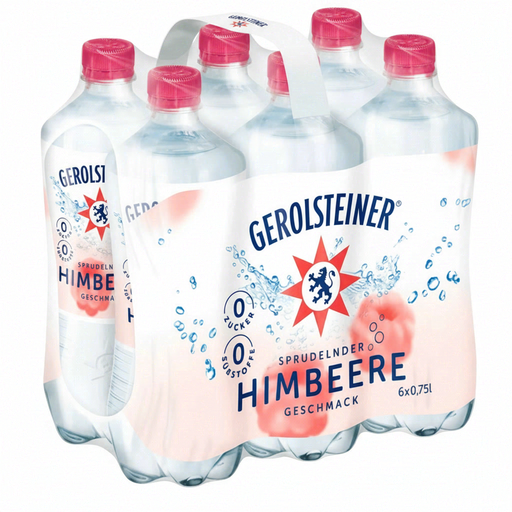
Why This Fits Their Persona: For anyone who wants flavour but without the sugar and calories. This water offers a fruity note derived solely from natural flavouring, making it a great choice for a conscious diet.
Solves the hidden sugar problem. The product description explicitly confirms: zero sugar, zero calories, and no artificial sweeteners. The taste comes exclusively from natural raspberry flavouring.
Combines the high mineral content of Gerolsteiner mineral water with refreshing flavour and zero calories. Vegan and suitable for diabetics.
The convenience of having a case of water delivered is another factor that is particularly important for families, offices, or people who want to avoid heavy lifting. Online ordering allows for easy stocking up without the physical strain.
We've compiled a complete, up-to-date list of products that fully meet these strict selection criteria and German regulations.
1. What exactly does "Natural Mineral Water" mean in Germany? "Natural Mineral Water" is a protected designation under the German Mineral and Table Water Ordinance (MTVO). It must originate from an underground, protected source, be of pristine purity, and be bottled directly at the source. Its mineral composition must remain constant within the scope of natural fluctuations, and it requires official approval.
2. How long does opened mineral water last? Once opened, mineral water should be stored in a cool, dark place. Still water should be consumed within 2-3 days, as germs can multiply more quickly. Carbonated water lasts a little longer due to the acidity but will lose its fizz after a few days.
3. Is it worth having a case of water delivered? Yes, especially for households with high consumption, offices, or individuals with limited mobility, having cases of water delivered is a significant convenience. It saves time, travel, and the physical effort of carrying heavy cases. Many online retailers offer this service, often including convenient deposit returns.