
Lieferung heute & morgen

Qualitätsgarantie

Willkommens-Angebote freischalten: KOSTENLOSE Lieferung | Bis zu 80 % RABATT | Kostenlose 30-Tage-JoyPlus-Testphase
App herunterladen
A mini-fridge promises chilled drinks in the office, fresh snacks in the gaming room, or proper storage for cosmetics. However, the market is flooded with models whose real-world performance often fails to match their marketing claims. Before you make a decision, it's crucial to understand the common pitfalls that can lead to a bad purchase.
As your Joybuy Product Recommendation Officer, I'll help you correctly interpret technical specs and find an appliance that truly meets your needs.
Many buyers are quickly disappointed when their appliance turns out to be too loud, too weak, or impractical. This is often due to three common misconceptions that are deliberately exploited by marketing.
To avoid these traps, you should focus on three objective criteria. These will determine whether a mini-fridge is right for your purpose.
The type of cooling is the most important factor for performance and application.
Don't just look at the total volume; also consider the internal dimensions and layout. Check if the shelf height is sufficient for your typical beverage bottles. A good countertop fridge or beverage fridge offers adjustable shelves and practical door compartments to make the most of the space. Models with a reversible door hinge offer additional flexibility in placement.
For appliances that run continuously, consumption and noise level are critical.
Here are some models that represent a considered choice for specific user profiles, based on their technical specifications.

Why This Fits Their Persona: Ideal for mobile use in a car, truck, or while camping. The 12V/24V connection and robust construction are designed for the demands of travel. The 36-litre capacity offers enough space for several days' worth of supplies.
Thanks to compressor technology, this unit reliably cools to the set temperature (down to -20°C), regardless of the heat inside the vehicle. It completely bypasses the "Relative Cooling" trap.
Two independently controlled cooling zones allow for simultaneous chilling of drinks and freezing of food. The integrated battery protection prevents draining the vehicle's battery.
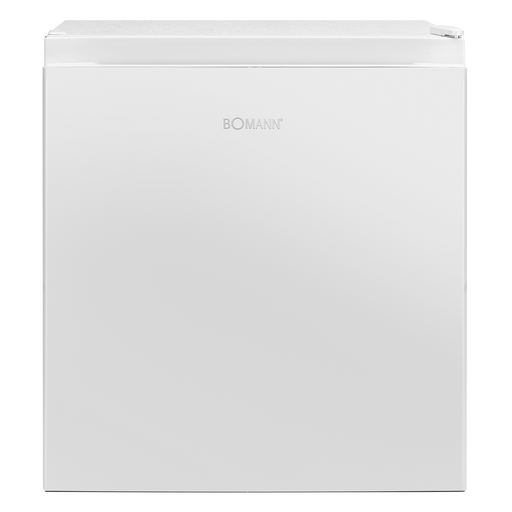
Why This Fits Their Persona: A classic solution for students, office workers, or as a secondary unit in a guest room. Its compact design fits under a desk, while the small freezer compartment is practical for ice cubes or frozen snacks.
With a noise emission of 39 dB, its operation is objectively quiet and suitable for living and working environments. The freezer compartment's capacity is clearly specified at 4 litres, not just a vague suggestion.
Offers a combination of cooling and freezing functions in a very compact format. The reversible door hinge and adjustable feet ensure easy integration into any environment.
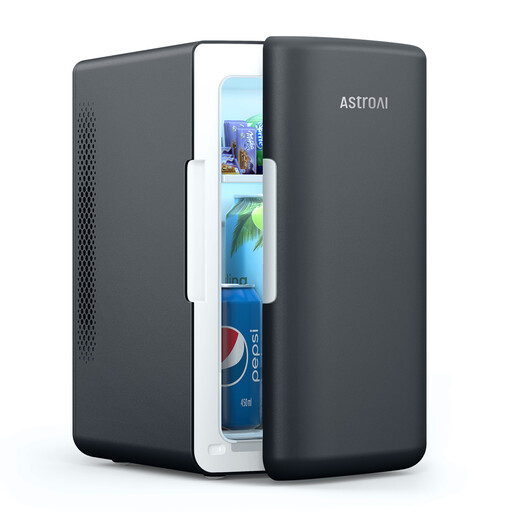
Why This Fits Their Persona: Perfect for beauty enthusiasts who want to store serums, creams, and masks in a cool place to extend their shelf life and efficacy. The small, stylish design fits on any vanity.
This appliance is a dedicated cosmetics fridge with thermoelectric cooling. It doesn't promise freezing capabilities, but rather the moderate cooling ideal for skincare products, thus avoiding the "Relative Cooling" trap for this specific purpose.
Very quiet operation and extremely compact dimensions. Thanks to AC and DC power cords, it can be used both at home and in the car. The removable shelf adds flexibility.
We have compiled a complete, up-to-date list of products that fully meet these strict selection criteria and rigorous safety standards.
1. How much power does a mini-fridge consume? Power consumption depends heavily on the size, cooling technology, and energy efficiency class. A modern countertop fridge with a compressor and Energy Class E, like the Bomann KB 7245, consumes about 80 kWh per year according to the manufacturer's specifications. Thermoelectric models often consume more power relative to their small size, especially when running continuously.
2. Can you freeze food in a mini-fridge? That depends on the model. Thermoelectric units cannot freeze. Compressor models can, but only if they have a designated freezer compartment (often with a 1- or 2-star rating for short-term freezing) or an adjustable temperature below 0°C. For long-term food storage, an appliance with a 4-star freezer compartment is required, which is less common in mini-fridges.
3. How loud is a mini-fridge, and can I put it in my bedroom? For use in a bedroom, the noise emission should be under 40 dB. Many modern compressor mini-fridges achieve levels of 37-39 dB. Thermoelectric models don't have loud compressor noises, but their fan produces a constant hum that some people may find disruptive. Always check the exact decibel rating in the product specifications.