Lieferung heute & morgen

Qualitätsgarantie

Willkommens-Angebote freischalten: KOSTENLOSE Lieferung | Bis zu 80 % RABATT | Kostenlose 30-Tage-JoyPlus-Testphase
App herunterladen
The afternoon sun casts long shadows through the tall windows of a period apartment. Dust motes dance in the beams of light. A gentle breeze may be blowing outside, but inside, especially on the upper floors and in attic spaces, a silent, oppressive warmth has taken hold. It's a condition familiar to many residents of European cities—a heat that builds over days, seemingly stored within the walls. Opening the windows offers little relief, only the sounds of the city. In these moments, the home transforms from a sanctuary into a space where concentration and rest become difficult. The question is no longer how to endure the heat, but how to regain control over one's own indoor climate.
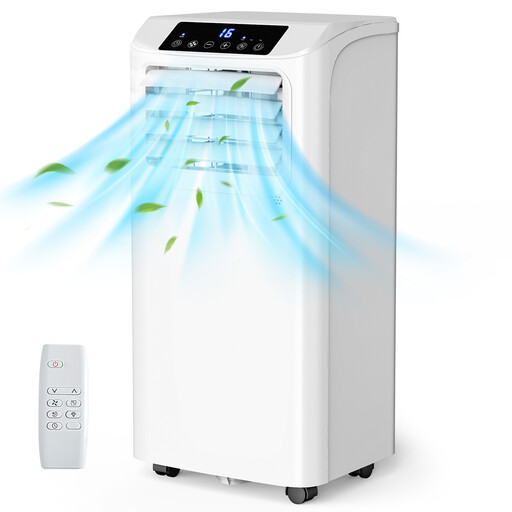
The conscious design of a living space extends beyond aesthetics. It also encompasses the quality of the air we breathe and the temperature that surrounds us. In this context, a mobile air conditioner is not just a technical device, but a tool for creating a personal comfort zone. Unlike fans, which merely circulate air, a mobile air conditioner with an exhaust hose actively removes heat and moisture from the room and directs it outside. This physical process is the key to a noticeable and lasting cool-down.
However, the decision for such a device involves careful consideration. Older models were often loud and difficult to integrate into a thoughtfully designed interior. Yet, development has made significant strides. Modern units prioritise a minimalist design, a small footprint, and, above all, quiet operation. A quiet air conditioner for the bedroom with a special sleep mode that intelligently adjusts fan speed and temperature overnight is now a realistic goal. For particularly noise-sensitive environments, the concept of the mobile split air conditioner also exists. Here, the compressor, the primary source of noise, is placed in a separate outdoor unit, making indoor operation virtually silent.
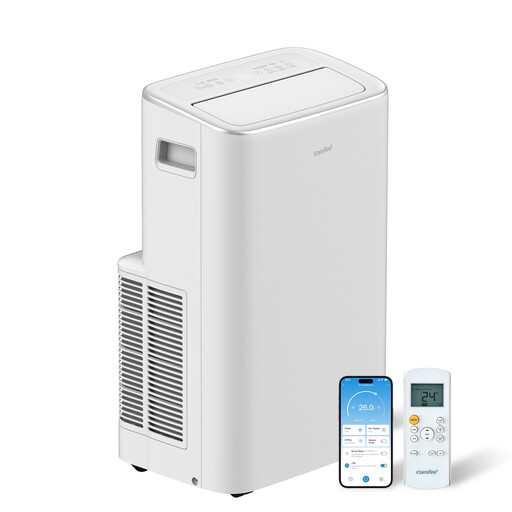
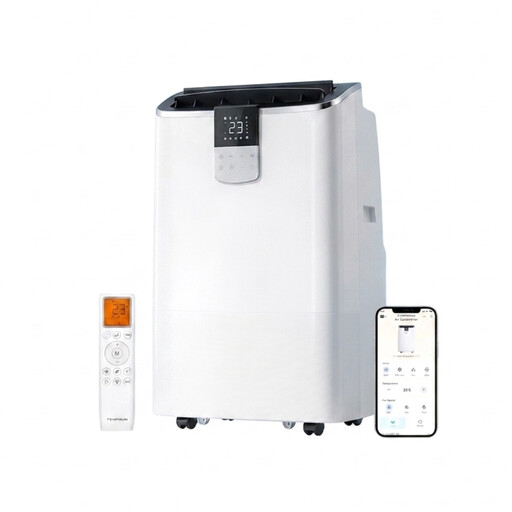
Integration into daily life is facilitated by digital interfaces. An air conditioner with app control allows you to pre-cool the room on your way home or to schedule its operation with precision. This is not only convenient but also efficient. Efficiency is a central theme. An energy-efficient air conditioner with a high energy efficiency class (A+ or higher) and the environmentally friendly R290 refrigerant not only reduces running costs but also minimises the ecological footprint. Choosing the right power, specified in BTU (British Thermal Unit), is also crucial. For example, a 9000 BTU air conditioner is well-suited for rooms up to about 30 square metres, while larger or sun-exposed areas require a higher capacity. However, the effectiveness of any unit hinges on an often-overlooked detail: a properly fitted window seal for mobile air conditioners. It prevents warm outside air from flowing back into the cooled room, which would undermine the unit's efficiency.
The selection of an air conditioner should be viewed as a curated decision for one's own well-being. Some models extend their functionality beyond the summer months, becoming year-round companions. An air conditioner with a heating function, such as that found in the Daitsu APD 12FCX Mobile Air Conditioner or the Electrolux Comfort 600 EXP26U339HW, can serve as an additional heat source during the transitional seasons. This multifunctionality transforms a seasonal appliance into a considered investment in year-round living comfort. The devices combine cooling, heating, dehumidification, and ventilation in a single, unobtrusive casing.
For users whose top priority is minimal operating noise, the mobile split-unit principle offers a compelling solution. The Midea PortaSplit Cool Air Conditioner separates the indoor and outdoor units, achieving a sound pressure level of just 38 dB(A) in silent mode, according to the manufacturer. This ensures an undisturbed atmosphere, whether in a home office or a bedroom. At the same time, the conscious use of resources is becoming an ever-stronger focus. Models like the Comfee Mobile Air Conditioner Environmentally Friendly Pro with an A+ energy efficiency class demonstrate that powerful cooling and responsible energy consumption are compatible.
The functionality of the entire system stands or falls with its correct installation. The exhaust hose must efficiently channel the warm air outside. A specially designed Portable Air Conditioner Window Seal is not an optional accessory here, but an essential component. It is attached to the window frame with Velcro and seals the gap around the hose, which minimises energy loss and maximises cooling performance. And when a device reaches the end of its life cycle, thoughtful services like the Joybuy Portable Air Conditioner Removal & Recycling Service offer a responsible solution for disposal.
For those wishing to explore an expanded selection of objects for indoor climate control, the complete 床头空调 directory offers further inspiration.