
Lieferung heute & morgen

Qualitätsgarantie

Willkommens-Angebote freischalten: KOSTENLOSE Lieferung | Bis zu 80 % RABATT | Kostenlose 30-Tage-JoyPlus-Testphase
App herunterladen
When choosing a motorcycle protector jacket, there's more at stake than just aesthetics. The right gear is a fundamental component of your safety, whether on the road, off-road, or during other high-impact sports. However, the market is saturated with products making lofty promises. Many riders invest in gear that fails to provide necessary protection when it counts or distracts from the ride due to poor comfort.
This guide will help you identify the crucial features and avoid common purchasing pitfalls. We'll focus on the objective criteria that define a truly functional protector jacket.
Before we dive into the technical details, let's look at two common problems that can lead to a poor purchasing decision:
To avoid these pitfalls, you should focus your attention on three core criteria. These largely determine the protective function and wearing comfort of your gear.
Comprehensive motorcycle armor for men & women should cover the most critical body parts. Look for a design that integrates the following elements:
A good motorcycle upper body armor combines hard outer shells (often made of PE plastic) to deflect impacts with shock-absorbing padding (like EVA foam) underneath.
The combination of materials determines the protection, weight, and climate under the jacket. A proven construction consists of three layers:
A precise fit is non-negotiable. Look for models with a wide range of adjustment options to tailor the jacket exactly to your body:
Instead of making a blanket recommendation, we are matching a versatile model to different user profiles. This illustrates how a single, well-thought-out design can meet various needs, provided the fit and intended use are right.
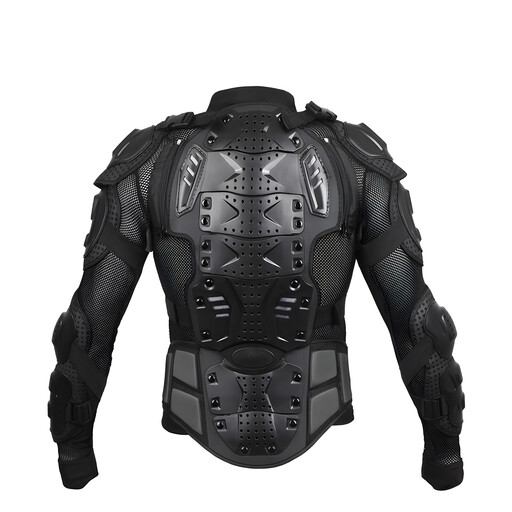
Why this model is a great fit: This model is designed for versatile off-road use. The combination of a segmented back plate and flexible joint protectors offers protection without restricting the freedom of movement required for enduro or motocross riding. It is suitable for riders looking for a reliable all-in-one solution.
The breathable mesh base fabric and ventilation openings in the chest area actively counteract heat buildup, ensuring a comfortable climate even during exertion.
The chest and back protectors are removable. This not only simplifies cleaning but also allows you to adjust the level of protection to suit the activity.
Why this model is a great fit: For newcomers to sports like downhill mountain biking, skateboarding, or motorcycling, this jacket offers a comprehensive protection package. The unisex design and wide range of sizes make it an accessible option for anyone seeking reliable base protection for various activities.
Thanks to numerous adjustment straps on the shoulders, arms, and waist, the jacket can be precisely fitted to the body. This prevents the protectors from shifting and solves the problem of a poor fit.
The construction of PE hard shells and EVA padding offers a solid compromise between protective impact and low weight, enhancing comfort during extended use.
If you'd like to compare more models selected based on objective criteria like material and adjustability, you can find an expanded overview here.
The correct size is crucial for protective effectiveness. A protector jacket must fit snugly against the body without restricting movement. Measure your chest circumference, waist circumference, and height, and compare these measurements with the manufacturer's size chart. When trying it on, wear the clothing you would typically wear underneath the jacket (e.g., a technical base layer).
Yes, most protector jackets, especially mesh-based models, are designed to be worn as a protective layer under an abrasion-resistant motorcycle or enduro jacket. Ensure that your outer jacket has enough room so that the protector jacket is not compressed and freedom of movement is maintained.
Most models require careful handling. Before washing, remove all removable protectors (hard shells and foam pads). Hand wash the carrier material (the jacket itself) in cold water with a mild detergent. Rinse it thoroughly and let it air-dry. Avoid direct sunlight or heat sources, as they can damage the material.