
Lieferung heute & morgen

Qualitätsgarantie

Willkommens-Angebote freischalten: KOSTENLOSE Lieferung | Bis zu 80 % RABATT | Kostenlose 30-Tage-JoyPlus-Testphase
App herunterladen
Persistent tension in the neck and shoulder area is a familiar problem for many, especially those who work regularly at a desk or have poor posture. An electric neck massager can be a convenient way to help relax these muscles. However, the market offers a vast array of models with different technologies and features, making the choice difficult.
This article serves as your guide. We will introduce various types of neck massagers, explain key selection criteria, and present a selection of models to provide you with a basis for an informed decision.
To find the right device for your personal needs, several technical and functional aspects should be considered.
The type of massage is a crucial criterion. The most common technologies are:
A neck massager with a heat function can enhance the effect of the massage. Heat helps to promote blood circulation and is found by many users to be particularly soothing for tension. Look for models with adjustable heat levels to tailor the temperature to your personal comfort. Adjustable intensity levels for the massage itself are also a standard feature that allows for individual customisation.
Consider where and how you plan to use the device most often.
Here is a curated selection of models from the SKG brand, covering different technologies and use cases.
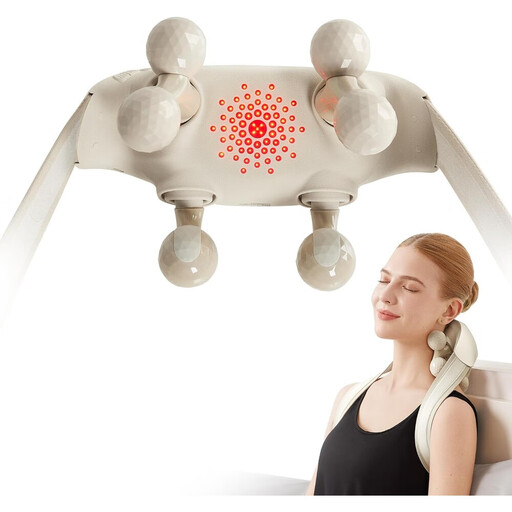
Why It Stands Out: The SKG H7 Ultra combines a rotating kneading massage with a large-area heat function. According to the manufacturer, the device features massage heads with a special faceted structure for intense muscle contact and 64 red light beads for a heating area of 2826 mm?. The backpack-style design allows for hands-free use.
Advantages:
Who It's For: This model is aimed at users seeking an intense, deep-tissue Shiatsu massage for the entire neck and shoulder girdle who also value a large-area heat treatment. It's a great option for regular use at home.
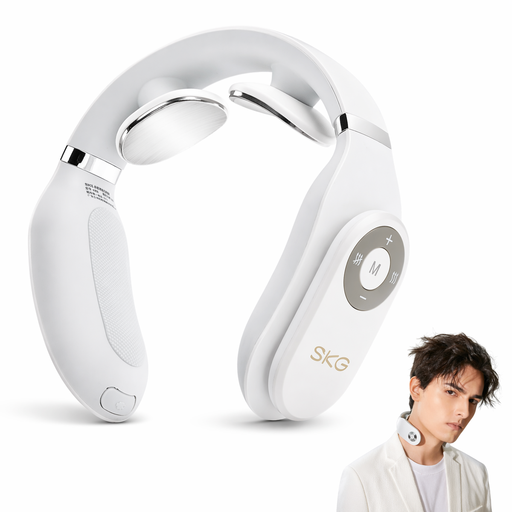
Why It Stands Out: The SKG 4098E utilises EMS technology in an extremely lightweight and compact design reminiscent of headphones. Weighing only about 160 grams, it is designed for mobile use. It is conveniently controlled via a separate remote.
Advantages:
Who It's For: Ideal for people who travel frequently or are looking for a discreet solution for the office. Those who prefer targeted muscle stimulation from EMS over a mechanical massage and prioritise portability will find this a suitable model. It also makes a practical gift for both men and women who are always on the move.

Why It Stands Out: The G7 Pro-Fold is a hybrid model that combines EMS and TENS pulses with a mechanical vibration massage from 9 massage heads. Its standout feature is the foldable design, which makes it very space-saving and travel-friendly. It can also be controlled via an app.
Advantages:
Who It's For: This electric neck massager appeals to tech-savvy users who value flexibility. The combination of different technologies and app control offers a high degree of customisation, while the foldable design makes it a perfect travel companion.
If you're looking for more inspiration for practical gifts that promote well-being, you'll find a carefully curated selection of products in our Baking Gifts category.
Most manufacturers recommend a usage time of 15 minutes per session, no more than once or twice a day. Many devices have an automatic shut-off feature to prevent over-stimulation of the muscles. Always follow the specific instructions in the user manual for your product.
Both technologies use electrical impulses but have different goals. EMS (Electrical Muscle Stimulation) aims to cause muscles to contract, which can help with loosening and strengthening them. TENS (Transcutaneous Electrical Nerve Stimulation) stimulates the nerve endings to influence the transmission of pain signals to the brain. Some devices combine both technologies.
An integrated heat function is found to be pleasant by many users. Heat can stimulate local blood circulation and help muscles relax. This can enhance the effect of a mechanical or electrical massage. However, this is a wellness application and not a medical treatment. For acute or chronic pain, a doctor should always be consulted.