
Lieferung heute & morgen

Qualitätsgarantie
App herunterladen
Kategorien
A night light's primary purpose is to provide a minimal level of illumination in dark rooms. Its function is to aid wayfinding, increase safety in pathways such as hallways or on stairs, and offer a gentle light source in bedrooms or children's rooms. Selecting a suitable model depends on specific technical requirements and the intended location. This guide analyses the crucial criteria and presents a selection of products with varying specifications.
The decision to purchase a night light should be based on an analysis of objective parameters. The following technical features are crucial for functionality and efficiency.
The type of power supply determines the device's flexibility and running costs.
Modern night lights use sensors for automatic control, which enhances convenience and energy efficiency.
The light source is a central element that influences both atmosphere and functionality.
Based on the technical criteria mentioned above, we have compiled a selection of night lights that cater to different user profiles.
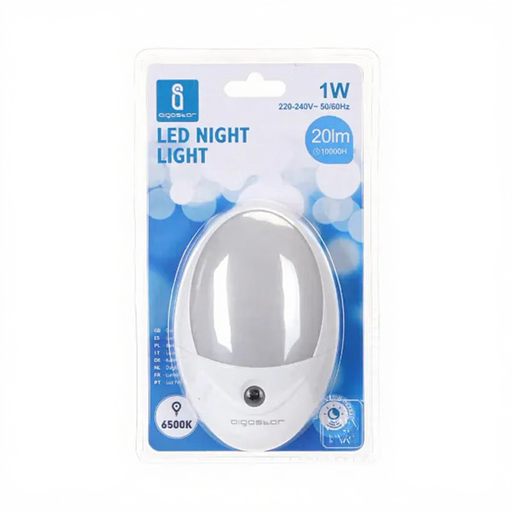
Why we recommend it This model is a classic plug-in light with an integrated day/night sensor. Its main function is to provide clear, automatic illumination. With a colour temperature of 6500 K, it produces a cool white light that ensures distinct visibility in dark areas. Its very low power consumption of 1 watt makes it an energy-efficient permanent solution.
Pros
Who it's for Individuals looking for a reliable, maintenance-free, continuous lighting solution for hallways, stairwells, kitchens, or garages where clear orientation is the priority.
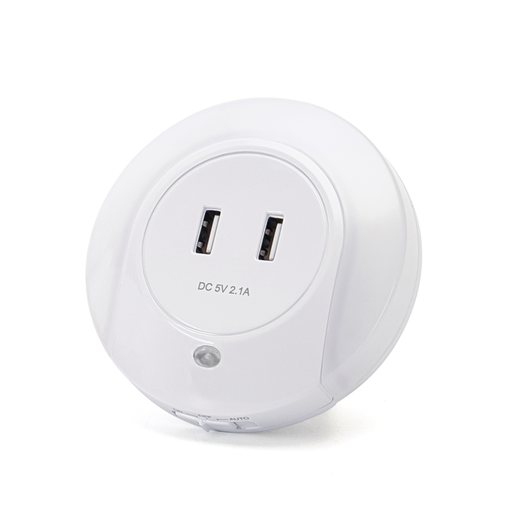
Why we recommend it This product combines two functions in one device: a night light and a charging station. It provides a warm white light at 3000 K, which is considered pleasant for bedrooms. At the same time, it offers two USB ports for charging mobile devices. This saves space and eliminates the need for a separate charger. At 0.4 watts, its energy consumption is extremely low.
Pros
Who it's for Users who want a practical solution for the bedroom, guest room, or office, and wish to charge their electronic devices alongside having a gentle light.
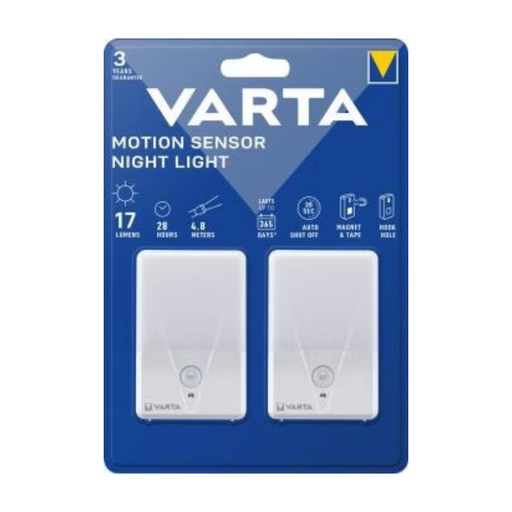
Why we recommend it This battery-powered night light from VARTA offers maximum flexibility thanks to its wireless operation and versatile mounting options (magnet, adhesive tape, screw). The integrated motion sensor, with a detection range of 3 metres and 120°, activates the light only when needed and switches it off again after 30 seconds of inactivity. This ensures very high energy efficiency. The warm white light, at 17 lumens, is bright enough for orientation without being glaring.
Pros
Who it's for Homeowners and renters who need a flexible lighting solution for areas without outlets. It is especially suitable for securing stairs, dark corners, or as a safety light for seniors and children.
If the featured models do not fully meet your specific requirements, a broader selection of specialised lighting solutions is available. You can find more products with different designs, light colours, and sensor technologies in our main category.
Discover more models here: LED Night Light Lamp
1. What light colour is suitable for a night light in a bedroom or child's room? For environments where sleep should not be disturbed, a warm light colour (approx. 2700 K to 3300 K) is recommended. Warm white light contains less blue light, which is less likely to inhibit the production of the sleep hormone melatonin. Such a soothing light creates a calming atmosphere.
2. How does a night light with a motion sensor work? A night light with a motion sensor typically uses a Passive Infrared (PIR) sensor. This sensor detects changes in heat caused by the movement of people or animals within its detection range. In combination with a dusk-to-dawn sensor, the device ensures that the light is only activated in darkness and when motion is detected, making it very energy-efficient.
3. Are LED night lights energy-efficient? Yes, LED night lights are extremely energy-efficient. Their power consumption is typically between 0.3 and 2 watts. A 1-watt model that is on for 10 hours per night will consume only about 3.65 kilowatt-hours (kWh) of electricity per year. This results in very low running costs.