
Lieferung heute & morgen

Qualitätsgarantie
App herunterladen
Kategorien
Installing window treatments often presents a challenge for both renters and homeowners: how to avoid drilling holes in window frames or walls. A no-drill roller blind offers a functional solution that leaves the window frame undamaged. These systems typically rely on clamp-on or adhesive mechanisms that allow for simple and residue-free installation. This article analyses the technical aspects of various drill-free blinds and presents a selection of products based on their specifications and applications.
By: Joybuy Product Recommendation Officer
Choosing the right blind depends on objective parameters. These include the mounting type, material properties, and the blind's specific function.
The most common method for drill-free installation is the clamp-on roller blind. This involves hanging adjustable clamp brackets directly onto the window sash.
An alternative is installation using adhesive strips. With this method, the brackets are glued directly onto the cleaned window frame. The load-bearing capacity and durability depend heavily on the quality of the adhesive and the condition of the surface.
The blind's fabric determines its primary function, whether it's for sun protection, privacy, or complete room darkening.
Besides the classic roller blind, other drill-free options are available:
The following selection is based on the products' technical specifications and practical benefits.
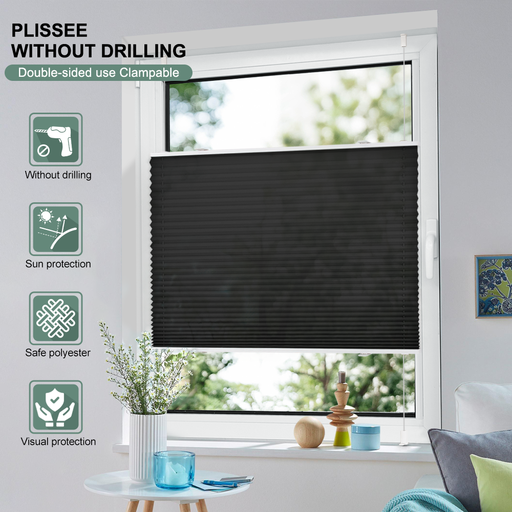
Why We Recommend It This no-drill pleated blind combines a pleated fabric structure with an opaque material. It is installed using a clamp-on system that enables tool-free attachment to the window sash. The top and bottom aluminium rails provide stability, while the polyester fabric is designed for complete room darkening. Its operation allows for flexible positioning of the shade.
Pros
Best For This product is suitable for users seeking an effective blackout solution for bedrooms or children's rooms who prefer a flexible, drill-free installation. It is particularly relevant for renters in apartments with standard window sashes.
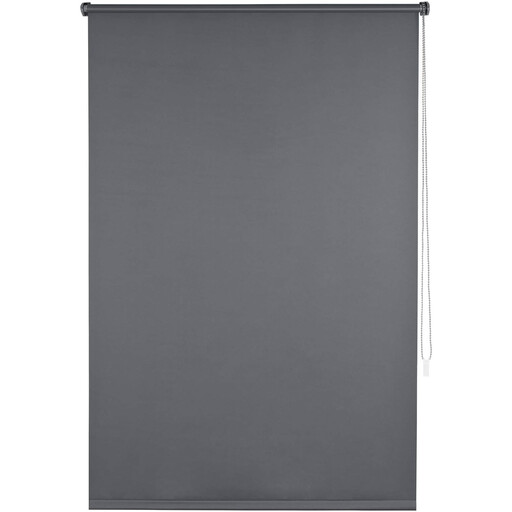
Why We Recommend It The EUGAD blind is designed as a no-drill blackout roller blind and features a special aluminium coating on the back of the polyester fabric. According to the manufacturer, this coating blocks nearly 100% of light and has thermal properties. Another feature is the colour-coordinated design of the fabric, backing, and accessories. The pull chain can be mounted on either the left or right side.
Pros
Best For This roller blind is designed for users who require maximum room darkening, for instance in bedrooms or home cinema rooms. Its thermal coating also makes it appealing for those looking to help regulate their room's climate.
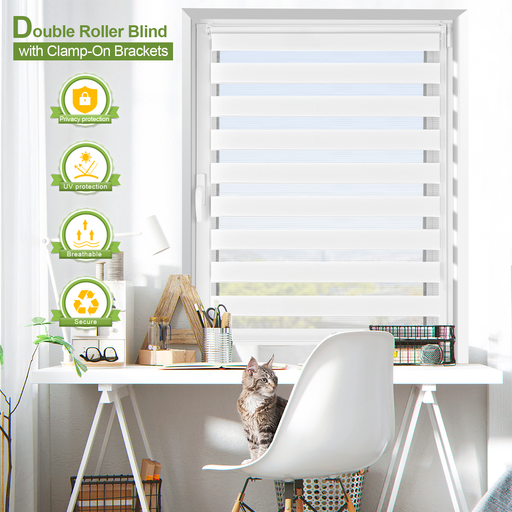
Why We Recommend It This clamp-on dual roller blind offers variable light control thanks to its two fabric layers with alternating transparent and opaque segments. The position of the fabric panels relative to each other can be adjusted via a pull chain to regulate light from transparent to dim-out. Installation is tool-free using clamp-on brackets. The combination of an aluminium top rail and a plastic bottom rail provides a functional construction.
Pros
Best For The DuoRollo is ideal for living and work areas where flexible adjustment of light conditions and privacy is needed throughout the day. It appeals to users looking for a modern and multifunctional window treatment.
The products featured cover common use cases. However, the range of drill-free solutions is broader, encompassing various sizes, colours, and specific designs. For a more extensive selection of designs and dimensions, you can browse our Window Blinds for Doors category.
1. How reliable is the installation of a no-drill roller blind? The reliability of a clamp-on installation is high, provided it is done on a suitable window sash (usually uPVC) and within the manufacturer's specified frame thickness. The clamp brackets wedge themselves firmly onto the frame, offering stable support for the blind. It is important to measure the thickness of your window sash before purchasing and to follow the installation instructions carefully.
2. What is the difference between a dual roller blind and a pleated blind? The fundamental difference lies in their construction and operation. A dual roller blind consists of two fabric panels with alternating woven stripes that move past each other to control light. A pleated blind consists of a single, pre-folded panel of fabric that collapses like an accordion. Pleated blinds often offer the ability to be positioned freely within the window (both from top to bottom and bottom to top).